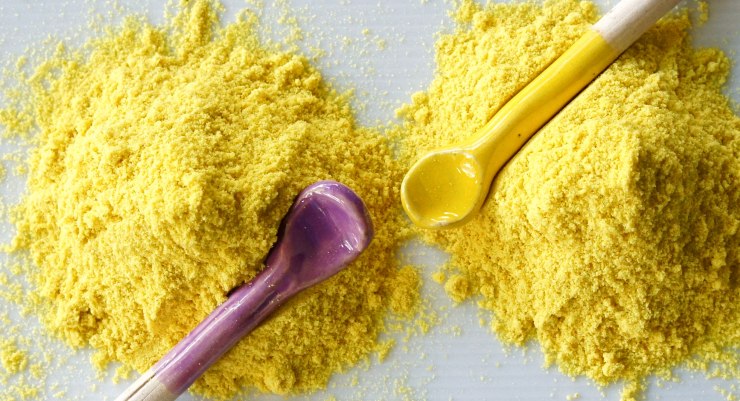
Asafoetida – what is it?

The link below is to a great little piece on asafoetida from BBC Good Food, if you are eager to learn more about this spice. I would advise anyone with coeliac disease to check to ensure it has not been mixed with wheat flour before you buy it. It is a great addition to recipes that are low fodmap. As for the account of it helping with those people who have problems with lentils and beans (foods containing oligo-saccharides) I cannot guarantee that the addition of this spice to dishes will reduce the effects of this fodmap, for those following a low fodmap diet. However if you are following a low fodmap diet and missing onion as a spice it is certainly worth trying.
http://www.bbcgoodfood.com/glossary/asafoetida

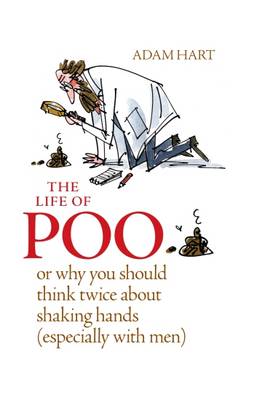
Why your wind smells of roses – The Life of Poo book review

Well now, a book all about poo, why would anyone want to read this you may ask, surely the grim subject of poo is not something to read about – certainly not in public or polite company, I imagine you thinking. This thought briefly entered my head as I picked up the book in the bookstore and I do confess, even as a professional working in the area of digestion and more than happy to talk about poo in clinic, I purchased it online – it came in a brown package. If you are wondering whether to read on – this is not a post for those with a ‘delicate’ disposition (who perhaps belong in the eighteenth century) or one to read on your tablet at the breakfast table. You have been warned.

It might surprise you to know, you really ought to read this book. How can I persuade you to take a quick peek? How about the post title? Have you ever said, with an air of superiority, ‘my wind smells of roses, that smell cannot possibly be down to me’? You are correct it seems, at least in very small doses anyway. The ‘flower’ odour usually appears at much lower doses than is produced by a ‘silent but deadly’ however, but I’d bet you didn’t expect that did you? Adam writes that skatole and indole, the gases found in malodorous wind, smell of flowers in small concentrations.

A very surprising incident happened whilst out walking yesterday, my hubby stated this very fact when smelling hawthorn blossom. Wow, I thought, how does he know that? I really couldn’t believe it, I had only read this fact in Adams book the day before.  Well the story behind his knowledge is a bit more grim than Adam’s fascinating publication. So now I have told you about my husbands experience you want to know about it, don’t you? My husband is a chemist, he worked in a company making pharmaceutical products, one of which utilised the chemicals indole and skatole – “oh, good grief”  I exclaimed, “what sort of pharmaceutical product uses those?” “dog trainer liquid” was the response – the mind boggles. My husband had the unfortunate experience of contaminating his lab coat with these very chemicals and not only that, then proceeded to wander down to the restaurant in said lab coat, at lunch time. Chaos ensued, this had the effect of teaching him the very good lesson of removing his lab coat before dining, which one should always do, to prevent ingestion of nasty chemicals and nauseating diners. He showed absolutely no sense of embarrassment though, surprisingly enough and regaled the story with a good degree of relish.

Now, back to the topic in hand. This book is factually correct, very amusing in places and does have a small reference to irritable bowel syndrome and inflammatory bowel disease in it’s chapters – something for everyone then! It discusses the microbiota, antibiotics, prebiotics, probiotics and the microbiota’s relationship with health and disease. Very topical and containing everything of interest to me. I really like the examples used in the book to describe some complex concepts in simple easy to read form. If you want to know more about poo – yes you really do, think of it this way, it’s like looking in the bowl before flushing, you know you really should (but DO put the lid down before the flush, read a lot more about that in the book) – then I can’t think of a better book to buy.


This book was purchased by myself.

It’s National Barbecue Week!

How about trying a vegan low fodmap burger during National Barbecue Week! This is a very tasty vegan burger that is not too hard on the digestive tract for people with IBS.

Ingredients

120g of cooked red and white Quinoa

1 chopped roasted red pepper

30g chopped peanuts

1 courgette

4-5 sprigs chopped fresh thyme

2 teaspoons of garlic infused oil

Salt + Pepper to taste

Method

Grate the courgette finely and squeeze out the excess water from the vegetable

Mix all ingredients together

The burgers are delicate, so it is better to put them on a square of greased foil to cook them on the barbecue.

Using a crumpet ring or metal cutter, place the cutter on the foil then fill to the rim with recipe mix and press mixture together, then remove the cutter to leave a circular burger.

Cook on the barbecue till fully cooked through – remember disposable barbecues take longer to warm up and cook food.

once cooked place them in a vegan gluten free, pitta or wrap.

Serve with skewered roasted green peppers.

Makes 3-4 burgers

Enjoy!

Food safety is really important when having a barbecue to prevent food poisoning – often a cause of IBS please see the link for food standards agency for further details on how to keep your friends and family safe http://www.food.gov.uk/news-updates/campaigns/barbecue

images

Easy like Sunday morning

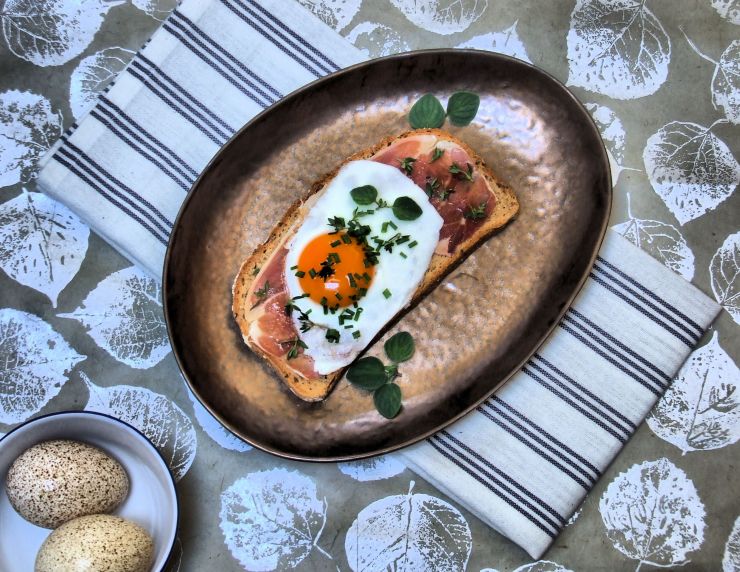
Fancy a cooked breakfast occasionally and finding that your IBS symptoms are getting in the way? Then perhaps try this version, which is lower in fat than a ‘good old fry up’ and lower in fodmaps and therefore shouldn’t be too hard on your digestive system. Choose a wheat free bread that is <3g/100g of total fat, if you can. If you choose a bread that is lower in fat you can save calories, help your symptoms and the dish would come in at around 320 Kcal per portion – not too bad for a tasty breakfast! The added herbs gives the dish a nice flavour and added some vibrancy to the dish. If you choose a different aged ham or salami then check the label to ensure it doesn’t contain any fodmaps such as onion and garlic and is a lean meat. I found I didn’t need to add any salt to this dish as the ham provided plenty.

Ingredients

1 slice of wholegrain wheat free bread

1 slice of Serrano ham (trim any excess fat)

1 egg

Chives and thyme to serve.

Method

Add the bread to a plate and top with the Serrano ham, you can warm the bread and ham if you wish before you use it, but I didn’t bother.

Dry fry the egg or use a little 1 Kcal spray oil to the pan if you don’t have a non stick frying pan.

Cook the egg – then add on the top of the ham and sprinkle with chopped herbs. This works just as well with poached egg or scrambled – depending on your preference! Serves one.

DSCF3151corala - Copy

Pickled vegetables – Low Fodmap

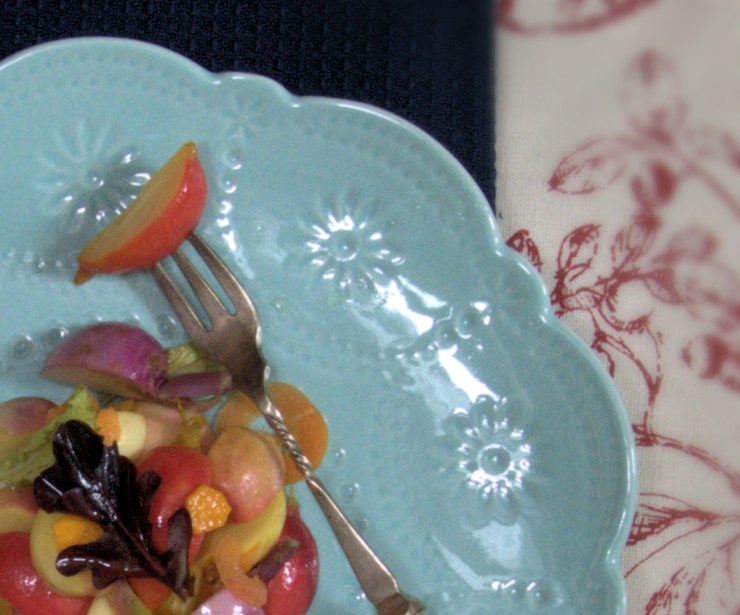
I am a real fan of Ottolenghi’s work, his recipes are delicious, but unfortunately they do contain lots of ingredients high in Fodmaps, so not that great for people with IBS. This weekend however was a bit different – a recipe suitable for the Low Fodmap diet was published in the Guardian magazine. I have tweaked it a little, because I feel that if you are posting a recipe it needs to be referenced to the original source and modified – this is the only time I have, so far. The recipe was for pickled baby turnips – I have added baby turnips and radishes (for colour) and a little Worcestershire sauce into the pickle mix. This mix will last a few days in the fridge but no longer, as thorough sterilizing techniques have not been employed.

Ingredients

Pack of baby turnips (you can use standard turnip around 200g chopped)

5-6 Radishes

1/4 of a carrot spiraled and cut into short lengths

1 stick of fresh turmeric (you can use powdered but this will likely cloud the pickle liquor)

1 teaspoon Worcestershire sauce

2 teaspoons of granulated sugar

120ml White wine or rice vinegar

175ml Water

1 teaspoon of salt

Method

Chop the turnips and radish into quarters, wash thoroughly.

Pour the water, Worcestershire sauce and vinegar into the pan and add the sugar.

Warm and dissolve the sugar and heat to a rolling boil.

Take off the heat and cool. Add the vegetables, turmeric and salt.

Add to a jar and refrigerate.

These vegetables taste great with cold cuts of meat – don’t be too concerned that they contain a little sugar to counteract the sharpness of the vinegar. You will not be eating the pickling liquor, so it is really not a great amount of sugar that you will be adding into your diet.

DSCF2763 -3


Chocolate, Courgette and Pecan Cake – Low Fodmap, gluten free

It’s Bank holiday weekend and as usual the weather is dismal, at least it’s not snowing like last week – time for some baking to lift the mood. How about a cake with some vegetables? Not something you fancy? It is worth trying this cake, the courgette adds some moisture to the gluten free cake and you really can’t taste it – so why not give it a try? Now as usual this cake is for a treat only, despite it containing a vegetable 😉 – I am not suggesting you have cake every day – neither am I suggesting you be a total nutrition evangelist and avoid it for the rest of your life. It is not too sweet and very rich in flavour, so a small piece is all you will need to get a chocolate hit. It does contain a large amount of fat too, it would still be classed as high fat, if you have IBS, again a small piece is advisable. This gluten free option is certainly not going to lead to weight loss! It is a great option for a celebration, so you can share it with others and not be tempted to have more than one piece!

Ingredients

  • 250g of plain gluten free flour
  • 200g icing sugar
  • 65g of good quality cocoa powder
  • 2 teaspoons of bicarbonate of soda
  • 1 tablespoon of baking powder
  • 1/2 teaspoon of salt
  • 4 eggs
  • 350 ml of vegetable oil
  • 100g pecan nuts
  • 2 grated courgettes

Method

  • Warm the oven to gas mark 4, line a cake tin with parchment.
  • Grate the courgette.
  • Chop 50g of the pecan nuts and add to a bowl.
  • The other 50g of pecans, save for decorating, choose the best looking ones.
  • Weigh out the dry ingredients into the bowl containing the pecan nuts.
  • Crack the eggs into a bowl and add the oil, mix well.
  • Add the wet ingredients to the dry ingredients and mix using a hand blender.
  • Add the courgettes.
  • Mix well.
  • Add to a 7inch cake tin lined with parchment.
  • Cook in the oven for 90 minutes or until a skewer inserted in the cake comes out clean.
  • Trim the top of the cake flat and turn it over for decorating.
  • Add some sugar to a pan and cook till it caramelizes, dip in the pecans and cool.
  • Add the rest of the caramel to the top of the cake and cool.
  • Serves 10-12

If you are a coeliac check your cocoa powder, baking powder and and bicarbonate of soda is gluten free. The cake is low fodmap but occasionally people with IBS can have a problem with chocolate despite this fact. It is very difficult to provide an ‘IBS’ friendly recipe that will suit absolutely everyone. If anyone tells you different be suspicious, IBS can result in numerous food intolerances, remember only 70-80% are successful with the low fodmap diet, suggesting that other food might be problematic for some – or food isn’t actually the problem.

DSCF2764 -2