Tomato free moussaka – low FODMAP

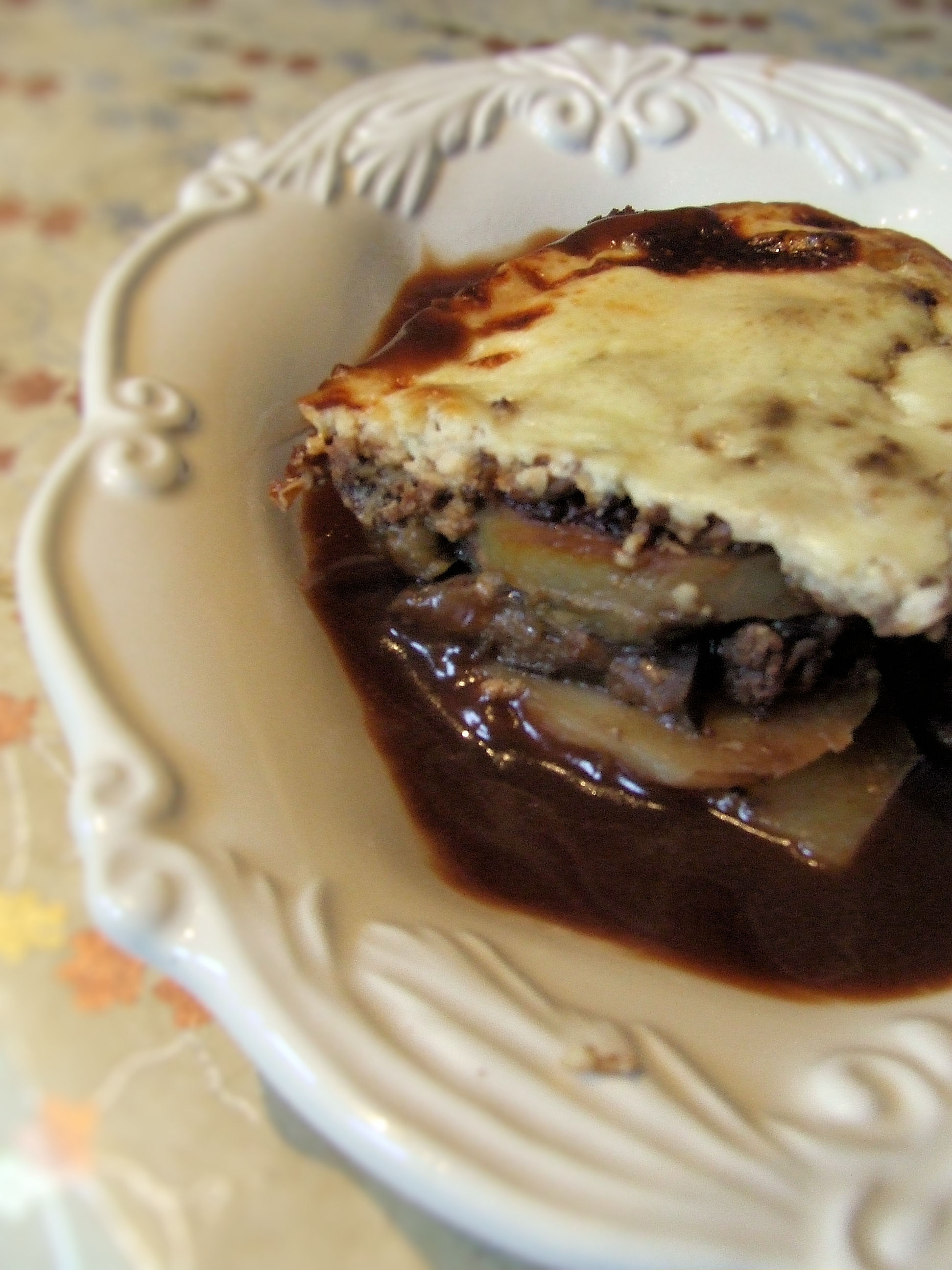
DSCF1197modMoussaka is one of my favourite dishes, in my humble view it has to have cinnamon included – and lot’s of it. You might feel that adding a spice used in sweet dishes in the UK sounds strange, but it rounds off the flavour really well. It can be a high calorie dish particularly when lamb is the main component but it is possible to reduce the high fat load. I may be performing moussaka sacrilege by suggesting that it can be made without tomatoes, but I feel the essential flavours are included, so the dish doesn’t miss much by not using them.

Ingredients

2 medium aubergines

1 tablespoon of garlic infused olive oil

4 potatoes

500 g lean lamb mince

2 teaspoons of cinnamon

1 teaspoon of asafoetida

2 teaspoons of dried oregano

1 pint of skimmed lactose free milk (Yes you can get it now!!!)

75 g grated strong mature cheddar

2 eggs

200 ml of red wine

1/2 teaspoon of gravy browning

100 ml of water

4 teaspoons of cornflour

Salt & pepper to taste

Method

The method is time-consuming but I don’t eat this dish regularly, I usually have it on special occasions so it is worth making an effort to make it well.

1) Dry fry the mince and add cinnamon, asafoetida, oregano and gravy browning. Drain off the cooking juices and allow the mince to cool. Put the cooking juices in the refrigerator till the drained lamb fat has gone solid, scoop off the fat and throw it away.

2) Pour the remaining cooking juices in a frying pan, add red wine, water and cook. Mix 2 teaspoons of the cornflour with a little water then add to the gravy, cook till thickened.

3) Slice the aubergines into 4-5 mm circular slices, sprinkle with olive oil and roast in the oven till brown. Cool.

4) Slice the potato to the same thickness as the aubergine and par boil for 10 minutes – do this just before you are ready to assemble the dish, you don’t want them to go cold.

5) Grate the cheese, pour the milk into a pan and add the cheese and the rest of the cornflour (mixed with a little water.) Cook till thickened, cool and add the eggs – mix well.

6) Add a layer of aubergine, potato, meat – add gravy. Continue to build up the layers till the ingredients are used up. Pour the cheese sauce on the top.

7) Cook for 1 hour at gas mark 6 (200°C), or until the potatoes are soft and the top has browned.

Serves 6

Toasted quinoa and buckwheat salad – gluten free, dairy free, vegan

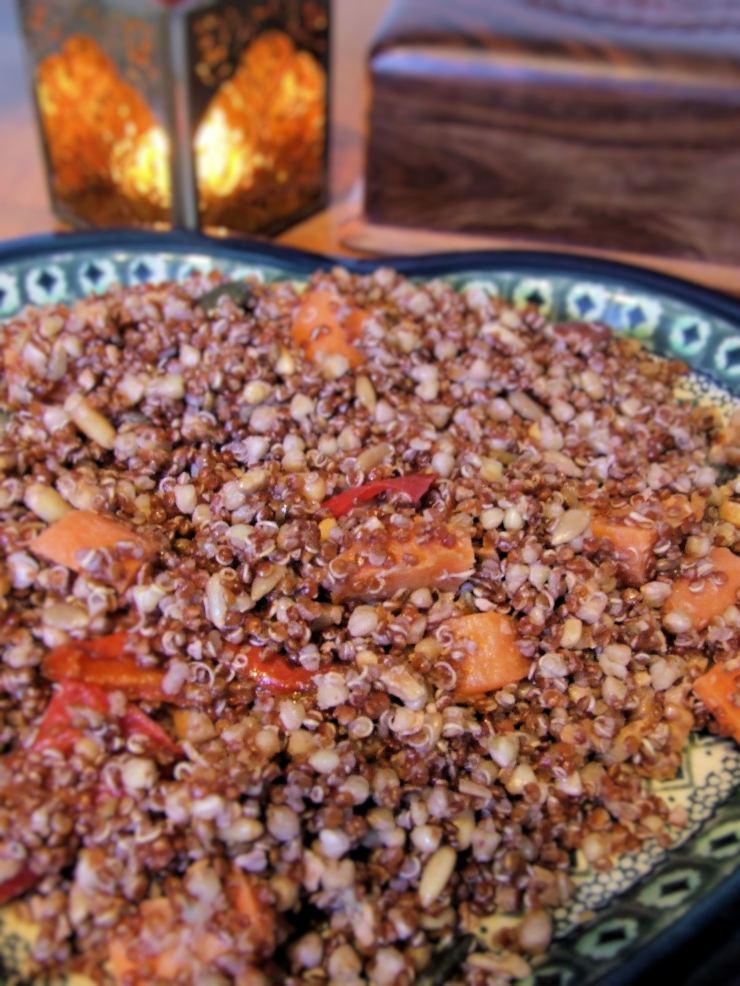
DSCF1140mod

It is a little more of a challenge to follow a free from diet if you are vegan and rely on pulses in your diet – I am going to attempt to produce more recipes to facilitate a good variety of foods for you to choose, during the exclusion phase, here is one recipe – but check out the links below for others.

Ingredients

25 g Mixed sunflower and pumpkin seeds

25 g Walnuts

25 g Pine nuts

1/2 Teaspoon of smoked paprika

1/2 Teaspoon of cinnamon

1/4 Teaspoon of ginger

1  dessert spoon of garlic infused oil

1/2 Lemon

2 Carrots

1 Red pepper

150 g Red quinoa

80 g Buckwheat

Spray oil

Method

Add the spices to the garlic infused oil and mix into the chopped nuts and mixed seeds.

Toast for 5-10 minutes in an oven – watch this closely as it can easily burn.

Remove from the oven and cool.

Add the buckwheat and quinoa to a pan and add some water to cover and simmer till soft.

Cool.

Chop the pepper and carrot into medium pieces and spay with oil and roast in the oven.

Mix ingredients together and add lemon juice.

Check the labels of the spices to ensure they are free of contamination with gluten if you have coeliac disease

Serves 4-6

 https://clinicalalimentary.wordpress.com/2012/12/16/dippy-over-hummus-oh-sigh-to-find-a-low-fodmap-alternative

https://clinicalalimentary.wordpress.com/2012/10/13/snack-time-spicy-paprika-crackers-low-fodmap-wheat-free-dairy-free-gluten-free/

https://clinicalalimentary.wordpress.com/2012/10/04/midweek-low-fodmap-special-veggie-chilli-a-warming-meal-for-chilly-nights/

 updated 22.11.14

My annual toilet rant

I have to say I find the price of toilets rather expensive and unlike last year when I travelled to London, this year I am going to blog about the problem. My bladder is partly at fault here, because it does not feel the need to empty whilst I am on the train but as soon as I arrive at any railway station I have to go, and usually quickly.

DSCF0977mod

Toilets are a problem for many people with bowel disorders, or lack of them to be precise, many people feel anxious at going out because they need to know where the toilet is, as they can need to go with some urgency. This can increase feelings of anxiety increasing symptoms, making the problem worse. I have recently written an article on IBD and quality of life and the survey (The IMPACT study) I used for the article contests to this very fact in people with this condition. The UK part of the survey revealed that during a flare 97% of IBD sufferers needed to open their bowels urgently, this only dropped to 70% between flares – this therefore represents the majority of responders. Episodes of diarrhoea were 5-10 times per day for 38% during a flare, this level remained at 11% during remission, and this clearly has a major impact on an individual’s ability to travel, work and to function day-to-day. Perhaps not surprisingly this affected the unemployed to a greater extent. One of the primary reasons for work absence is frequency of needing the toilet (38%) and anxiety due to the risks of incontinence (33%).

posterimpact

The British Toilet Association says that the provision of public toilets is a vital service for those people with medical conditions. They campaign for ‘provision of clean, hygienic and safe publicly accessible toilets that are available where and when needed, for all types of users. They request an end to public toilet closures and authorities acceptance that access to safe, discrete toilet facilities are a basic human need. The IBD quality of life study also highlights the need for accessible facilities, unavailability of toilet facilities can increase a persons’ anxiety at going out, which can make symptoms worse. 26% of people with IBD have found they have had to be rude with staff in public areas, whom often do not appreciate the person with IBD’s needs, and have refused to allow people access to staff toilet facilities.

ots-british-toilet-association-southport-ots-onthespot-ots-otsnews.co_.uk_0

This can lead to an individual being housebound by their symptoms, reducing access to society, friends and family. 81% of people with IBD reported that they are anxious about toilet facilities when travelling somewhere new. Perhaps surprisingly, the Impact survey found that the level of concern about toilet access increased with increasing age, clearly these worries are a very personal and significant problem for people with IBD. I suspect that the same is likely true for people with IBS and other bowel conditions. I do feel that it is the responsibility of the station operators to keep these prices in proportion, particularly when we are having to experience price hikes in other areas and many people who rely on government aid to live, especially those with bowel conditions, whose anxiety at trying to make ends meet can have a direct impact on the symptoms they experience. So come on guys please consider your toilet prices – available toilet facilities are a basic human need, not an excuse for making money.

Can’t wait cards can be purchased from

www.theibsnetwork.org

www.nacc.org.uk

Radar key for disabled toilet facilities and guides are available from

www.radar-shop.org.uk/Detail.aspx?id=44

Read Peter’s blog on toilets and IBD here

http://www.crohnsupport.com/toilet-finder/

The impact study can be downloaded from

http://www.efcca-solutions.net/country.php

Stir fry beef low fodmap

gingergrind

This recipe is suitable for a Low FODMAP diet, lactose free, wheat free dairy free and some advice later will show you how you can modify this recipe suitable for Crohn’s and colitis too. Give it a go – also check out the following tool to help you monitor your symptoms of diarrhoea it is not a diagnostic programme so if you have a diagnosis and wish to know more read on…….

A new free online health programme and app called MyRhythm has just launched and is used to track your digestive health on the go discreetly and with ease. By inputting your food and mood, the app will draw up a monthly report, identifying certain triggers unique to the user for digestive upset.

Ingredients

1 tablespoon of Ginger, chopped

4 tablespoons of Tamari soy sauce

1 tablespoon of golden syrup

1 tablespoon of garlic infused oil (to ensure it is totally FODMAP free you need to purchase this)

1 pak choy

1 courgette

1 red pepper

1 spring onion, green part only

1/2 tin of bamboo shoots

250g of lean beef – cut into strips.

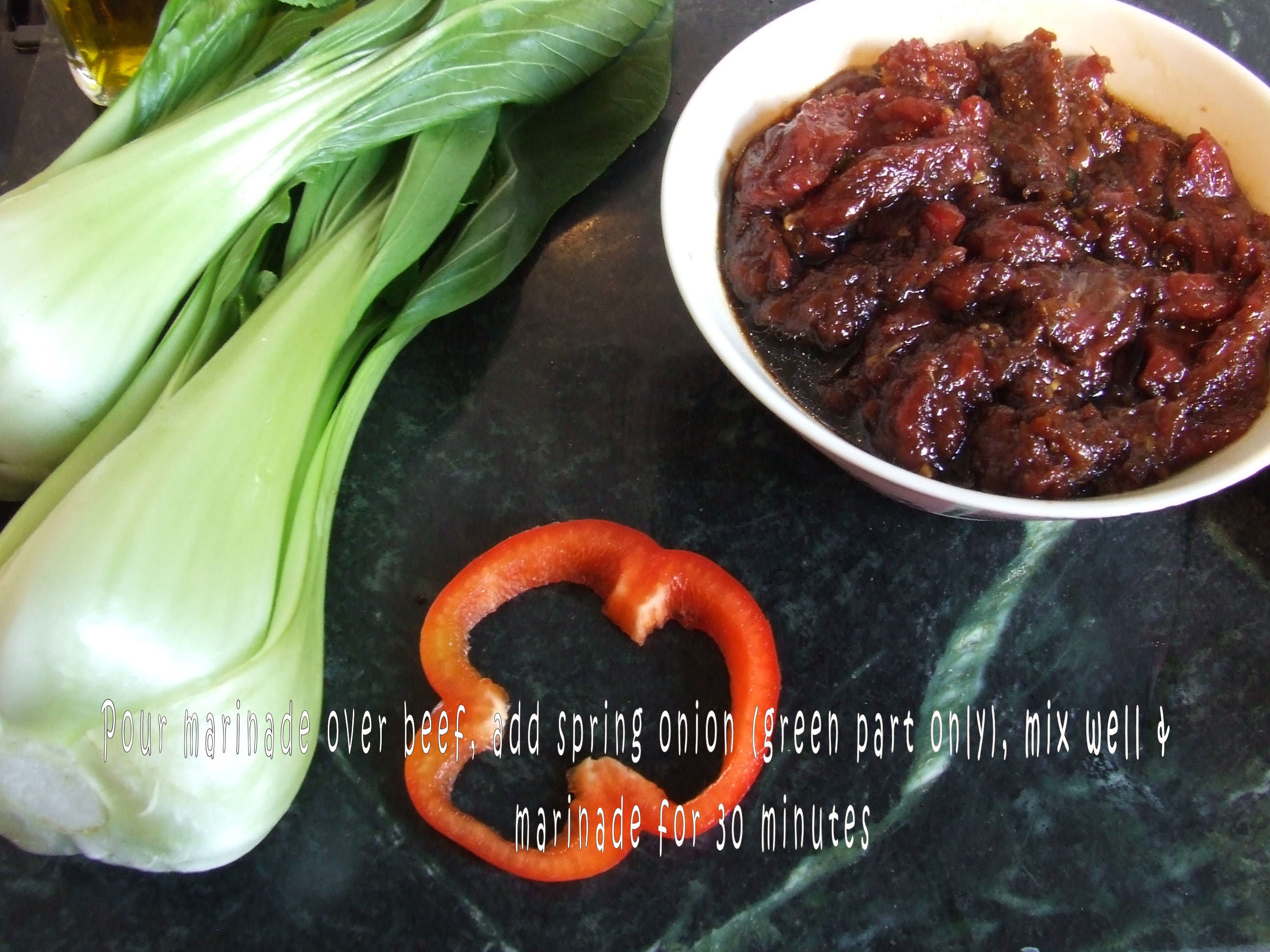
20131103_34modMethod

Chop ginger and add to a pestle with the golden syrup and garlic infused oil, grind to form a paste

Add this to the beef and chopped spring onion pour on the Tamari, mix well and leave to marinade for at least 30 minutes.

Chop the vegetables thinly and heat a wok – I use a non stick wok so I don’t need to add any further oil to this to cook the meat.

Add the meat first and cook, then add the vegetables and keep stirring till the vegetables are cooked.

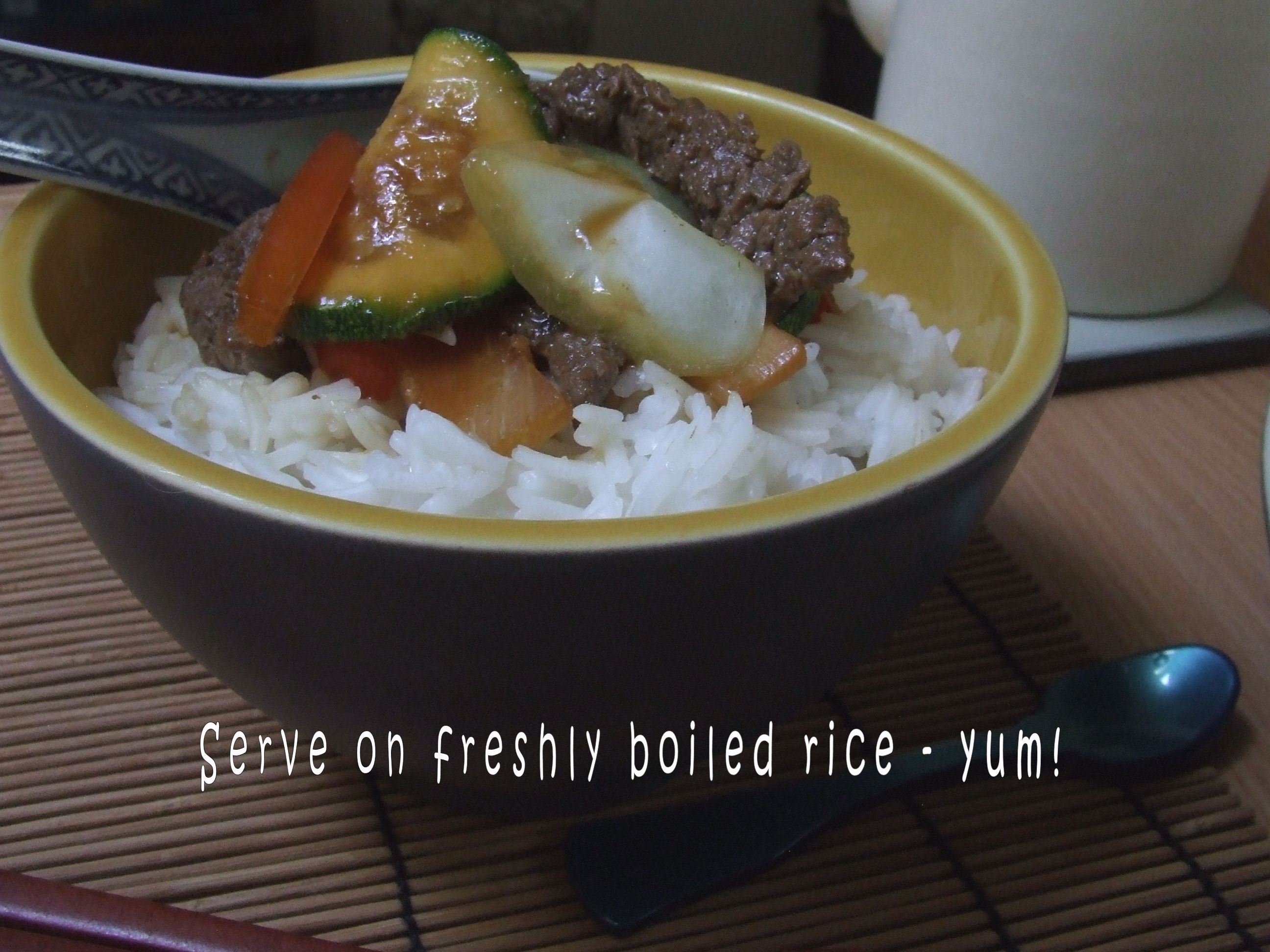
Serve with boiled rice – ensure you use freshly boiled  rice and eat whilst hot to avoid resistant starches, if this is a problem for you.

20131103_53modIf you have colitis and don’t tolerate red meat you can use chicken or fish to make this recipe. If you are experiencing diarrhoea symptoms and have been advised to have a low fibre diet, you will need to reduce the amount of vegetables in this dish, 1/2 carrot and 1/2 a skinned red pepper cut finely and cooked well will be adequate (boil for 10 minutes – boil the pepper whole for 10 minutes and the skin will peel away, before you put the vegetables into a wok) and use powdered ginger instead of ginger root to make up the recipe. Discuss the iron content of your diet with your dietitian or IBD team – do not be tempted to try iron supplements without discussing this with your doctor or dietitian, they can make symptoms worse. Low FODMAP diet is suitable if you are in remission (your inflammatory markers or CRP are normal) with your colitis and are continuing to experience symptoms, your dietitian can advise you how to use the diet, to see which foods result in symptoms.

20131103_57modFor Crohn’s to make this diet suitable for LOFFLEX you can use the modifications which have been suggested for the low fibre diet.

Please note I do not endorse any medication companies but this app tool might be useful – only use medications on advice from your healthcare professional.

Valentines Day approaches – love me, love my gut – even if it misbehaves sometimes.

Now, I’m not a counsellor or psychologist but I am able to give you some advice around dining out and reducing the anxiety this can cause around safe foods to eat. If you are going out with a new partner Dr Barbara Bolen has some really useful advice around dating and functional bowel problems (IBS.) She advises that you should be open about having digestion problems and it is OK to describe them as such, you don’t need—and probably

A little flippant perhaps – but also some truth, love me love my GUT!

wouldn’t wish to go into detail. She also provides some good examples of how to describe your GUT problems so check out her website. An explanation will also help to reduce your anxiety about needing to go to the loo frequently during a meal and this might help reduce the actual visits required. Dr Bolen also has some really good information on her website about how to tell someone about your IBS, relationships and how to enjoy a healthy sex life with functional bowel problems, check out her site here –

http://ibs.about.com/od/livingwithibs/tp/IBSandDating.htm

Dr Bolen has also posted a link about this post and she does also appreciate Valentines Day is not a day that everyone celebrates and it can be a time that can be difficult psychologically – see the link here:-

http://ibs.about.com/b/2013/02/14/ibs-and-valentines-day.htm

If you are going on a date you may want to go to an establishment that you know well and ask for a table to be reserved in a good position, making it easier should you need to visit the toilet. Making a suggestion about where to go on a date shouldn’t cause a problem, just be a little assertive and ensure that you explain about your IBS at some point—if someone wishes to go out with you this really shouldn’t be an issue. You could also a look at the menu before your visit and telephone the chef to ask if they can cook your food without ingredients that may cause problems if this helps. See if your partner also wishes to look at the menu before arriving, this will leave more time for conversation and getting to know each other. Looking at the menu is easier to do these days as most restaurants post menus on-line.

Eating out on the Low FODMAP diet can be challenging, as onion and garlic are widely used, don’t forget to ask about sauces and stock. Having dietary intolerances shouldn’t stop you going out – some ideas for choosing food are grilled chicken breast, fish fillets, steak—in other words plain meat or fish without sauce. Egg dishes are also a possibility, omelette or frittata, check the dishes are onion and garlic free, if they are a problem for you. Choices for the starchy component are plain rice, freshly cooked potato or you could ask for wheat or gluten-free dishes (depending on your intolerance,) but again check for other FODMAPs. Establishments are now better at labelling their menus, or providing separate gluten-free menus, since a recent change in regulations. Or you could try sushi, if you like it but again check any vegetables for FODMAPs. Always remember that it might not be the food you have just eaten that causes symptoms. If you are through the exclusion phase stick to your known low FODMAP foods for the day and possibly the evening before your date depending on your GUT motility (knowing the time it takes food to pass through your digestive system.)

If foods high in fat are a problem for your digestion then ask for the meat grilled or cooked on a griddle which will allow the majority of the fat to drain away. Vegan options are a little more challenging as they often contain foods high in fermentable carbohydrates, but a risotto based on Low FODMAP vegetables or rice stuffed peppers would be an option here, not forgetting to ask about use of onion and garlic in the dish, should you need too.

Wheat free pasta I presume?

Some people find alcohol is a problem, if you want to have alcohol and it does give you symptoms, limit the amount that you have. You could have a glass of wine, for example with your main meal, or ask for a spritzer to make a longer drink. Order a spritzer with your starter and allow it to go a little flat before drinking it, if you suffer from bloating. Using an implement such as a straw or cocktail stirrer to mix your drink will help to disperse the gas it contains, but don’t be tempted to drink from the straw.  You could try a little seduction and gaze into your partners eyes, whilst stirring your drink! Watch the amount of fruit cocktails you have, if you have fructose intolerance—one small glass (100 ml) of pure fruit juice containing low FODMAP fruits is usually the maximum advised. So ensure your cocktail has no more than this amount and drink it with the main dish or sweet.

Check out The IBS Network Self-Care Plan for medications that are helpful.

I would really encourage you to eat out this Valentines Day if you are invited, you may have some symptoms because it can be difficult to avoid all FODMAPs, but the most important factor is that you go out and enjoy the experience. You might find a life partner by going on the date, what more could you wish for? If you don’t have a partner, you could plan to do something special with friends or family for the day.

Most of the advice has been about functional gut problems (IBS) but if you have inflammatory bowel disease IBD, some of the advice posted may be useful but I would strongly advise you to go on-line and check out Crohns & Colitis website (link to the main site is found to the right) as they have some really useful advice on relationships and IBD, or the link for The Ileostomy and Internal Pouch Association for advice.

Check out the living with IBD leaflet here

http://www.nacc.org.uk/content/services/infoSheets.asp

Now for the bah humbug ;-),  this advice also applies to the rest of the year! Valentines Day is very commercialised, expensive and anticipation of events occasionally can prove to be disappointing if you spend lots of money on the day. You could always suggest going out at another time, if you wish and there are other ways of showing your affection than an expensive card and some petrol station bought carnations! If you know what your partner likes, try making your own gifts, some baking perhaps (and I do include you gentlemen readers here too)—invest some time and personalise your gift, this will be really appreciated as it shows your love and understanding.