The first noel – carol singing with warm Low FODMAP sweet pies

It’s the first of December today – and so the countdown begins. I hope you have had a nice surprise this morning when opening your advent calendar for the first time. The evenings are dark early and it is a really frenetic time of year. I wonder how many of you will have carol singers arriving at the door in two or three weeks time? Have you ever wondered if any of your visitors have food intolerances when handing them a warm mince-pie after their efforts? Is offering mince-pies too old-fashioned do you think? Would they rather have money? That would be a little sad and not really in keeping with the spirit of the season. I have decided to rewrite the Christmas favourite – mince-pie, to provide a different alternative for those people who want to avoid a bout of symptoms after their festive singing. The recipe is based on rice flour – the pies are baked blind so the filling really is up to you, if you want to avoid nuts or other ingredients, you can base the filling on something else. The pastry is a great base for jam, lemon curd tarts or custard tarts you can add any other filling you can imagine!

Ingredients

1) pastry recipe

240g Rice Flour

50g Dairy free margarine

50g Light muscovado sugar

2 Eggs

1/2 Teaspoon of xantham gum

pinch of salt

2) Filling

60g Light muscovado sugar

20g Treacle

45g Golden syrup

1/2 Cap of vanilla essence

50g Dairy free margarine

1/4 Teaspoon cinnamon

1/4 Teaspoon of mixed spice

1 1/2 eggs (use the other half for brushing the pastry)

50g Pecan nuts

50g Banana chips

DSCF1059modMethod

Add the rice flour, salt and xantham gum to a bowl and mix. Melt the margarine and sugar in a small pan and allow to cool a little. Add the eggs and sugar mix to the rice flour and knead thoroughly. Pastry without gluten needs working to give a good texture, if you need to add a little more egg then do. It really is different to cooking with standard pastry – you should not need to allow it to rest either. You can roll this out between cling film but I used a little rice flour and had no problem in rolling and cutting the pastry. Cut the pastry and add to a well greased pie baking sheet. Add baking beans to each tart case and cook for 10 minutes gas mark 5 or 190°C. Allow to cool, makes about 20-25 tarts depending on how thin you roll the pastry.

Melt the sugar, golden syrup, treacle, margarine, vanilla essence and spices in a pan under a low heat – allow to cool a little to ensure it doesn’t scramble the eggs. Add this mix to the eggs whilst beating. Save a pecan nut or banana chip as decoration for each tart and chop the rest separately. Split the sugar and egg mix into two – add chopped pecan to one and chopped banana chips to the other. Mix well then add a small amount to each tart and top with the decoration. Cook at the top of an oven at gas mark 5, 190°C for 15 minutes (do keep checking them to ensure they don’t burn.)

Be aware that these pies do contain fibre – so only eat a small amount! They are small pies just a morsel to tempt!

Updated 22.11.14

Stir up Sunday – ‘free from’ fun! Low FODMAP, wheat free, gluten free, milk free

By this I certainly don’t mean devoid of pleasure! it is a tradition in our household to make Christmas puddings, but for this year I have decided to make a pudding that you can make just before Christmas and is made from ingredients that are cows milk protein, gluten, and wheat free plus Low FODMAP to ensure you have a symptom free Christmas. Everyone in the household would stir the pudding and a sixpence was often hidden inside, a nice surprise for someone on Christmas day. As long as you don’t choke on it that is!

DSCF1034mod

Ingredients

120g wheat/gluten-free self-raising flour*

1 tablespoon cocoa powder** (gluten free, dairy free – see link below)

1 teaspoon cinnamon

1 teaspoon mixed spice

1 teaspoon powdered ginger

1/4 freshly grated nutmeg

1 cap full of vanilla essence

100g dairy free margarine

2 eggs

1 tablespoon of treacle

grated rind of 1/2 lemon and 1/2 an orange

Juice of 1/2 an orange and 1/2 lemon

90g soft brown sugar.

2 tablespoons of dried blueberries

*this recipe does not work well with flour based on chickpea and chickpea flour is a source of FODMAPs.

Method

Weigh out and sieve the dry ingredients into a small bowl, add gluten substitute and mix well into the dry ingredients.

Generously grease a pint pudding basin

Weigh out margarine, treacle, soft brown sugar, lemon + orange rind, Lemon + orange juice, vanilla essence into a mixing bowl and using a hand mixer, mix well till the mixture is pale.

Add 1/3 of the egg and a tablespoon of the dry mix, mix well, if it looks like it is curdling add a little more flour. It will likely look like it is curdling so don’t be put off, just add some more flour. This recipe needs 2 eggs to stop it from crumbling, repeat till all the egg is used up.

Fold in the dry ingredients to the batter.

Then add the fruit and again mix into the batter. Get each of your family members to give

the pudding a stir – if you can drag them away from the tv. Add the batter to the pudding basin and cover the top with a grease proof paper lid tied with string, add a fold in the paper to allow room for the pudding to rise. Cover the whole dish with foil and steam for 1.5 hours. Serve!

DSCF0997mod

If you follow a gluten-free diet then ensure your spice ingredients are gluten-free – supermarkets usually ensure these ingredients are labelled appropriately.

DSCF0998modThe pudding has dried fruit – but not too much, so that a small portion should be suitable for those with fructose malabsorption. It is very light and a good choice for Christmas day pudding.

I found this really interesting blog on recipes from history with a plum pudding recipe – don’t try this at home it contains FODMAPs 😉

http://lostcookbook.wordpress.com/2013/11/24/plum-pudding/

DSCF1057**For milk free cocoa powder check out the following link

http://whatallergy.com/2013-07/can-you-buy-nut-and-dairy-free-cocoa-powder

Change is not made without inconvenience, even from worse to better – (Samuel Johnson 1755)

IMG_1634

Happy New Year to our my readers and I hope you will have a year of gut calmness in 2013. January is a natural time for contemplating change and you might be wondering how successful New Year resolutions are, I am sure the majority of people have attempted to make changes in the New Year. I know I have joined gyms and weight loss groups in January, signed up for twelve months only to lapse and end up wasting my money. So what is the trick here? Can we be successful in what we choose to renew? Looking into the actual evidence one study that compared New Years resolvers with those who wanted to change later in the year, the authors found that 46% of those choosing to change in the New Year were successful compared with 4% of those choosing to change later on. The reasons for their success were that they were contemplating change, really thinking about how it can be achieved and feeling confident of being successful. It might have been possible that the study was biased, those choosing to take part were more likely to be successful because of being more proactive for example, but even if the figures are an overestimation this is still pretty impressive. Other surveys have suggested that New Year isn’t the time to plan changes; a very large survey by Richard Wiseman suggested that 88% of people fail but the details of this survey were difficult to access.

After the Christmas indulgence in rich foods it is perhaps natural to want to look after your body and wipe the slate clean, this is a time of year when detox diets or programmes are promoted to help you cleanse your body, in general but also for people with IBS. I know from personal experience I always crave fresh foods after Christmas, fruit for example never gets eaten at Christmas in our home – I often wonder about the reason, every year in fact! Detox is the process of removing toxins from the body and I’ll let you into a little secret, we have a fantastic organ in our body called the liver, it really is a wondrous organ, it is our bodies detox machine and it normally works very effectively in removing toxins from inside our body, helped by our kidneys. But there is a natural need to look after our body this time of year and there is no harm in pampering it by eating a more healthy diet, within the restrictions of your IBS symptoms, of course. For example higher fibre is not advisable for everyone; check out the IBS Network Self Care Plan for more advice on changes to help changing to a healthier lifestyle. Perhaps getting back to your normal pattern of eating after the Christmas splurge might be a good goal to begin with, then choosing one more change to a healthier lifestyle to keep things manageable. Personally and professionally the problem I have with detox diets and regimens is that they don’t do what they propose to do. Sometimes they can be very expensive and are, in the main, just a very restrictive diet – which will result in rapid weight loss initially, making you feel lighter, less bloated and fresher, but this feeling is unlikely to be maintained. So what do you do to fulfil the need for a fresh new you? Your body will thank you if you make changes to make your life generally healthier and you can feel really positive that you are helping in the long-term. Being a little more active can help your digestion and changing to eating perhaps a little more healthily for your IBS, check out the Self Care Plan for advice about how to eat and manage your IBS. Perhaps all that is needed is planning to include some ‘me time’ in your life, this will be helpful, if you find your life is very busy. A thought to changes to help your well-being is also a possibility – the overriding consideration is that whatever you decide to do it has to be your choice and shouldn’t harm you in any way.

Here are some tips to help make those changes more permanent.

1. Think carefully about what you wish to change, I mean REALLY think, not just a transient ‘light-bulb’ moment, put the kettle on, get a pen and paper or use your laptop, deliberate and plan what you are going to do.

2. On your paper write a heading of positive and negative or pros and cons. How is changing helpful? What positive benefits are there to what you are planning? The more you can think of here the better.

3. What are the negative aspects of your change? These are very important to consider as we all choose to live the way we do as it is somehow easier for us, what makes it easier? The content of this list is possibly what is going to stop you changing or result in a relapse. How are you going to manage this aspect? Write a plan of action for if you lapse, remember lapses are likely and if you plan for the possibility, it’s less likely to become a fully blown relapse.

4. How are you going to put your plan into action? What exactly are you going to do? You need to be specific here.

5. You might find that thinking about your change results in deciding that it really isn’t the best time to do it, this is acceptable, maybe keep the pros and cons list somewhere safe and come back to it sometime in the future. Ensure your choice is an easy goal for you to achieve; being successful will help you make other changes. Goals need to be realistic and achievable deciding that it is perhaps not the right time to change is a positive step. Changing one aspect of you life at a time is more manageable.

6. How will you know whether you have made a positive change? It is important to measure this aspect as this is your motivation to continue, write it down or draw a graph, use the symptom tracker or there are lots of apps available to help with this and never forget to congratulate yourself on your achievements.

7.  How long is it going to take to see an achievement? Measuring daily might not be helpful, weekly might be better. It depends on what you choose to do, but if you measure too much you might not see a change and this can be disheartening.

8.  What do you do when you lapse? Well look at your measurements – what you have already achieved, congratulate your self for all that effort, use that motivation to continue. Also review your list of positive reasons you wrote at the start to refresh yourself on why you decided to change that aspect of your life.

If we live our lives without considering changing then we will carry on having to manage the negative aspects of what we choose to do. New Year is a really good time for people to consider what it is about our lifestyles can be improved and as such it is a really useful time, also getting others involved can also help people to keep up with resolutions.

J. C. Norcross, M. S. Mrykalo, M. D. Blagys (2002) Auld Lang Syne : Success Predictors, Change Processes, and Self-Reported Outcomes of New Year’s Resolvers and Nonresolvers Wiley Periodicals, Inc. J Clin Psychol 58: 397–405, 2002.

http://richardwiseman.wordpress.com/2009/12/29/how-to-keep-your-new-years-resolution/

Sage and hazelnut stuffing wheat free and Low FODMAP

IMG_1624This is a little late for Christmas 2012 but there is always next year or you could try this with roast chicken or any other light meat.

Ingredients

150g of fibre based wheat free bread

200 g of chicken livers

30g hazelnuts

a good handful of fresh sage leaves

leaves from 4 stalks of thyme

1 tablespoon of garlic infused oil

100 mls vegetable stock (made from celery + carrot) or chicken/turkey stock – this is probably better home made as stock cubes often contain onion and garlic.

Salt + pepper

Method

Crumb the bread (it is better if it is a little stale)

Chop the herbs and hazelnuts

Trim the livers – removing any white and connective tissue

Add the oil to a frying pan and lightly fry the livers, chop them into small pieces (or lightly blend) They do not need to be cooked through as the stuffing will be going in the oven.

Mix with the breadcrumbs, herbs livers, hazelnuts, salt + pepper.

Place the ingredients in an oven proof dish and cook at gas mark 5, 190 degrees C, for 20-30 minutes.

Serves 5 don’t have a very large amount as hazelnuts do contain a small amount of FODMAPs.

When making snow dragons and other mythical creatures, keep your energy up with chestnut biscuits!

These delightful biscuits have a crisp crunchy outside and a cake textured middle. They are so easy to make and do taste very sweet  – ideal served with a sweet wine at Christmas, after walking in the snow (doing some exercise to burn off the calories, obviously!) Or after expending energy making snow men/creatures in the cold like IMG_0789 the dragon in the picture above, we made him about 3 years ago. I often wondered what people thought of him, we made him along a country walk near to where we live, I think he probably lasted two or three days. The biscuits are wheat, dairy, egg and gluten-free and should be suitable for most people following a low fodmap diet – as long as you tolerate almonds, as almonds can be rather high in fodmaps but obviously, this also depends on how much you add to a recipe and you could always use more gluten/wheat free flour to replace the almonds if you are following the exclusion phase of the Low fodmap diet. IMG_0792

Ingredients

250g dairy free margarine

100g icing sugar

40g soft brown sugar

260g of wheat and gluten-free plain flourIMG_1612

40g of ground almonds

1 x 250g tin of sweet chestnut spread

Icing sugar to dust

Method

It couldn’t be easier – add all ingredients in to a bowl and mix with an electric mixer till all the ingredients have been incorporated into a stiff batter.

Spoon about a tablespoon size drop on a greased baking tray and cook at gas mark 6/200 degrees C, till nicely browned.

Place on a cooling rack and sprinkle with icing sugar, I’m not sure if they are really a cake or a biscuit – I suppose this depends on whether it goes hard or soft on standing (cake goes hard once stale, biscuits go soft.) Will have to let you know.

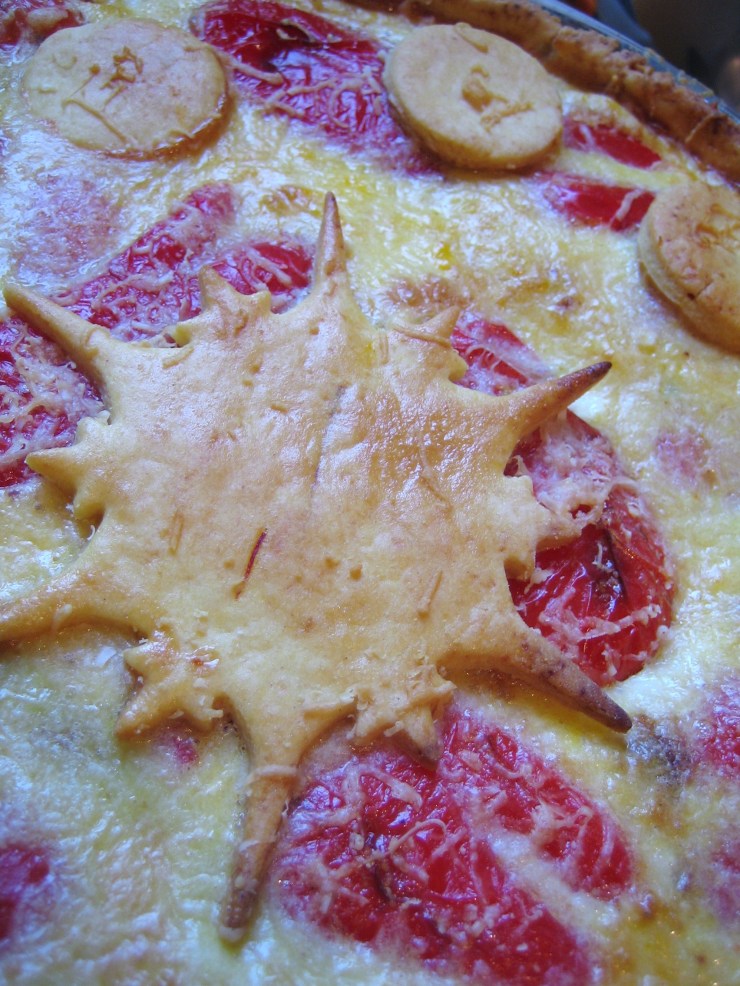
Christmas Eve special supper – spicy saffron red pepper and courgette/zucchini Quiche

IMG_1610

Low Fodmap, low lactose, wheat free + gluten-free.

Ingredients

200g of gluten free wheat free flour mix.

90g of milk free margarine

Pinch of salt

(or 1 packet pastry mix for gluten free, wheat free pastry – this can contain chickpea flour, so make your own if you have problems with lentils and chickpeas)

pinch of saffron

4 tablespoons of water

1-2 red peppers

1 courgette/zucchini

1 red chilli

4 eggs

1/4 teaspoon of turmeric

saffron-rex1/4 teaspoon of chilli powder

1/2 teaspoon of smoked paprika

1 oz of finely grated fresh parmesan.

Salt to taste.

Method

Place a tablespoon of just boiled water into a cup and add the saffron, leave for approximately half an hour to release the colour and flavour.

Weigh out the flour, add salt (if not a packet mix) and rub in the margarine, add the water and saffron mix to the pastry. Bring the dough together, work it well – the better it is worked in, the easier you will find it to use.

Roll out the pastry on a well floured (gluten and wheat free!) board or roll between two sheets of cling film. Line the base of a flan ring/dish. Cut out circles or shapes for the top of the flan.

http://animatedtoast.blogspot.co.uk/2007/12/santa-imposter-gallery.html

Break the four eggs into a bowl and mix well, add chilli powder, salt and turmeric, mix well.

Use a small amount of the egg mix as a wash for the base of the flan and the cut out shapes. Bake these for 15-20 minutes in an oven set a gas mark 5 or 190 degrees C. Also add to the oven a baking tray containing sliced pepper, finely chopped chilli, sprinkled over smoked paprika and spray oil. Place the peppers at the top of the oven till roasted.

Slice the courgette.

Cool the pastry, grate the parmesan. add the courgette to the base of the flan, then layer on the pepper. Pour over the egg mix, decorate with the pastry discs and sprinkle over the cheese. Cook at gas mark 6 or 200 degrees C, for approximately 20 minutes. Exclude the chilli if you find it too much for your digestion. Check your spices are wheat and gluten free if you need to.