Trout with salad – Low FODMAP, dairy free, gluten free

IMG_1801We are heading towards the end of Summer, early in the morning it certainly feels like Autumn is on the way. However there is still time left to enjoy a cold salad with a small glass of chilled white wine for our evening meal.

Today’s activity was a run around my home town, nestled in the middle of the Pennines. We certainly have our share of wet weather and today was no exception. However the skies were bright enough for me to manage an hour without getting too drenched. This summers weather has still resulted in flooding in the next village, despite the weather being hotter than usual, the deluge of rain was severe enough to wash away the road. I would not want to live anywhere else though, as we have beautiful countryside and the steep wooded valley’s add to the overall atmosphere. Have a look at the pictures and see if you agree.

This slideshow requires JavaScript.

If you wish to make the meal above the recipe is as follows:

Salad

Small handful of miniature plum tomatoes (about 8-10)

Small handful of green olives

Small handful of mixed leaves (rocket, spinach and watercress)

1/2 an orange pepper

1 tablespoon of pumpkin and sunflower seeds

2 teaspoons of fennel seeds

1 small piece of celery

2 inch slice of cucumber.

1/4 teaspoon of cinnamon and 1/4 teaspoon of ground allspice

1/2 lemon

1 bunch of fresh thyme

Chop all ingredients finely and add spices, seeds and lemon juice

Season and toss well. Serves three

Rice

3 cups of basmati rice

1 cup of neroli rice

1/2 an aubergine

salt

Chop the aubergine and add to the rice, cover with water season and cook till tender. Cool

Plus 1 fillet of trout per person, grilled and cooled.

Serve

Gluten free bread woes?

The one anxiety people have when they are diagnosed with coeliac disease is the bread. People complain about the texture, the taste, the fact that sandwiches ‘are just not the same’, the slices are too small and they struggle with choices at lunchtime. In my experience most people find a solution to the bread ‘problem’ and this can be achieved by trying all different types, most

http://sammisofties.blogspot.co.uk/2011/09/miss-marples-bread-woes.html

companies will allow you to sample the products. Free From shows are ideal venues to visit as most companies exhibit and will allow you to taste. It can be argued that the popularity of the gluten-free diet as a lifestyle choice is not ideal, but one thing is for sure, choices for gluten-free foods are improving all the time. Although free market competition and following price reductions due to market competition does not seem to have followed with the increasing choice available.

The fresh breads that are marketed are good options and if you can tolerate codex wheat (wheat that has had the gluten removed) but you may need to have freezer storage as if these are ordered on prescription (for people with coeliac disease only) they are delivered in larger batches. Try to choose ones with added fibre or seeds to increase wholegrain options in your diet. Some breads can be freshened by warming in an oven or microwave – this is usually stated on the packet and some versions have humectants (an additive that holds on to water) added to keep them moist, such as psyllium husk flour, which can also act as a bulking laxative! Useful for most people but you might want to limit the amount of these types of bread if you have irritable bowel syndrome and you suffer from diarrhoea and bloating.

lunch day 2

Most types of bread are available in gluten-free varieties, such as baguettes, rolls, fruit loaf, pita and naan, a new wrap has even been introduced recently. If you use artesian bread outlets or farmers markets, please ensure contamination with gluten has been avoided and the seller is aware that spelt flour is not gluten-free. One clear problem with the gluten-free bread is that the slices are often smaller – but do be cautious as these slices may contain the same calories as a standard sized loaf. Those people who have weight management requirements need to review the labels when choosing bread as sometimes ingredients that are used to improve the texture increase the calories the bread contains. Some of the more common breads and there fat and calorie contents are below.

————–Energy per Slice/per 100g (Kcal)              Fat Content per slice/per 100g (g)

Juvela Fibre Fresh                           73/229                                                     1.3/4.2

Glutafin Select Fibre Fresh             88/252                                                     2.2/6.1

Genius brown original                      82/304                                                    3.8/14.3

Warburtons Brown                           73/229                                                    2.2/6.1

Yes You Can (fibre)                          83/221                                                    1.4/3.7

Wellfoods (fibre)                               –/216                                                     –/2.3

Ener-G (rice brown loaf)                  –/334                                                     –/15

Fria Fiber                                            83/265                                                   2.1/7.0

Barkat Brown                                      –/221                                                   — /3.2

Dietary Specials                                68.5/249                                                 1.7/6.2

Biona rice brown bread                       –/200                                                  –/2.0

Asda Brown                                            86/234                                                1.2/3.3

Sainsbury’s Brown  (slice = 36g)         86/302                                                3.6/12.5

Tesco Brown                                         105/285                                                3.1/8.6

Only two of the above products would be classed as a low fat product if you go by grams of fat per 1oog only, but this is complicated, as slices are different thicknesses and sizes and calorie content is also important. Concentrating on the fat level might not be that helpful (and the calorie content of the rest of the diet too is clearly important – it’s no good complaining about the calorie content of the bread, if you consume lots of gluten free cake, biscuits and pastries!) Those examples above without per slice options may be unsliced, therefore the calorie content depends on how generous you are, thin slices or ‘door stop’ slices, as my Lancashire family would describe. Some companies are now producing loaves that have larger slices to address the issue of small slices, but again caution might need to be taken for those who struggle to maintain a healthy weight.

gluten free bread loaf 3 4-23-12 w

As can be seen above we now have lots of options for choices for bread – so those who are newly diagnosed should ideally try each version to see which they prefer, this choice can be as different as chalk and cheese! You can make your own using breadmakers and baking by hand, mixes are available to help and they are usually very good in my experience. Making your own can take some time to get used too but home-made can taste much nicer – you could add dried fruit, a source of iron and fibre. Other options are gluten-free crackers and crispbreads, good options for lunchtime and eating away from home. Toasting the bread can also make the bread more tolerable for some.

If you are following the Low FODMAP diet ensure you check ingredients.

If you have any tips for people please share!

No funding or free samples were provided to faciliate writing of this post.

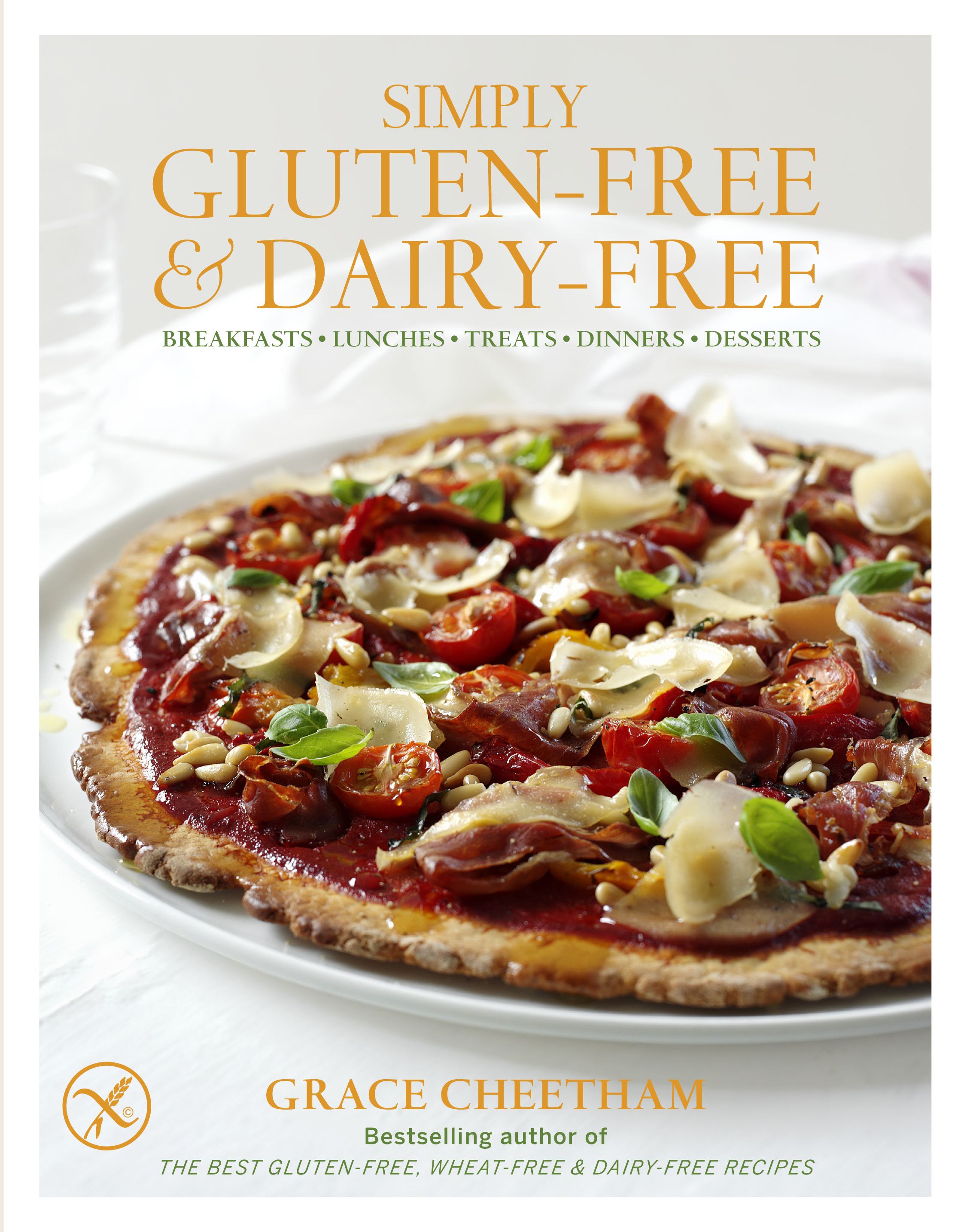
Simply Gluten Free and Dairy Free – Grace Cheetham

SimplyGluten_Nov12This book is a useful addition to the bookshelves of anyone who has a requirement to follow either a dairy free, lactose free and gluten-free diet or both. However despite the name of this book it contains some recipes for a number of different food allergies or intolerances identified by symbols at the side of each recipe, the symbol key is at the front of the book. The gluten-free symbol does include wheat free so the recipes are suitable for those people needing to follow a wheat free diet, although this is not clear from the title of the book. For those coeliacs amongst my readers the book has the endorsement of Coeliac UK, meaning that the recipes are guaranteed gluten-free (as long as you use the listed gluten-free ingredients of course!) Healthy eating recipes are included and the pictures certainly make you want to try some of the dishes as they look fresh and colourful and Grace injects some personality into the chapters by writing a small introduction to each and hints and tips are included throughout. Most of the recipes are not easily identifiable as ‘free from’ by anyone who wouldn’t be aware, making the recipes useful for the whole family. Treats are not forgotten, also very important to include occasionally in the diet for those people who have to exclude certain foods. It is perhaps better to wait till you have identified your intolerances if you are being treated with the Low FODMAP diet before you think about buying the book as the recipes do contain a number of high FODMAP foods, but these types of foods are generally healthy for those people who don’t have Irritable Bowel Syndrome or types of gut inflammation such as crohn’s or Colitis. For Low FODMAP followers you should only consider these recipes if you only have lactose intolerance and/or need to avoid gluten or wheat and you are fine with all other types of high FODMAP foods. The recipes I tried worked well and the book is nicely presented and not too expensive, so perhaps think about the book as a nice birthday or Christmas present for your friends or relatives with free from needs. Or buy it yourself and treat your friends to some baked goods – even better!”

The book was provided by the author for this review


Easter meal – roast spring lamb

IMG_1673The first thing to do in the preparation for this Easter meal is to marinade lamb steaks for 1-2 hours.

Marinade

1 freshly squeezed lemon

1 tablespoon of garlic infused oil

Sprinkle of salt

3 sprigs of rosemary

chop the rosemary and add to a bowl with 2 lamb steaks, oil, lemon juice and a small amount of salt to taste.

Leave to refrigerate for 1-2 hours before adding the lamb to a roasting tin with vegetables (I chose parsnips, these were what I had in the fridge, but you could choose carrots if you wish.)

Place in the oven at gas mark 4 and cook for 2-3 hours or until the lamb is very soft and falls apart. Keep checking it as you don’t want it to become too dry. Cooking the lamb long and slow will ensure that some of the marbling of fat it contains will liquefy and can be skimmed off the meat juices once cooked.

IMG_1674

The next dish to make is a greek salad – we had this as a starter to our easter meal.

Ingredients

1 large tomato

1/2 cucumber

10-12 black olives

1 teaspoon of dried oregano

100g of feta cheese.

Chop the tomato, feta and cucumber and add to a bowl with olives. Mix well, as the feta and olives are quite salty there should be no need to add salt to season this dish. Serve before the main meal or have it as a side dish – whatever you prefer to do is fine.

IMG_1677

The next thing to make is the mint dressing for the potatoes.

Minted Charlotte Potatoes

2-3 potatoes per person.

2-3 sprigs of mint

1 tablespoon of garlic infused oil

1 tablespoon of white wine vinegar

Salt to taste

Chop the mint and add it to a bowl with the olive oil and white wine vinegar, salt and mix well.IMG_1680

Chop the potatoes into 2-3 cm wide slices. Boil the potatoes for 10-15 minutes, drain the pan of water, add the dressing and shake the pan well.

Keep potatoes warm.

Prepare the lamb

Trim the fat from around the lamb and place on a serving dish with the roasted vegetables.

Drain off the cooking juices and strain off the fat which floats on the surface, drizzle this liquid over the meat and allow it to rest (if you wish to make a gravy add a heaped teaspoon of cornflour and heat in a pan until thickened.)

Serve up and enjoy! This meal is gluten-free and Low FODMAP (a small amount of tomato is included in the salad, which shouldn’t be too much for those excluding fructose from their diet) however the salad does contain milk protein. The meal is a celebration and has been prepared with some effort to reduce the fat levels in the roast lamb, however lamb is still quite a fatty meat therefore it is probably better to eat it occasionally. It serves 2-3 people (ensure a lamb steak per person.)

IMG_1679

Easter with food intolerance

Simnel Cake

What is Simnel cake? Simnel cake is a cake that is traditionally consumed on Easter Sunday, it is a light fruit cake with a toasted marzipan topping. The Lancashire version is a particularly fine version – recipes I have found don’t contain saffron, you can leave it out if you wish but I felt it added a nice flavouring and colour to the cake. It is a festival cake once used for mothering Sunday – see a history of the cake here

http://www.timetravel-britain.com/articles/taste/easter.shtml

I hope you have a happy holiday this weekend – despite the cold weather!

IMG_1664

Ingredients

240g of self-raising wheat free/gluten-free flour

1 flat tsp of cinnamon*

1/4 of grated nutmeg

1/4 tsp of ground cloves*

1 teaspoon of gluten-free dairy free** cocoa powder

50g of pecan nuts

50g of sultanas

4 eggs

200g of milk free margarine

Large pinch of saffron

200g of golden caster sugar

Method

Pour approximately 1 tablespoon of boiling water on to the saffron and set aside to cool.

Weigh all other ingredients into a mixing bowl, add saffron and liquid mix, mix well.

Place in a paper lined seven-inch baking tin and bake till a cake skewer comes out clean when inserted into the centre of the cake.

Trim the top of the cake flat and turn upside down to give an even working surface. Cover with rolled out marzipan* (or ready roll icing sugar* if you are following a low FODMAP diet – you can colour it pale yellow to simulate marzipan if you wish!) Roll 11 equal balls of marzipan or icing sugar to represent the disciples (minus Judas) and if you are using marzipan place the cake under a grill to brown the marzipan.

IMG_1665

Enjoy a small piece with a nice cup of tea!

**Milk free see http://lucysfriendlyfoods.wordpress.com/2012/07/05/dairy-and-nut-free-cocoa-powder-found-at-last/ , lactose free, wheat free, gluten-free, Low FODMAP (without marzipan.) *Ensure these ingredients are not contaminated with wheat or gluten.

Happy New Year! Clinical Alimentary blog awards 2012

https://i0.wp.com/wallpaper.goodfon.com/wallpaper/previews-middle/379111.jpg

Will you sing this tonight on the strike of midnight, to being in the new year?

Should auld acquaintance be forgot

And never brought to mind

Should auld acquaintance be forgot

For the sake of auld lang syne.

For auld lang syne my dear

For auld lang syne

We’ll take a cup of kindness dear

For the sake of auld lang syne – Robert Burns

So as not to forget times long past and new friendships found – with a special thanks to all my followers – in particular (in no order of preference)

Dr Gary Lum author of Yummy Lummy, who consistently likes my posts and has so far provided my only reblog http://garydavidlum.com/

John Thompson (not a relation!) author of Sybaritica, for comments http://sybaritica.me/

Alex Gazzola author of Food Allergy and Intolerance, for support and always making me think ‘out of the box’ http://foodallergyandintolerance.blogspot.co.uk/

Dr Barbara B. Bolen author of About IBS, http://ibs.about.com/ and Patsy Catsos author of IBS free http://ibsfree.net – for driving the most views to my site

Nina and all at IBS Impact http://www.ibsimpact.com/about_us.htm http://ibsimpact.wordpress.com/ for supporting the IBS community and driving some very interesting discussions.

I hope the New Year brings all of my followers good luck, new opportunities and most of all a calm gut.

My most popular posts of 2012

https://clinicalalimentary.wordpress.com/2012/04/18/surely-these-digestive-enzymes-ive-found-can-help-or-are-they-money-down-the-toilet/

https://clinicalalimentary.wordpress.com/2012/03/27/lofflex-recipes/

https://clinicalalimentary.wordpress.com/2012/09/30/low-fodmap-on-a-budget-how-to-make-the-diet-more-affordable/

The WordPress.com stats helper monkeys prepared a 2012 annual report for this blog.

Here’s an excerpt:

600 people reached the top of Mt. Everest in 2012. This blog got about 6,900 views in 2012. If every person who reached the top of Mt. Everest viewed this blog, it would have taken 12 years to get that many views.

Click here to see the complete report.