The ‘ravelled sleeve of care; how sleep affects IBS — The Sensitive Gut

See here for a great post from Dr Nick Read about how sleep disturbance affects IBS

Sleep disturbance affects about a third of the American population, but is particularly common in patients diagnosed with IBS. As many as 74% of people with IBS characterise themselves as poor sleepers. People with IBS often report that their sleep has been disturbed and they do not feel rested when they get up in the […]

via The ‘ravelled sleeve of care; how sleep affects IBS — The Sensitive Gut

Why your wind smells of roses – The Life of Poo book review

Well now, a book all about poo, why would anyone want to read this you may ask, surely the grim subject of poo is not something to read about – certainly not in public or polite company, I imagine you thinking. This thought briefly entered my head as I picked up the book in the bookstore and I do confess, even as a professional working in the area of digestion and more than happy to talk about poo in clinic, I purchased it online – it came in a brown package. If you are wondering whether to read on – this is not a post for those with a ‘delicate’ disposition (who perhaps belong in the eighteenth century) or one to read on your tablet at the breakfast table. You have been warned.

It might surprise you to know, you really ought to read this book. How can I persuade you to take a quick peek? How about the post title? Have you ever said, with an air of superiority, ‘my wind smells of roses, that smell cannot possibly be down to me’? You are correct it seems, at least in very small doses anyway. The ‘flower’ odour usually appears at much lower doses than is produced by a ‘silent but deadly’ however, but I’d bet you didn’t expect that did you? Adam writes that skatole and indole, the gases found in malodorous wind, smell of flowers in small concentrations.

A very surprising incident happened whilst out walking yesterday, my hubby stated this very fact when smelling hawthorn blossom. Wow, I thought, how does he know that? I really couldn’t believe it, I had only read this fact in Adams book the day before.  Well the story behind his knowledge is a bit more grim than Adam’s fascinating publication. So now I have told you about my husbands experience you want to know about it, don’t you? My husband is a chemist, he worked in a company making pharmaceutical products, one of which utilised the chemicals indole and skatole – “oh, good grief”  I exclaimed, “what sort of pharmaceutical product uses those?” “dog trainer liquid” was the response – the mind boggles. My husband had the unfortunate experience of contaminating his lab coat with these very chemicals and not only that, then proceeded to wander down to the restaurant in said lab coat, at lunch time. Chaos ensued, this had the effect of teaching him the very good lesson of removing his lab coat before dining, which one should always do, to prevent ingestion of nasty chemicals and nauseating diners. He showed absolutely no sense of embarrassment though, surprisingly enough and regaled the story with a good degree of relish.

Now, back to the topic in hand. This book is factually correct, very amusing in places and does have a small reference to irritable bowel syndrome and inflammatory bowel disease in it’s chapters – something for everyone then! It discusses the microbiota, antibiotics, prebiotics, probiotics and the microbiota’s relationship with health and disease. Very topical and containing everything of interest to me. I really like the examples used in the book to describe some complex concepts in simple easy to read form. If you want to know more about poo – yes you really do, think of it this way, it’s like looking in the bowl before flushing, you know you really should (but DO put the lid down before the flush, read a lot more about that in the book) – then I can’t think of a better book to buy.


This book was purchased by myself.

Which path will you choose?

You might consider that this post is not relevant to IBS, but everyone has to make some changes, when diagnosed with a medical condition. Changes perhaps try a new diet, a new medication or treatment, these naturally will require some change to a persons usual lifestyle. I was lucky enough to train with an inspirational dietitian during my clinical placements and one experience I had during training was listening to my mentor explaining to a patient, using the metaphor of a path, for explaining the challenges of changing any behaviour that we need to, in life. She explained that choosing to change a behaviour is like choosing a path to walk and the path we all use as a default, as human beings, is often the easy, well trodden route. Or the path of least resistance. This is a human trait – it is certainly not being lazy, a comment I often hear from people – you are not lazy – you are human. Making changes is challenging, a difficult path to follow, often with steep slopes, an uneven, meandering, overgrown path – a formidable terrain. Initially both paths follow close to each other.

Often, when starting out on a demanding route, it is very easy to start to follow the more difficult path and step from the difficult route back to the easy one. This is very much to be expected – but when this happens, look behind you – how far have you come? You now have a decision to make – and this decision is solely yours, so take full ownership of it. You can continue to follow the well trodden route, consider what this will ultimately achieve – weigh up the costs and benefits of staying on your chosen path. If you choose to stay on the well trodden path then do not feel disappointed, don’t berate yourself for your choice. You have made a choice and there will be very good reasons for it. Maybe this is not the time for difficult challenges and believe it or not, it is perfectly acceptable to reach such a conclusion. Walk a little further and consider again whether you are ready to try the more difficult path, it will always be possible to step back onto it, from the easy route. People can hop from one path to the other a few times before they find that they are actually some way down the tough route and realise that the path actually does have very manageable sections. Now the easy path is some way in the distance and this tougher path has surprisingly become the new default. Think about the achievement you can make and the views you can expect to see, when following the challenging paths in life!

Pickled vegetables – Low Fodmap

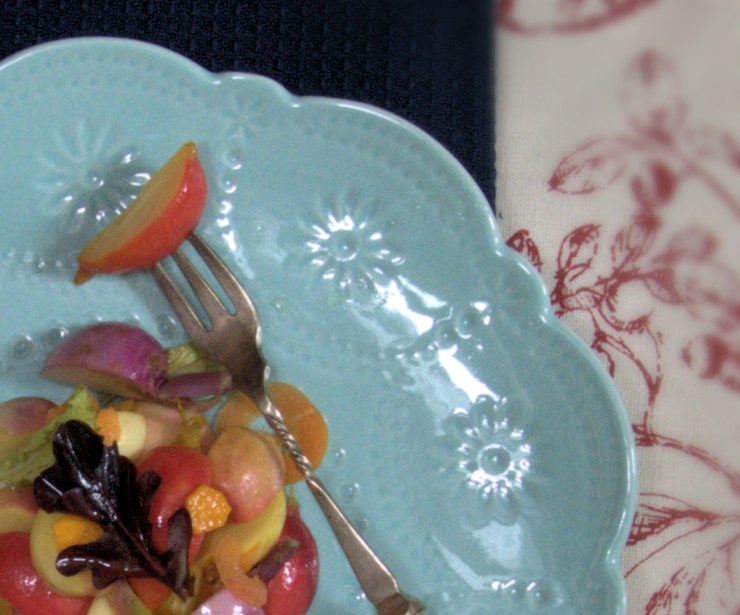
I am a real fan of Ottolenghi’s work, his recipes are delicious, but unfortunately they do contain lots of ingredients high in Fodmaps, so not that great for people with IBS. This weekend however was a bit different – a recipe suitable for the Low Fodmap diet was published in the Guardian magazine. I have tweaked it a little, because I feel that if you are posting a recipe it needs to be referenced to the original source and modified – this is the only time I have, so far. The recipe was for pickled baby turnips – I have added baby turnips and radishes (for colour) and a little Worcestershire sauce into the pickle mix. This mix will last a few days in the fridge but no longer, as thorough sterilizing techniques have not been employed.

Ingredients

Pack of baby turnips (you can use standard turnip around 200g chopped)

5-6 Radishes

1/4 of a carrot spiraled and cut into short lengths

1 stick of fresh turmeric (you can use powdered but this will likely cloud the pickle liquor)

1 teaspoon Worcestershire sauce

2 teaspoons of granulated sugar

120ml White wine or rice vinegar

175ml Water

1 teaspoon of salt

Method

Chop the turnips and radish into quarters, wash thoroughly.

Pour the water, Worcestershire sauce and vinegar into the pan and add the sugar.

Warm and dissolve the sugar and heat to a rolling boil.

Take off the heat and cool. Add the vegetables, turmeric and salt.

Add to a jar and refrigerate.

These vegetables taste great with cold cuts of meat – don’t be too concerned that they contain a little sugar to counteract the sharpness of the vinegar. You will not be eating the pickling liquor, so it is really not a great amount of sugar that you will be adding into your diet.

DSCF2763 -3


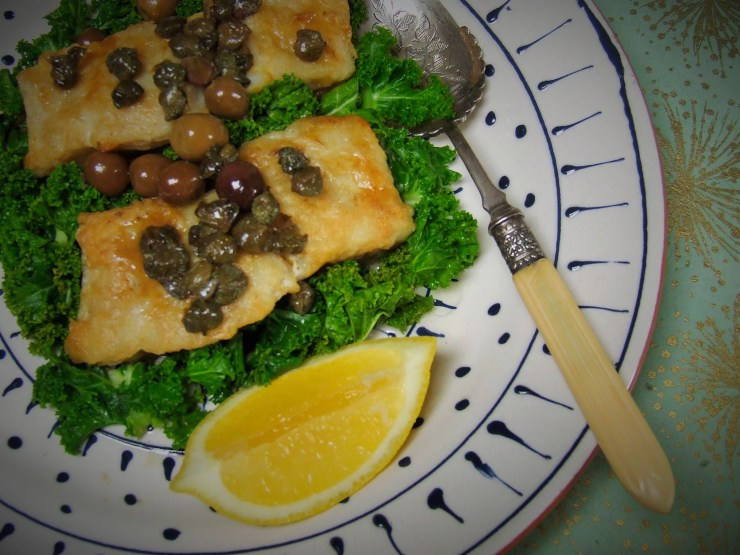
Cod with caper and olive sauce

Flavourings such as capers can be included on the Low Fodmap diet and are especially important when onion and garlic are not available in the range of flavours that can be used to develop dishes. Capers are a delicate taste and one that I certainly did not appreciate when I was younger. I remember very well taking a jar of capers to a party when I was a teenager and not one person who attended the party liked them. But perhaps this was because I had stated to absolutely everyone in my eagerness – taste these, aren’t they really disgusting? Perhaps this preconditioned everyone else that of course capers are MEANT to taste dreadful, perhaps not too surprising that everyone else thought so. However when we are younger we have more taste buds therefore we taste more acutely and this is thought to be as a result of the higher energy needs of children enabling them to prefer and seek out energy dense foods. Bitter and sour notes in food are avoided – we only start to appreciate bitter notes in food when we are in our early twenties. As my taste has developed as I have aged I now really relish capers – they go rather well with fish and are better eaten warm and add a depth of flavour. I noted a very similar effect of olives, and do now love their saltiness and rich flavour. We also can develop aversions to foods and food aversion might be psychologically conditioned – a learned behaviour. If we experience sickness during a time when we are eating we can develop a strong aversion to that food, it is common that people undergoing chemotherapy can develop aversions to food. This can happen if strong negative emotions are developed during eating also, the food a ‘reminder’ of the episode therefore avoided.

Development of taste matures as we age, capers are an acquired taste, but one that will expand the range of dishes available to people following the Low Fodmap diet. Taste is a very complex sense – why not challenge yours and make this recipe?

Ingredients

2 pieces of white fish

1 egg

Gluten free flour for dusting

2 tablespoons of capers

1 Lemon (juice only)

1 tablespoon of oil

1 tablespoon of green olives

Salt and pepper to taste

(serve with steamed kale and new potatoes.)

Method

Mix the egg with a fork and add to a flat plate, add the flour to another flat plate with a small amount of salt and pepper.

Dip the fish fillets into the egg first, then the flour.

Fry in a small amount of oil till the flour is golden and then remove the fish fillets and cook for ten minutes in an oven till cooked through (timings will depend on how thick the fillets are.)

Add capers, olives and the juice of the lemon to the pan and warm through. You should not need to add salt to this sauce as the olives and capers add plenty of saltiness to the dish

Serve the fish and pour over the capers and olives, serve with green vegetables (I used kale) and boiled new potatoes in their skins for added fibre.

Enjoy!

DSCF2703 (3)

Rhubarb cordial

Rhubarb is one of my favourite vegetables – yes you heard right – it is a vegetable, a stalk, but with a glorious colour and taste. It marries very well with ginger. Rhubarb has an anecdotal use as a laxative in herbal and Chinese traditional medicine but paradoxically it is also suitable for a low fodmap diet. The leaves contain high levels of oxalic acid and are toxic so not to be consumed but the stalks are very popular around the Calder valley – perhaps because we are not too far from the rhubarb triangle.

What about the chemistry of rhubarb – well Andy Brunning of Compound Interest has produced the following excellent graphic.

The-Chemistry-of-Rhubarb

I can find no RCTs for the use of rhubarb as a laxative or its use to assist in ameliorating any symptoms in IBS so I can only assume that the anecdotes are just that but the information in the graphic is very interesting, non the less. But what about recipes – to make a rhubarb cordial and puree see the recipe below which makes around a pint of cordial.

400g of rhubarb

1 inch stick of ginger

Adequate water to cover the rhubarb in a pan

Sugar or sweeteners (not polyol based) to individual taste.

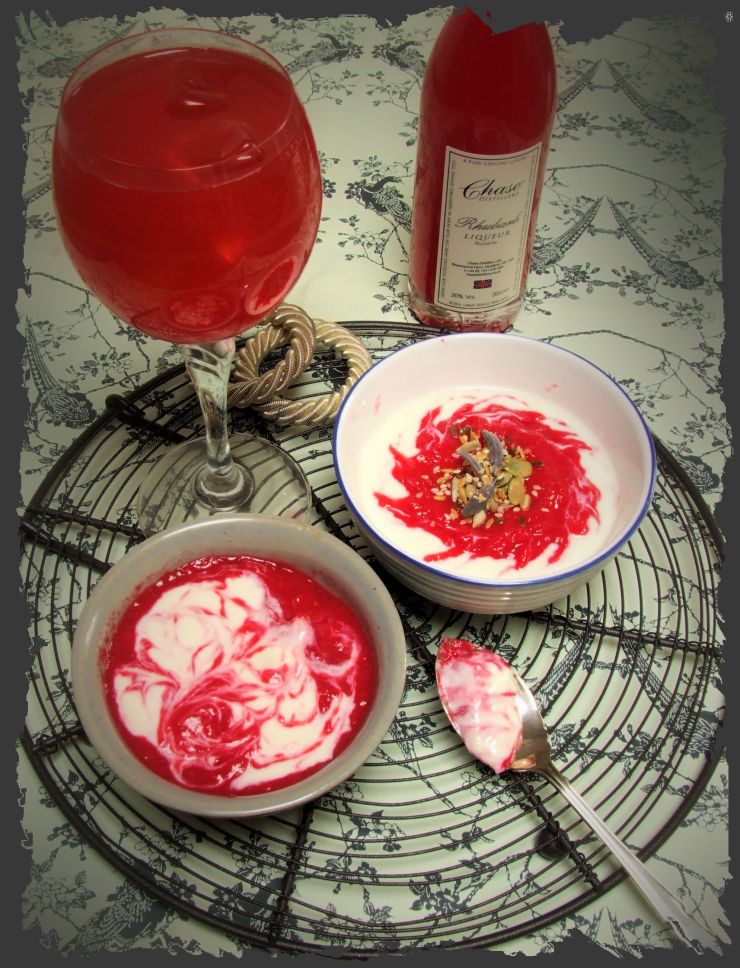
Wash and slice the rhubarb stalks, peel and chop the ginger and add to a small pan. Cover with water and cook till very soft. Add sugar (I used just enough to remove the tart taste.) Pass through a sieve or blend. then cool and add to a bottle – I used the one in the image it once contained rhubarb liqueur. The pureed rhubarb that remains in the sieve can be used to add to lactose free yoghurt as a breakfast fruit puree. Store the cordial in the fridge – you can either drink it cold or warm. Sweeteners will work just as well in the cordial and for those ‘nutrition evangelists’ that decry sweeteners as toxic- we have NO evidence that they are harmful and if they are used to reduce energy consumption for weight management or for diabetes management, then that surely has to be a benefit?

DSCF2686c