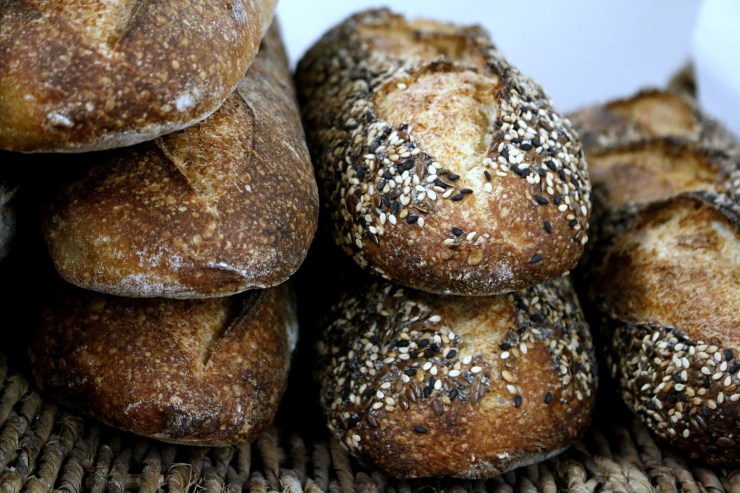
IBS digestive distress – is there a problem with bread?

Many people with IBS state that bread is a real issue in provoking symptoms. Is this true? What is it about bread that is the problem? This post aims to discuss the provocateurs of digestive distress in IBS (Irritable Bowel Syndrome).

Cited as sustenance – for example, the line ‘give us this day our daily bread’ in the Lord’s prayer – having access to bread was life for the poor in the past and bread is a staple food in the United Kingdom. The first piece of toast dripping in butter and a cup of tea after a period of fasting through having surgery is one time I recall, and bread was all the food I desired. How wonderful it tasted. The mouthfeel of gluten is undeniable and can be identified by those who do need to follow gluten, wheat or fructans free diet. I have identified it when I have infrequently made a mistake, as in ‘wow, this gluten-free bread tastes GREAT’ only to later realise my mistake at a cost and in fact it was the standard wheat based bread I had consumed!

The-Chemistry-of-Bread-MakingIn the past bread was made locally and bakers were part of the local community. When industrialisation arrived, bread, needed in large quantities as a staple food, soon was produced in factories, one of the possible reasons was because it was terrible work – bakers had to rise early and work hard to provide the daily loaf for their community. Is industrialisation the cause of bread symptoms? Many blame the Chorleywood bread making process and fast fermentation – but harking back to the bread of the past does not always leave a rosy glow. Adulterating food with cheap ingredients was commonplace in Victorian history, alum (aluminium salt) was added to the dough to improve it’s colour and was thought to be one cause of Rickets, by reducing the availability of phosphorus, leading to decreasing its absorption from the diet.

bread-2885965_1920

So, let’s take a look at bread more closely. There are possibly a few protagonists for digestive discomfort after eating bread, and the reason may be different for individuals – we will now discuss some of those possible causes:

Resistant starch content

‘Resistant’ starch does what its name suggests – it resists digestion and is a component of fibre.  Produced by heating/cooling treatment, these resistant carbohydrates are based on wheat (and other) grains. Now for a little bit of chemistry, not too complicated, I promise. Starch is a crystalline polymer (think of a chain of a necklace containing many small beads, each small bead representing a sugar molecule, the necklace representing a polymer chain – a starch). Chains of the starch molecules closely line up on cooling, forming crystals within the bread matrix, links (imagine two or more necklace strings joined together) or bridges between the starch chains makes the structure a tightly packed area, where our digestive enzymes (amylases) can’t penetrate. The speed and repetition in cooling and heating will affect the amount of the resistance formed. Exposed to up to 20g of resistant starch per day from our diet some of the bacteria (amylolytic) in our large intestine may be able to ferment these crystalline resistant areas more successfully . IBS has alterations in the gut microbes, meaning that gut fermentation is a possible consequence and symptoms likely, in those people with IBS.

Research has shown that only certain types of bacteria are capable of digesting resistant starch of the form Bifidobacterium spp. and Clostridium butyricum but these types of study are limited. Consumption of these starches enriches the gut microbial populations with more of the microbes capable of breaking down the starch. We know that people with IBS have different populations of gut bacteria than the general public – a changing diet to improve symptoms is a possible cause of this difference.

Similar mechanism to the mechanism that causes issues from resistant starch – in other words poorly absorbed starch components causes these starches to be fermented in the large bowel resulting in symptoms when the colon is overly sensitive in IBS.
bread-2920173_1920

Gluten

Gluten is a different component, and it is a protein, not a starch. Different mechanisms occur with proteins. During bread mixing initially, the gluten is softened by adding water to the flour, then kneading the bread with the salt that is added strengthens the gluten bonds gives a stretchy mixture, which traps air giving a better rise. Proteins tend to solidify when heated during baking, producing the tight structure or links between the protein molecules. Some research has found by blinding during trials that it does appear to be the fructans in wheat that result in the majority of problems for people with IBS. However is it still possible for individuals to have an issue with gluten? It does make you wonder, for those people who can tolerate all other fodmaps except wheat, whether this is, in fact, a non-coeliac gluten sensitivity. In my experience, most people following a low fodmap diet will go utterly gluten-free despite the fact that small amounts of wheat are tolerated well. Or perhaps the problem is a non-IgE wheat allergic reaction, or maybe natural toxins developed by the wheat is the problem…
wheat-175960_1920

Wheat ATIs

Wheat amylase-trypsin inhibitors are proteins that are found naturally in wheat and are resistant to digestion and were developed by the plant to act as a defence against parasites and insects. They are activators of innate immunity and are suggested to lead to digestive symptoms by activating an immune reaction in the gut mucosa resulting in low levels of inflammation. Bioactivity of these proteins was found to be lower in spelt flour – often stated to be tolerated better for digestion. Is it possible that these ATI’s or gluten activate an immune response that then sensitises the colon leading to reactions to fodmaps?

The processing of wheat to produce bread, however, reduced ATI’s bioactivity up to 30-50%. But some people state bread is explicitly a problem so we should look at the manufacturing process specifically.

Chorleywood bread making process – the case for fructans?

All the above are commonly found in all wheat-based food, but bread is processed, what effects does this have? The Chorleywood process was developed in 1961 and improves production time reducing costs of bread production. This production method can also use a lower protein content flour, which was the type of flour available in the UK, to reduce costs of having to import flour with higher protein. The protein content in UK wheat has increased since this development, but this process is still used and widely disparaged as a cause of digestive distress.

bread-2559313_1920

One fascinating study looked at the differences in symptoms between the general population and those with IBS and whether a longer fermentation would lead to lower gut fermentation and gas (1). Now, this study was tiny and was completed in vitro (it was not a controlled trial in human subjects, although human stool from volunteers was used) so, the conclusions would need further study. The Chorleywood process produced more gas more quickly, after simulated digestion. The more prolonged fermentation process also led to a higher level of bifidobacteria in the stool, the levels of these microbes are reduced in IBS. Bifidobacteria also produce less fermentation in the gut, suggesting increasing numbers compared with others may help reduce symptoms.

bread-322697_1920

So, the combination of less gas delivered more slowly and increasing commensal bacteria that produce less gas anyway, was suggested to equal better tolerance, which is perhaps a leap of faith to suggest that this reduction will reduce symptoms without it being tested in humans. Voila, testing in humans has been done (2)! A more extensive study in humans also looked at Chorleywood process compared with sourdough and showed that a more extended fermentation leads to the breakdown of ATI components and reduced fodmap levels BUT NO DIFFERENCE IN SYMPTOMS OF IBS. Both studies used constipated volunteers, so no difference there, the symptom production in the second study was reported to possibly be a nocebo effect – expecting symptoms due to previous experience. Which is possible, six slices per day is a considerable amount to consume for people who have an intolerance to wheat. Diet was excluded as a confounding factor but what is not clear is how the bread was eaten and whether this was different in the two groups – toasted, fresh, or frozen, perhaps taking us back to resistant starches? Also, about a third of people with constipation based IBS will have pelvic floor dyssynergia, which in theory could elicit symptoms that might not necessarily be helped by changes in the diet, if symptoms are severe. Both these studies were pilot studies and need further investigation on a broader population of people with IBS.

Yeast

For many people with IBS yeast is anecdotally reported to result in symptoms. We do not have any evidence that this is a problem and this has been dismissed by the medical establishment as a cause. No evidence means precisely that, we don’t know, so would it be an issue? Saccharomyces cerevisiae, a yeast, has been studied in improving IBS symptoms, so we have another situation of modulating the gut microbiota to improve symptoms. While we have absolutely no evidence that a low yeast diet is useful, in IBS treatment, it might lead to altering the microbiome and should not be advised, but this is an area indeed worthy of further study.

I think in conclusion, symptom inducement in IBS with bread is complicated and needs further study – with this detail of research required for one food item – is it any wonder that we have not got a cure for this medical condition?

  1. Adele Costabile, Sara Santarelli, Sandrine P. Claus, Jeremy Sanderson, Barry N. Hudspith, Jonathan Brostoff Alison Lovegrove, P R. Shewry, Hannah E. Jones, Andrew M. Whitley, Glenn R. Gibson (2014) Effect of Breadmaking Process on In Vitro Gut Microbiota Parameters in Irritable Bowel Syndrome PLOS one Volume 9 Issue 10 e111225
  2. Laatikainen R, Koskenpato J, Hongisto SM, Loponen J, Poussa T, Huang X, Sontag-Strohm T, Salmenkari H, Korpela R (2017) Pilot Study: Comparison of Sourdough Wheat Bread and Yeast-Fermented Wheat Bread in Individuals with Wheat Sensitivity and Irritable Bowel Syndrome. Nutrients. 2017 Nov 4;9(11). pii: E1215. doi: 10.3390/nu9111215.

Is ginger useful for treating IBS?

Chemistry-of-Ginger-1024x724
http://www.compoundchem.com/2014/11/27/ginger/

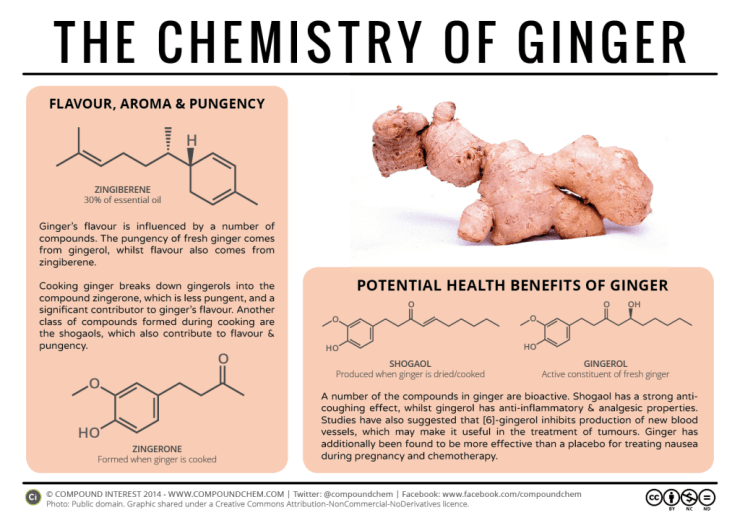
The next ingredient to be reviewed is ginger. Ginger has many studies into its use to treat vomiting in pregnancy and to treat nausea during treatments such as chemotherapy or reducing sickness after surgery. Ginger has a long history of being used as a natural treatment for nausea, so one might expect that it could be used to reduce some of the symptoms of IBS. It is one of the most common herbal treatments used by patients to attempt to ameliorate symptoms of IBS (1). The action of ginger on the digestive tract is suggested to be an increase in prokinetic action of the tract (increasing movement or contractions without disrupting the rhythm) and it has also been suggested to be useful in pain reduction. The active ingredients in ginger can be seen in the diagram above and a placebo-controlled RCT parallel study in IBS (2) used the pharmaceutical grade ginger containing 2.29 mg/g of gingerols and 6-shogaols.  Raw and cooked ginger contain different chemical compounds and may have different modes of action on the digestive tract.

tea-599227_1920

The study had a good choice of placebo (brown sugar) tolerated by most patients with IBS. Study numbers were small – a larger trial with at least 100 patients per group would give a chance of better results. Larger doses appeared to give poorer results from this study, but the numbers in each group were small. We are aware that IBS is a very heterogeneic condition (wide variation in symptoms between people) and studying those people reporting more upper GI symptoms of IBS such as nausea and reflux plus constipation might improve results if the mode of action is to increase stomach emptying and increase digestive tract motility. The study, unfortunately, did not show that ginger was effective compared with placebo so we have therefore no evidence that ginger is an effective treatment for IBS.

ginger-1432262_1920

Does it cause harm?

Side effects in the study chosen were greater in the placebo group, the relevance for this is unknown – IBS is a challenging condition to treat with relapsing-remitting symptoms – no significance can be seen in regard to side effects as no statistics were applied to check whether this was significant in the study reviewed. Ginger is thought to be a safe treatment – ginger is also suitable to be used for the Low fodmap diet.  So a great tasting low fodmap ingredient – but don’t expect it will stop your IBS symptoms.

Just the ticket for a recipe then!


This is a very easy recipe to prepare and these biscuits can be stored in an airtight tin. They may go soft if not stored correctly.

Ingredients

325g Gluten Free self-raising Mix (I used Doves Farm)

1 tsp. xanthan gum

a beaten egg

75g muscovado sugar

75g golden syrup

75g butter

2 tsp. ground ginger

Method

Melt the butter, sugar and golden syrup in a pan then cool till the mix is only just warm

Beat the egg

Add the dry ingredients to a bowl and ensure the xanthan gum is mixed into the flour.

Add the wet ingredients to the dry and mix well till the mixture forms a dough.

Work this well.

Roll out the pastry dough into a thin sheet on grease-proof paper or a Teflon sheet and cut out the biscuits.

Add the biscuits to a greased baking tray and cook till golden brown in a moderate temperature oven – gas mark 4 or 180 degrees C

Makes around 30 biscuits (depending on what size cutter is used.)

1.Van Tilburg MA, Palsson OS, Levy RL, et al. (2008) Complementary and alternative medicine use and cost in functional bowel disorders: a six month prospective study in a large HMO. BMC Complement Altern Med. 2008; 8:46.

2. VAN TILBURG MA, PALSSON O S, RINGEL Y and WHITEHEAD WE (2014) Is ginger effective for the treatment of Irritable Bowel Syndrome? A double blind randomized controlled pilot trial Complement Ther Med. 22(1): 17–20. doi:10.1016/j.ctim.2013.12.015


Chicken goujons – low fodmap

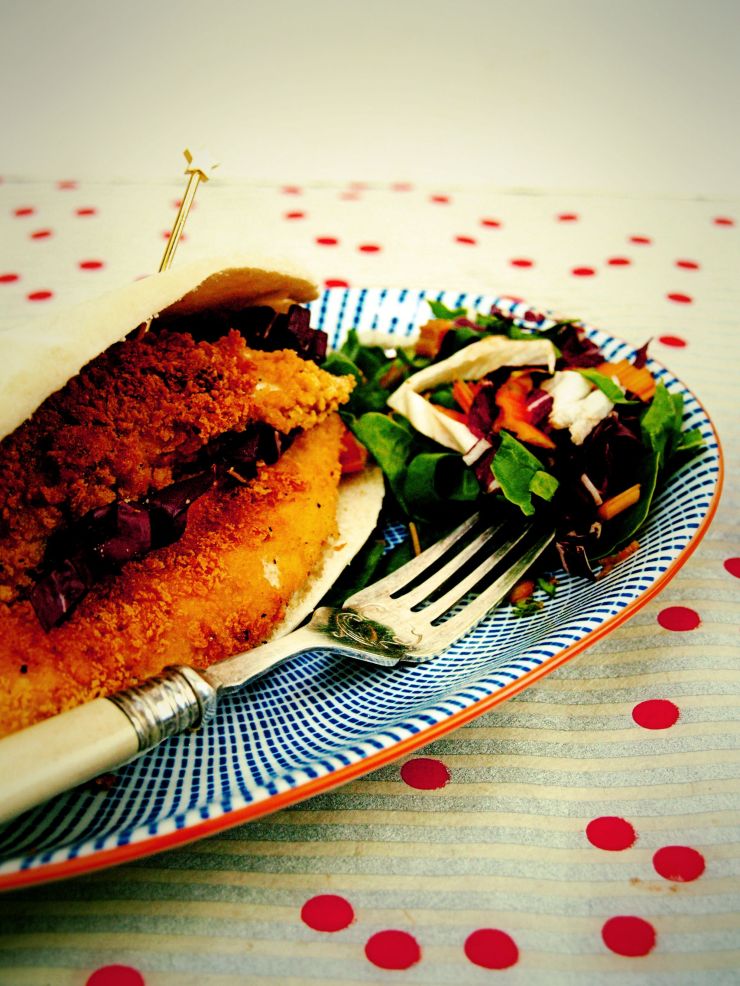
What are goujons? They are small chicken fillets that are coated in breadcrumbs. They are fairly easy to make using gluten free breadcrumbs but it is important to use the correct ones for the low fodmap diet. Clearspring rice crumbs are probably the best option. Some gluten free breadcrumbs use a blend including gram flour – this is chickpea flour and is a source of GOS, it might be OK for some people with IBS because of the small portions of crumbs used to coat ingredients – but pure rice crumbs are better and they are wholegrain too – bonus for those with constipation! Hale and Hearty breadcrumbs contain inulin so this should not be used for a low fodmap diet. You can make your own breadcrumbs with gluten free bread if you wish, again choosing wholegrain bread to give the dish added fibre – a way of using up stale gluten free bread and fibre is great for gut health! For health this is a recipe to have occasionally as it is a fried dish – but suitable for those who are underweight as frying adds additional calories to the dish. Mayonnaise is another addition but take care with ones that say low fat mayo as these can have increased amount of skimmed milk powder – a source of lactose. So it has to be full fat and a small portion! The dish includes making your own garlic infused oil at the start of the process – follow this part of the recipe closely, slicing the garlic makes it easier to remove it all before frying the goujons, so you remove all the fructans included in the clove. Don’t be tempted to use a garlic crusher as you cannot then remove all the pieces. I have added the goujons to a gluten free pitta bread with salad leaves.

OLYMPUS DIGITAL CAMERA

Ingredients

Gluten free four (100g)

1 egg

Gluten Free Breadcrumbs (1/2 pack)

seasoning

1 pack of chicken mini breast fillets

Rapeseed oil – enough for frying

1 pack of gluten free pitta breads

Salad leaves of your choice (I used chard and radicchio but lettuce leaves are another option.)

1 clove of garlic.

OLYMPUS DIGITAL CAMERA

Method

Wash Hands.

Wash and chop the salad leaves and prepare the pitta bread and put these on a plate away from the work surface you are using to prepare the goujons. If you have work surfaces on either side of the oven this is good, you can use one side for raw chicken preparation and one for cooked. Do this before handling the raw chicken fillets.

Open the packet of chicken fillets and use immediately – please do not wash them, they don’t need it, plus washing raw chicken is a food poisoning hazard – it can easily spread bacteria around the kitchen.

Place the flour and seasoning on a plate, crack the egg and mix well with a fork on a plate and breadcrumbs on separate plates. Dip the chicken fillets into the flour first, then egg and then the breadcrumbs – coat each fillet well and don’t forget the edges.

When coated, pile them on a dish for frying later.

Clean work surfaces down and wash your hands again after handling raw chicken.

Slice the garlic clove (this is better than crushing as it makes it easier to remove the pieces before frying the chicken.)

Add oil to the pan and fry the clove quickly then remove all the pieces of garlic from the pan.

Add the chicken goujons and fry till golden. Don’t overload the pan as this will lead to steaming instead of frying and soggy breadcrumbs.

Add 2 slices of goujons to each pitta – makes 5.

Serve with green salad.

Italian meatballs with Fodmapped sauce – a review.

I have purchased some Fodmapped sauces and soups to try, so I thought I would give you the low down. I bought them through the IBS Network website so that they would benefit from the purchase – were you aware that if you buy a starter pack you get membership covered for 1 year? The sauce was really tasty and gave an added advantage to tomato pasta sauces as you could really pick out the flavour of the aubergine – one of my favourite vegetables. Shortlisted for the Free From Food Awards I would say they are a great contender and tremendous to see a low fodmap product being reviewed. Any drawbacks? Yes, the price – the sauces are expensive compared to other sauces but they are onion and garlic free, which most ready made sauces (except plain passata and some pure tomato based pasta sauces) are not. Sometimes following the low fodmap diet can mean dry food unless you make your own stocks and sauces, you could argue that this needs to be done, but not everyone has the time. You could make a very simple roasted vegetable sauce yourself, however if time pushed these products are certainly a consideration. Putting additional pressures on busy lifestyles by making everything from scratch is sometimes unhelpful to symptoms. The packet gave a serving for 2 people. I have made an Italian dish, a comforting winter recipe, and in the process increased the portion size to 4!

OLYMPUS DIGITAL CAMERA

Ingredients

500g lean minced beef

1 egg

100g gluten free breadcrumbs

10g of basil leaves

10g oregano

1 packet of Fodmap Easy roasted vegetable pasta sauce

200g of dry polenta

60g parmesan

Seasoning

OLYMPUS DIGITAL CAMERA

Method

Place the mince in a bowl and add chopped herbs, egg and breadcrumbs and some seasoning, mix well. Roll into even sized meatballs – I made about 14 from the full mix. Set them aside.

Fry the meatballs in a dry non stick frying pan till browned.

Add the meatballs to a casserole dish with the sauce mix and 300mls of water. Place in an oven at gas mark 5 or 190 degrees C. Cook for 1 hour.

Using the directions on the packet for 200g of polenta add water to a pan and bring to the boil and pour in the polenta whilst stirring. Add extra liquid if needed to form a thick sauce, add parmesan (retain a small amount for serving) and seasoning (not much salt needed here!) to taste.

Serve

Serves 4 for a main meal.

Turmeric – medical jack-of-all trades, or just a great curry ingredient?

Chemistry-of-Turmeric
http://www.compoundchem.com/

Turmeric is a wonderful ingredient to add to a curry – it has also been exalted as a wonder food with lots of great benefits for health. Some of the more pervasive anecdotes with regards to turmerics ‘heath benefits’ are antioxidant, anti-inflammatory and anti-cancer effects and benefits for digestive health and IBS.

I have always had a bit of a problem with the anti-oxidant hypothesis in health, as an ex-polymer chemist, I was very experienced in protecting polymer products such as paints and adhesives from the effects of oxidation and environmental free radical degradation. This was not always easy to achieve – even the in simplest of formulations.

These free radical reactions do occur in our bodies – at a base level we are a very complex mix of chemical reactions and our bodies contain polymers. Turmeric is a polyphenol, and polyphenols do show anti-oxidant properties. With anti-oxidant protection, as a chemical reaction, one factor needs to be fulfilled – the anti-oxidant has to be situated at the site where the free radical reactions occur to be able to mop them up. Therefore any research involving turmeric in Petri dishes to observe it’s anti-oxidant (and anti-inflammatory or anti-cancer effects), or by feeding animals unsustainably large amounts may be very interesting, but far from proving it to be an effective anti-oxidant in our body. There is a problem with turmeric – it is very poorly absorbed in the digestive tract, it has poor solubility – therefore it would be difficult to transport it to the site of reaction. If the anti-oxidant cannot physically be transported to the site of free radical reaction, then it is clearly not possible for it to react! Until this problem is solved it is perhaps an entirely useless medical treatment, and of course, it needs to be studied in humans as a treatment, with randomized controlled trials and ultimately a systematic review. These problems can possibly be solved – by utilizing chemistry.

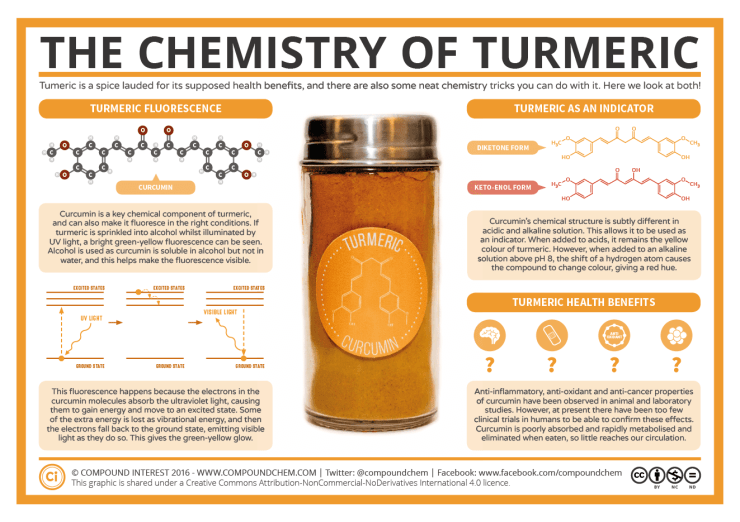
But…but…turmeric is ‘natural’, is the response, so therefore it is surely better for us than all those ‘chemicals’ in medicines? If you are going to use the anti-oxidant theory for the promotion of ‘alternative’ natural care, then you are buying into chemistry by using this as your argument. Spoiler alert – curcumin, the active compound in turmeric, is a chemical – see the infographic above. If it was effective it would be called a medicine, which may be possible in the future with lot’s more health research – but certainly, we are a very long way from this now. One research paper proposed turmeric as a jack-of-all-trades, in other words ‘useful’ for numerous health areas, which concomitantly also means master of none, an insightful figure of speech here, perhaps.

For digestive complaints, turmeric has a long history of use in Ayurvedic medicine as a compound which can be useful for indigestion, but with little strong evidence for effective use in either IBS or indigestion – just tantalizing pre-clinical trials and uncontrolled studies.

Past history has taught us that medicines are often derived from naturally occurring pharmacological plants, so research of turmeric should certainly continue – but we really shouldn’t be tempted to jump the gun with promoting turmerics alleged health effects, this is disingenuous.

So does turmeric have any benefits at all? Of course! Turmeric is low fodmap as a spice and can be used to flavour low fodmap recipes for people who have irritable bowel syndrome and imparts these foods with a very vibrant colour. If you are wanting a January ‘health kick’ from turmeric, or use it to ‘cure’ your IBS, then think again, but enjoying a great, warming, vibrant low fodmap meal made from turmeric, either low fodmap curry, or the low fodmap soup recipe below, in the depth of winter, is surely a sublime use of this wonderful spice?

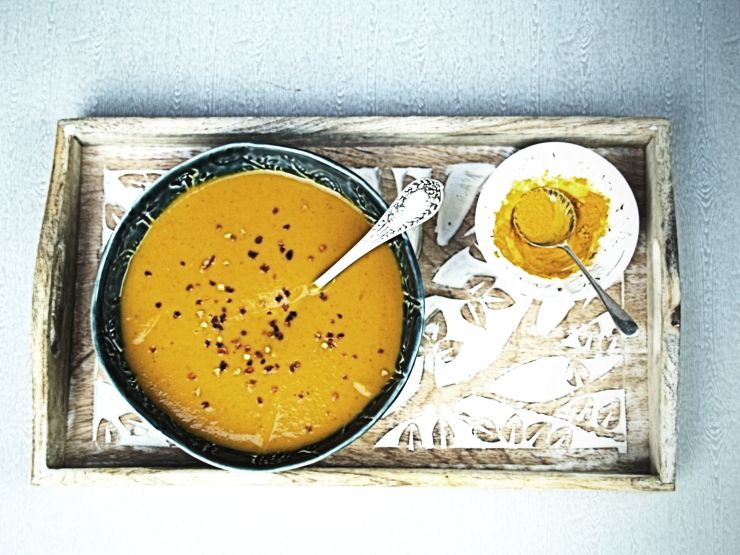
Carrot, ginger and turmeric soup

Ingredients

500g carrots

1 tablespoon of oil

1 teaspoon of Moroccan spice (Fodify)

1 teaspoon of ginger

2 teaspoons of turmeric

1500mls water

seasoning to taste

Method

Peel and chop the carrots

Fry the spices in oil to release the flavour

Add the water and carrots to the spices

Cook till the carrots are soft, then blend with a hand blender

Season

Serves 3-4

https://www.nhs.uk/news/cancer/curry-spice-kills-cancer-cells/

https://www.nhs.uk/news/food-and-diet/spice-for-mice/

https://www.nhs.uk/news/food-and-diet/could-curry-spice-boost-brain-cell-repair/

https://link.springer.com/article/10.1007%2Fs11894-016-0494-0

Celebration trifle – low fodmap

It’s New Years eve and if you want a celebration dessert that can help people following a low fodmap diet but is also tasty for all your New Years Day party guests, this is ideal – it is made with lactose free mascarpone and lactose free creme fraiche (you can buy these at Tesco) plus gluten free sponge. Whilst this trifle is low fodmap it is not low in fat – if you have issues with foods high in fat resulting in symptoms take care – a small portion only is probably best!

OLYMPUS DIGITAL CAMERA

Ingredients

Sponge

100g gluten free self raising flour

2 eggs

100g margarine

100g castor sugar

Rhubarb

250g rhubarb

2 tablespoons of maple syrup

1/2 teaspoon of orange oil

1 tablespoon of granulated sugar

100ml of water

Topping

50g chopped pecan nuts

Cream

200g lactose free mascarpone

100g of lactose free creme fraiche

1 tablespoon of icing sugar

OLYMPUS DIGITAL CAMERA

Method

Sponge

Make the sponge – this is better prepared the day before to allow it to stale a little

Add the margarine and castor sugar to a bowl and using a hand mixer mix until light and creamy

Add one egg and beat till incorporated into the mix – if it curdles or separates just add a little of the flour to the mix.

Repeat with the other egg.

Add the flour and mix it in slowly with a metal spoon.

Pour into a 7 inch lined cake tin and put in an oven to cook at gas mark 5 190 degrees C for 45 minutes – or until a metal skewer inserted into the cake comes out clean.

Cool and slice length ways into two circles

Rhubarb

Wash slice and cook the rhubarb with the water, maple syrup and sugar and orange oil until soft – cool and save the cooking liquor. I like my rhubarb quite sharp to counteract the sweetness – add sugar or syrup to your preference here.

Cream

Mix the mascarpone with the creme fraiche and icing sugar – keep in the fridge

and build….

Build the trifle, one layer of rhubarb, then sponge – add some of the rhubarb cooking liquor to the sponge, then mascarpone – repeat until all the mixes are used up ending with a layer of mascarpone. Add chopped nuts to the top of the cake to decorate.

Serves 8

🎇🎊 Wishing all my followers a Happy New Year!🎊🎇