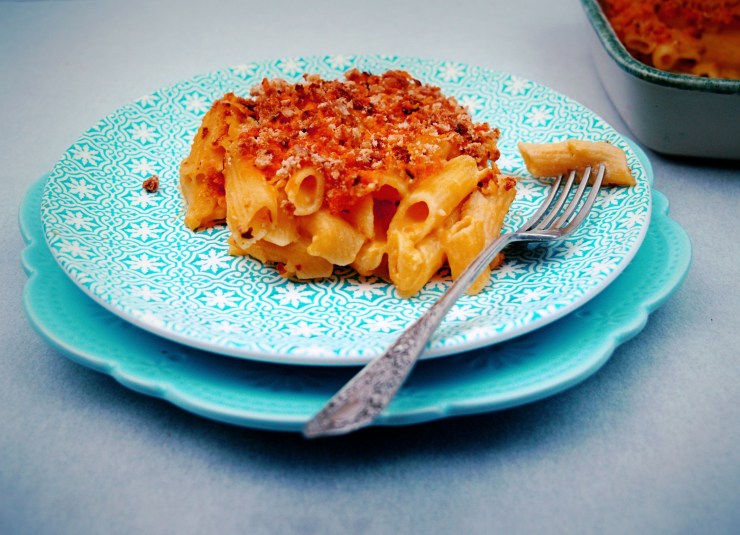
Mac and cheese – low fodmap

OK, so it really has an Autumnal feel today perhaps a comforting meal is required and macaroni and cheese is definitely one to make. This is a low fodmap recipe made with lactose free milk and cheese suitable for a low fodmap diet – please note that the fat content is high due to the cheese used. If you find that meals higher in fat cause symptoms it probably isn’t worth trying this recipe, although a small portion might be suitable. This is a great recipe if you are underweight and want to increase the calories in your diet. Unfortunately I didn’t have any macaroni so strictly speaking this isn’t mac and cheese but penne and cheese – you can get gluten free macaroni by ordering it on the internet but most supermarkets I use don’t stock it, which is a shame!

Ingredients

300g of gluten free pasta

560ml of lactose free whole milk

28g butter

28g cornflour

70g of cheddar cheese (I used an orange cheese for more effect)

20g parmesan

1 teaspoon mustard powder

2 slices of gluten free bread

seasoning

Extra grated cheese for topping

Method

Melt the butter in a pan and add the flour, mix well till the flour is incorporated into the butter

Start to add the milk slowly whilst keeping stirring

Add all the milk and warm the sauce till mixed

Add both cheeses to the sauce after grating

Add the mustard powder

Cook the sauce till thickened season if required (do taste the sauce first as the cheese does add flavour)

Cool whilst stirring to avoid a skin forming

Cook the pasta in water till al dente

Add the cheese sauce to the pasta and add to an oven proof dish

Top with gluten free crumbs made from the bread and the extra grated cheese

Bake in an oven for 20 minutes at gas mark 5 or 190 degrees C.

Serves 4 with a green salad

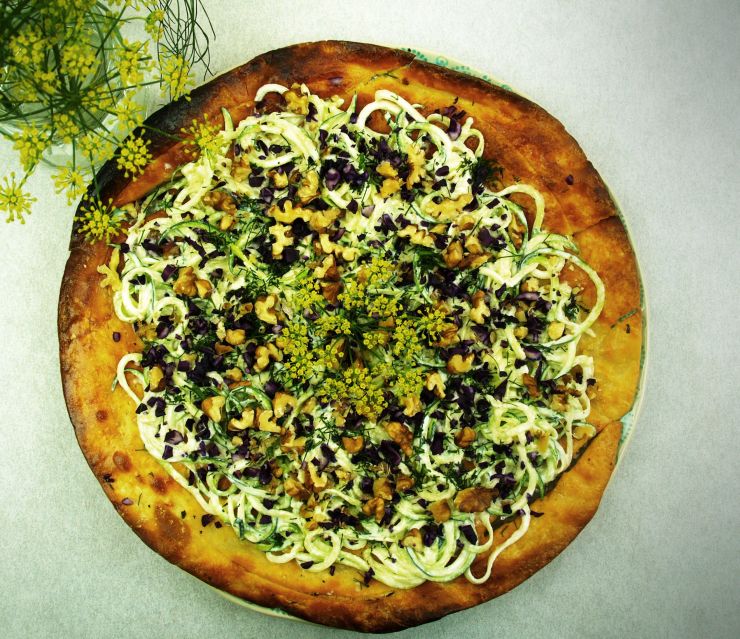
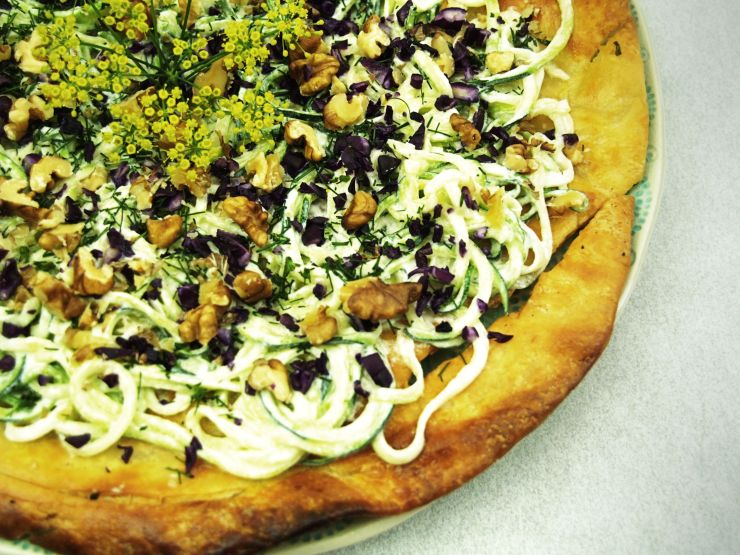
Puff pastry topped with creamy courgette and walnut salad – Low Fodmap

Autumn days are really setting in now and we are entering my favourite time of year with lots of squashes and root vegetables to roast – great for sensitive digestive tracts. As we are entering the cooler days of the year I have decided to try a different approach to a salad – this might be a little unconventional but it was filling, tasty and a little more substantial than the usual salad fare. I have used very pretty fennel flowers as decoration, which strictly speaking are not fodmap tested – but you can get away with a small amount of fennel bulb (49g) a few flowers sprinkled on a salad shouldn’t be too much of a problem. We are lucky in Todmorden, we have incredible edible and lot’s of fennel in flower beds for anyone to harvest.

You can used bought gluten free pastry – but do be aware that some are based on chickpea or pulse flour, which is not suitable for a low fodmap diet. Tips for using gluten free pastry is to roll it between cling film to prevent sticking.

OLYMPUS DIGITAL CAMERA

Ingredients

1 packet of gluten free pastry mix

2 courgettes

4 tablespoons of lactose free mascarpone cheese

100g red cabbage

2 handfuls of walnuts

1 egg

seasoning

Fennel fronds (2-3 should be adequate.)

1-2 fennel flower heads (not an essential ingredient)

OLYMPUS DIGITAL CAMERA

Method

Roll out the pastry

Beat the egg with a fork and brush the pastry with beaten egg – this will improve the colour.

Cook in the oven using the manufacturers directions – mine is a little dark at one end! It might be useful to turn it whilst cooking to get an even bake.

Cool.

Wash and spiralize the courgettes – (you can also buy them pre-prepared at many supermarket outlets to save a additional step in the method.) Mix in the lactose free mascarpone and season.

Finely chop the red cabbage, fennel fronds and roughly chop the walnuts and add all the ingredients to the pastry base – serve with mixed green salad leaves.

Decorate with fennel flowers (not an essential item)

Serves 4-6

Lactose free mascarpone was purchased from Tesco and the ready roll puff pastry was made by Genius (gluten free and dairy free.)

Chive salad – for low fodmapers missing onion.

This salad has onion flavour as it’s base and uses chives to achieve this. It can be made without the chive flowers but if you can get them they do make a really pretty addition to this dish. I am really lucky where I live as we have the Incredible Edible scheme. This is a organisation that has planted lots of edible herbs and fruit trees around the town that are available for all residents and visitors to sample for free – as long as you know what you are looking for and what flowers are edible and can be used. I have gathered the chive flowers (the light purple ones – see image below), fennel leaves and borage flowers (the deep blue ones that I have used for garnish.) So for me this recipe was reasonable in cost because the herbs were free. There was also a pleasure gained in going for a walk and gathering my own food.

800px-Allium_schoenoprasum_in_NH_01
Attribution ShareAlike 3.0

You can modify this recipe to make it more simple by just using chive stems and any green/red salad leaves to base the salad on, plus the borage flowers are not a necessary ingredient for the integrity of the dish. I produced this recipe without dressing as I felt the chives added plenty of strong flavour but you can add some if you wish- do check the label for fodmap ingredients. If you struggle with resistant starches then serve the rice whilst it is still slightly warm.

OLYMPUS DIGITAL CAMERA

Ingredients

75g of cooked wholegrain and red rice

4 chive flower heads and stems

4 chard leaves and stems

1/2 packet of low lactose mozzarella

2 sprigs of fennel leaves

seasoning

OLYMPUS DIGITAL CAMERA

Method

Chop the chive stems and chard stems into small pieces

Rip the chard leaves into small pieces

If needed cook the rice by covering in cold water and bringing it to the boil – season then cool and drain.

If using the chive flowers cut the individual flowers from the flower head

Rip the low lactose mozzarella into bite size pieces

Pull the fennel leaves into small pieces

Combine everything and serve

Serves one – enjoy!


Elderflower Cordial

On a walk this afternoon I gathered a handful of elderflowers. This recipe is based on a recipe from the book Hedgerow Cookbook. The elder is a wonderful bush although it generally doesn’t look that way when you find one. It is generally a wizened looking gnarled tree with moss growing on it but it produces the most wonderful flowers and fruit – the only decision to be made is whether to pick the flowers or save them till the berries arrive later. Or you could pick a smaller amount and save some berries for later in the year, if you can get to them before the birds do. Making this squash fills the whole house with the odour of elderberry blossom and is a wonderful treat – don’t forget this is concentrated squash and yes it does contain some sugar – but this can be drunk occasionally as a treat.


Ingredients

12 elderflower heads

18g citric acid

1 unwaxed lemon

400g granulated sugar

3/4 pint water


Method

Wash the flower heads under running water and add to a bowl with lemon peel and sliced lemon.

Add the water to a pan and then the citric acid and granulated sugar.

Heat the water till the sugar and citric acid has dissolved

Pour the liquid over the flowers and lemon and leave overnight to steep.

Strain off the liquid and put it into bottles.

This will keep a few days in the fridge.

2013 in review

IMG_1634In the great tradition leading up to New Year we look back at what has gone before and think about the times ahead. Last year I published the WordPress stats of my blog and I decided to repeat the process this year. I must admit that I am pleased that my blog continues to grow in popularity evidenced by the number of views. I do often wonder what people think of my posts – one of the most popular is a post I initially wrote in April 2012 it has had over 2000 views and no comments – I assume this is because it does not contain what people expect? In other words I wonder if people expect me to suggest that a quick fix pill taken to help your body digest food is effective – unfortunately life is often not that easy and for functional bowel symptoms, it is not as simple as popping a pancreatic digestive enzyme pill. If this was the case we would have cured IBS some time ago and doctors would prescribe these as treatment on a regular basis – they don’t. I do wonder if people are disappointed with this advice and choose not to comment, although if this was the case one would think that a few negative comments would be in order 🙂 . Which would be a little better than the lack of interest it has generated – blogging tumbleweed! Perhaps I do need to get involved and comment more on other people’s sites, is this the answer, I wonder?

The three most popular posts are:

https://clinicalalimentary.wordpress.com/2012/04/18/surely-these-digestive-enzymes-ive-found-can-help-or-are-they-money-down-the-toilet/

https://clinicalalimentary.wordpress.com/2012/09/30/low-fodmap-on-a-budget-how-to-make-the-diet-more-affordable/

https://clinicalalimentary.wordpress.com/2012/03/27/lofflex-recipes/

If you want to see what others are interested in please check the link below!

The WordPress.com stats helper monkeys prepared a 2013 annual report for this blog.

Here’s an excerpt:

The concert hall at the Sydney Opera House holds 2,700 people. This blog was viewed about 13,000 times in 2013. If it were a concert at Sydney Opera House, it would take about 5 sold-out performances for that many people to see it.

Click here to see the complete report.