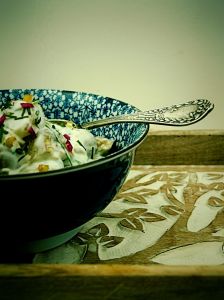
Chive salad – for low fodmapers missing onion.

This salad has onion flavour as it’s base and uses chives to achieve this. It can be made without the chive flowers but if you can get them they do make a really pretty addition to this dish. I am really lucky where I live as we have the Incredible Edible scheme. This is a organisation that has planted lots of edible herbs and fruit trees around the town that are available for all residents and visitors to sample for free – as long as you know what you are looking for and what flowers are edible and can be used. I have gathered the chive flowers (the light purple ones – see image below), fennel leaves and borage flowers (the deep blue ones that I have used for garnish.) So for me this recipe was reasonable in cost because the herbs were free. There was also a pleasure gained in going for a walk and gathering my own food.

800px-Allium_schoenoprasum_in_NH_01
Attribution ShareAlike 3.0

You can modify this recipe to make it more simple by just using chive stems and any green/red salad leaves to base the salad on, plus the borage flowers are not a necessary ingredient for the integrity of the dish. I produced this recipe without dressing as I felt the chives added plenty of strong flavour but you can add some if you wish- do check the label for fodmap ingredients. If you struggle with resistant starches then serve the rice whilst it is still slightly warm.

OLYMPUS DIGITAL CAMERA

Ingredients

75g of cooked wholegrain and red rice

4 chive flower heads and stems

4 chard leaves and stems

1/2 packet of low lactose mozzarella

2 sprigs of fennel leaves

seasoning

OLYMPUS DIGITAL CAMERA

Method

Chop the chive stems and chard stems into small pieces

Rip the chard leaves into small pieces

If needed cook the rice by covering in cold water and bringing it to the boil – season then cool and drain.

If using the chive flowers cut the individual flowers from the flower head

Rip the low lactose mozzarella into bite size pieces

Pull the fennel leaves into small pieces

Combine everything and serve

Serves one – enjoy!


Is juicing or liquid meal replacements good for IBS?

There is a plethora of information on the internet on how to improve IBS or even how to ‘cure’ IBS (if you see the word ‘cure’ you should be very skeptical – we have no cure unfortunately at this moment in time.) Despite the fact that we have no cure, we do have treatments that work to reduce or eliminate symptoms – one of these is the low fodmap diet. It is a really progressive time with research into IBS increasing knowledge and slowly improving access to services in the NHS – good reasons to be positive. What about the social media information on following a ‘juicing’ diet or liquid meal replacements for IBS – is this likely to help? The juicing hype is likely on the wane through concerns about the sugar content of juices but it is the fodmap sugars that these products contain that is the issue for many people with IBS. It could be argued that food that is chewed well and mixed with digestive juices is in-fact liquid – so why not drink liquids to reduce digestion and ease symptoms?

The answer is juicing is unlikely to help, it is neither a suitable option long term or an option that will reduce digestion processes within the digestive tract. Digestion continues despite what you consume and having liquids is not necessarily ‘easier’ on your digestive tract. If symptom improvement is reported by people it might be that the person was not chewing thoroughly to begin with. Not chewing your food can mean that excessive air is swallowed leading to bloating. Drinking your meals is not really a great idea, for other reasons. Drinking your meals can impact on the amount of fermentable carbohydrates that are consumed – juicing can mean that more of these FODMAPs can be consumed, as you are more likely to to have a larger portion in a drink, than if you consume the ingredients whole. Also dietitians advocate eating behaviour for people with IBS is an important consideration – juicing all meals is not sustainable in the long term and what happens when you break this regimen and return to old habits? Dairy free manufactured juices and shakes are often based on Soya, which is limited to 60 ml on the Low Fodmap diet – so again this can cause symptoms if consumed in excess of this amount. Testimonials are very convincing – but again, time to employ your skeptic radar, is this testimonial written by someone with something to gain from promoting a product or diet lifestyle? Many companies now employ bloggers to write posts from ‘their experience’ but they are often paid for blogging about a product and are therefore biased in their opinions.

There is another hidden issue with juicing for IBS – another promoting benefit of juicing is that it promotes fast consumption, which has always been a bad idea with IBS. Savour your food and chew your food well don’t ‘eat – or drink – on the go’.

Hot radish salad

Do you want a side salad with some heat but avoiding chilli and spices? Then radish is your choice. Here I have used three coloured radish but this works just as well with the basic red variety that is common in most supermarkets. This is a salad to accompany other dishes, it is not a good source of carbohydrate or protein so cannot form the only part of a balanced meal. I have also added some nasturtium petals – these can be omitted if you are strictly following the low fodmap diet, they can also add to the heat of the dish.

OLYMPUS DIGITAL CAMERA

Ingredients

1 bag of radish

A bag of green salad leaves (I used mixed chard and red lettuce.)

One or two edible washed nasturtium flowers

OLYMPUS DIGITAL CAMERA

Method

Wash then prepare the radishes three ways. – thinly slice, slice in two and prepare radish flowers.

Radish flowers are made by cutting a zigzag pattern with a knife half way along the radish then separating it in half – makes two flowers, then slice the base to provide a flat surface for it to sit on.

Add the washed salad leaves and radish to the dish with some nasturtium petals and chopped chard  stems for colour.

Serve as a side salad, you could add some dressing – but do check for those fodmaps!


Elderflower and blueberry pavlova – low fodmap low lactose

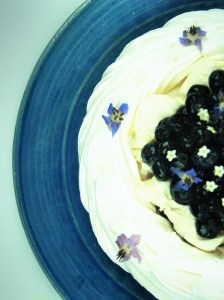
Imagine you are going to a party and have no time to prepare a dessert. If you have made the elderflower cordial recipe then you can whip up this beautiful dessert to take to a summer party and impress your friends! It will take just ten minutes to prepare. I have used frozen blueberries – cheaper than the fresh variety, when defrosted they are softer and have more juice than the fresh varieties. Forgive me for also using a purchased pavlova base – again another time saving tip. This dessert is again another treat to have occasionally in your diet – there are plenty of healthy eating recipes on my blog, sprinkled with the occasional dessert. I have not added any sugar to the blueberries as the pavlova contains plenty. It is important that people who have to follow free from diets know how to produce all recipes in my opinion – so that people can make a choice in their diet. The only concession to the ‘free from’ isle is the lactose free mascarpone cheese, which is divine.


Ingredients

1 Shop bought pavlova base

200g of frozen blueberries

1 tub of lactose free mascarpone cheese

70ml of Elderflower cordial

Method

Add the elderflower cordial to the lactose free mascarpone cheese and mix well

Add this to the pavlova

Pile the blueberries on the top of the pavlova

Enjoy!

Serves 6


The pavlova base was purchased by me from Morrisons, the lactose free mascarpone cheese from Tesco and the pavlova was decorated with elder flowers and borage flowers – these are not an essential addition to the dish.

Elderflower Cordial

On a walk this afternoon I gathered a handful of elderflowers. This recipe is based on a recipe from the book Hedgerow Cookbook. The elder is a wonderful bush although it generally doesn’t look that way when you find one. It is generally a wizened looking gnarled tree with moss growing on it but it produces the most wonderful flowers and fruit – the only decision to be made is whether to pick the flowers or save them till the berries arrive later. Or you could pick a smaller amount and save some berries for later in the year, if you can get to them before the birds do. Making this squash fills the whole house with the odour of elderberry blossom and is a wonderful treat – don’t forget this is concentrated squash and yes it does contain some sugar – but this can be drunk occasionally as a treat.


Ingredients

12 elderflower heads

18g citric acid

1 unwaxed lemon

400g granulated sugar

3/4 pint water


Method

Wash the flower heads under running water and add to a bowl with lemon peel and sliced lemon.

Add the water to a pan and then the citric acid and granulated sugar.

Heat the water till the sugar and citric acid has dissolved

Pour the liquid over the flowers and lemon and leave overnight to steep.

Strain off the liquid and put it into bottles.

This will keep a few days in the fridge.

Warm Potato Salad

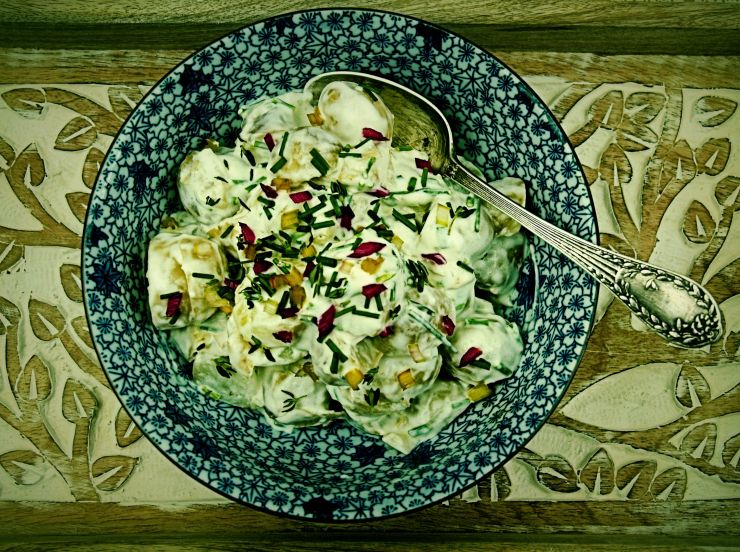
This potato salad is great for a summer barbecue and really easy to make. I have used lactose free plain yoghurt with mayonnaise to keep the calories lower and chives to flavour the salad. If you serve it slightly warm the mayonnaise soaks into the potatoes and also it means that if you have a problem with resistant starches you can avoid these too. I used Jersey potatoes – the best, but any salad potato will be suitable to use. It really couldn’t be easier to make!

OLYMPUS DIGITAL CAMERA

Ingredients

450g small jersey potatoes or small salad potatoes

1 tablespoon of mayonnaise

1 tablespoon of lactose free plain yoghurt

Chopped chives

Salt and pepper to taste

OLYMPUS DIGITAL CAMERA

Method

Boil the potatoes in salted water till soft.

Drain well.

Add the yoghurt and mayonnaise to a dish, season and add finely chopped chives.

Mix with the warm potatoes.

I decorated with some thyme leaves and chopped chard stems.

I hope you enjoy it!