Why does asparagus make your wee smell? – Book Review

My husband has received this book as a Christmas present and I am afraid he has not had much chance to read it yet! I am a bibliophile and I also have a passion for graphic design and chemistry (I gained a degree in polymer science and technology before I studied dietetics.) This book covers all my passions and as such I’m afraid I pinched it on the very day he received it and have not put it down yet. Of course he can have it back 🙂 – but he doesn’t usually settle down to read a book present immediately he has opened it (unlikely a bibliophile then!) and he does know I have it, so I am not being that mean!

Now back to the book, it is written in a very clear and understandable way, very important for a book covering the chemistry of popular food science and the info-graphics are a great way of showing the compounds involved. I wish info-graphics were available when I learned about chemistry, as my method of learning is very much visually I would have found this process a little easier. The author Andy Brunning is a chemistry teacher in Cambridge who is also the author of the website http://www.compoundchem.com/ which has similar blog posts, the website is really worth a visit if you have an interest in chemistry. I cannot find any negative aspects to this book, even the price is affordable for a hardback.

Some of the questions that particularly attracted my attention were:

Why do some people hate Brussels sprouts? – this might not be the reason you are thinking of!

Why do beans give you flatulence? Yes, this is the very reason you are thinking – I have also written about this very problem here, they are a fodmap!

Why are some people allergic to nuts?

Does MSG cause Chinese restaurant syndrome?

Of course, other posts might be more interest to you. The book has references at the back for all you scientists out there to do some further reading – although I guarantee this will be a little less stimulating.


Kale and herb frittata with a cheese and pine nut topping – low fodmap

Wondering what to have for lunch? A frittata is a great option because not only can you eat it warm, it slices very well and can be eaten cold with a fresh green salad or even used as a sandwich filling. Very versatile and tasty for a lunch option and what’s more it is low fodmap.

Ingredients

4 eggs

handful of Kale

2-3 sprigs of thyme and a few rosemary leaves (you can also use dried)

1 oz of grated Parmesan

1 tablespoon of pine nuts

Salt & pepper to taste

Spray oil

Method

Boil the kale till a little soft and leave to cool then chop well.

Chop the herbs, grate the Parmesan.

Crack the eggs in a bowl and mix, season and split into two.

Add the kale and herbs to one bowl mix well.

Spay a little oil into a frying pan and add the egg and kale mix, flatten with w fork and cook for 1-2 minutes

Add the second half of eggs to the pan. Cook for 2 to 3 minutes.

Place the pan under a grill to continue cooking and when the eggs are risen and fluffy sprinkle on the cheese and pine nuts.

Grill until the cheese is melted and the pine nuts are toasted.

Serve – serves 2-3 people.

DSCF2586 (2)


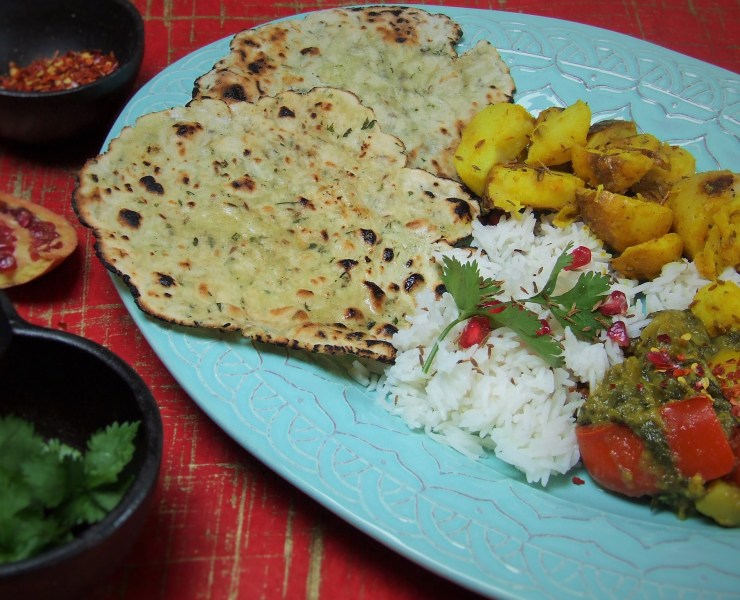
Chapati and low fodmap curry – yum!

Chapati

150 g of gluten free plain flour

1 teaspoon of garlic infused oil

1/2 teaspoon of Xanthan gum

20 g of well chopped coriander

Salt to taste

Water to form a dough

Method

Weigh out the flour in a bowl and add the xanthan gum and mix well.

Add the oil, salt and coriander and water.

Add water slowly and bring the flour together to form a dough – the more you work this dough the better the results will be!

Roll the dough into a sausage shape and divide to make approximately 8 small disks

Roll these into a ball then roll out evenly as thin as possible.

Cook on a flat griddle till the flour turns a little opaque then hold the chapatti in a flame to finish the cooking add some spray oil to the pan if needed.

Serve immediately – they don’t keep well and are best eaten fresh.

Curry

2 aubergines

200g spinach

200g of potato

1 red chili chopped small

1 inch of ginger chopped

1 teaspoon of coriander seeds

1 teaspoon of cumin

3 cardamon pods, split

1 red pepper chopped

1 tablespoon of garlic infused oil

1/2 teaspoon of asafoetida

salt to taste

Method

Roast the aubergines till soft and remove the skin and chop.

Add the spices and chopped chili (you can omit this if it affects symptoms too much) to a pestle & mortar and grind.

Add the oil to a pan and fry the spice paste to release the aroma.

Add the aubergine, chopped potato to the pan and cooked till tender.

Add 4-5 pieces of frozen spinach and chopped red pepper at the end of the dish and cook for ten minutes.

Serve!

Turmeric potatoes

These small potatoes are easy to make, use 3-4 potatoes per portion of salad potatoes. I roasted them in the oven in their jackets till soft them sliced them and using 1/2 tablespoon of oil fried turmeric and coriander seeds to release the flavour and added this to the potato with salt to taste. You could use this recipe with older potatoes if you wished.


DSCF2555 (2)

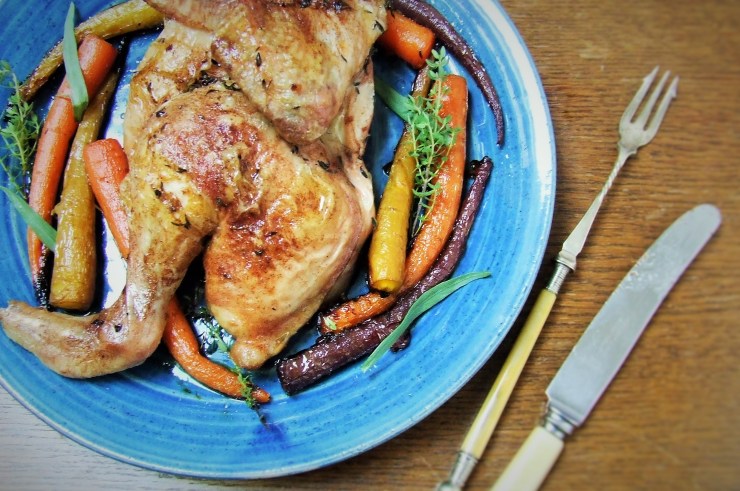
Cinnamon and lemon thyme roast chicken

It is the first cold snap of the season today and what better to warm the cockles than a roast chicken? This is a very simple roast, sprinkled with cinnamon and thyme.

Ingredients

1/2 roast chicken

2 teaspoons cinnamon

5-6 springs of thyme

salt and pepper to taste.

Method

Do not wash the chicken before you use it.

Place the chicken in a roasting tin on a rack to drain the fat as it roasts and add the thyme and cinnamon plus seasoning.

Roast for 3/4 hour.

I added some carrots to the roasting tin to add colour to the dish.

Enjoy!

DSCF1795 (3)


Coriander carrots

My love of the carrot is growing – it really is a very versatile vegetable and the colour it provides to dishes adds a bit of warmth during the winter. Carrots partner very well with coriander and I have decided to use my gnocchi recipe to see if it works with carrot in place of parsnips – it appears that it does, but one word of warning – ensure you cook the carrots well and puree them before you add the flour to ensure you can roll them and they have the correct texture.

Ingredients

400g Carrots

70g of gluten free flour

2g of coriander stalks chopped finely

Coriander seeds to garnish

salt + pepper

Method

Cook the carrots till very soft and puree

add the flour, coriander stalks, salt + pepper and mix well

Roll into a 1cm width sausage on a floured board and cut even 1 cm strips.

Roll into a ball and flatten with a fork.

Boil till they float in water.

Serve

I thought I would add a picture of this little chap with his orange (red) breast – he was very friendly!

DSCF2123

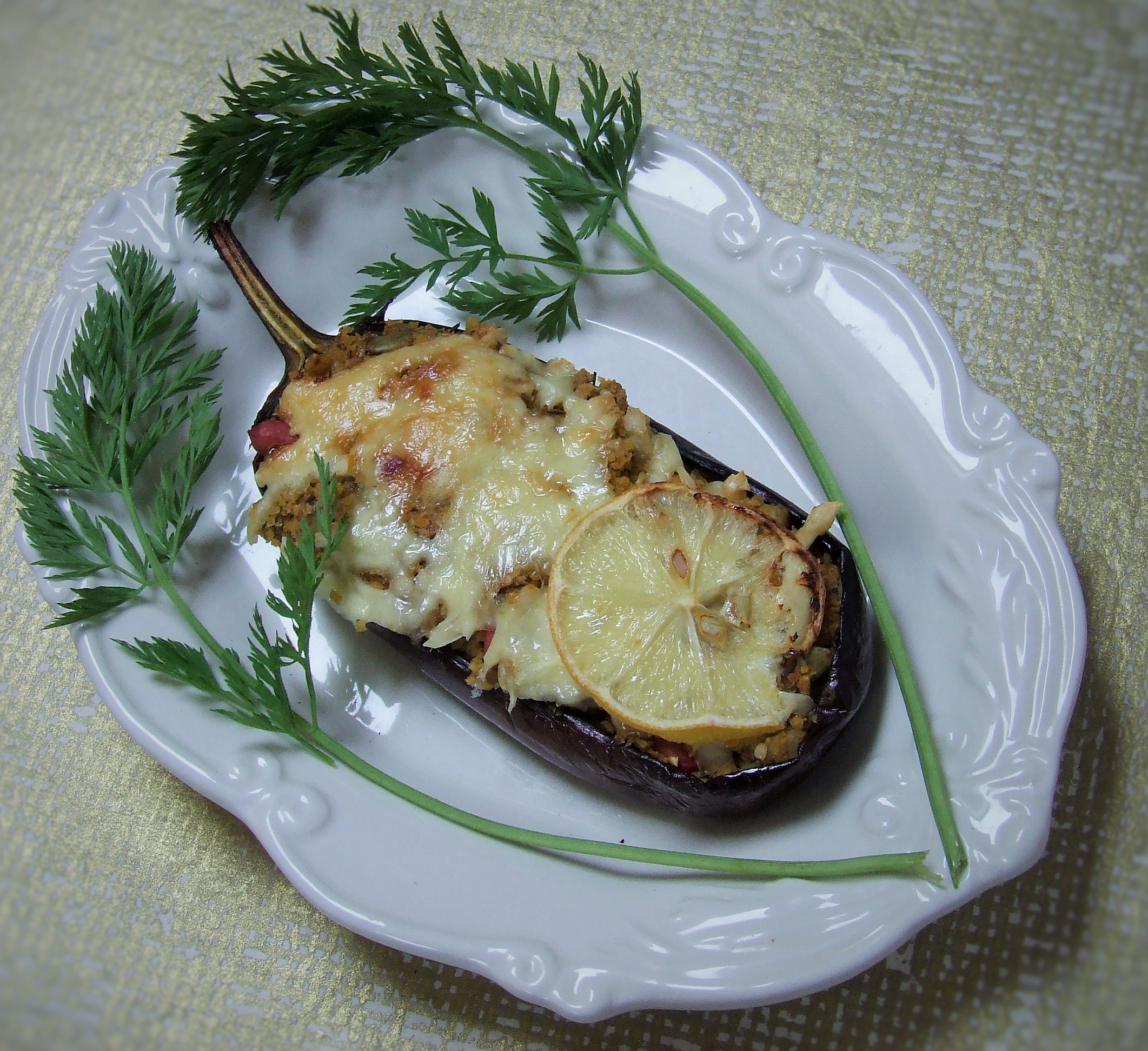
Stuffed Aubergine

Aubergines are my favourite vegetable and suitable for a Low Fodmap diet. Aubergines have been stated to be the vegetable to use if you wish to replace meat in a dish as they have a good texture and is satisfying to eat, but they will not replace some of the nutrition when replacing like for like. A vegetarian diet is great to have and can be very healthy if some regard is taken to ensure that it is nutritionally complete and not too high in energy. But some people really struggle to follow a vegetarian Low Fodmap diet because the diet on the exclusion phase excludes sources of protein from legumes and pulses.  This recipe contains nuts and just a small amount of low fat hard cheese – sources of protein – you can change the cheese for a vegan alternative cheese but use it sparingly as it tends to be quite high in fat and is a possible source of Fodmap, so check the label. Quorn and quinoa are good sources of protein but again check the label for Fodmaps if you choose Quorn products (not suitable for vegans as Quorn contains egg). To ensure you have adequate iron in your diet include some dark green leafy vegetables (chard and spinach are reasonably good sources,) along side a small amount of citrus fruit (or small amount of juice – 100 ml maximum) to improve the absorption. You could also include some fortified breakfast cereal to add to your iron intake. Egg yolk is a source of iron too, if you do eat them. Very small amounts of canned lentils and chickpeas can be included and these do contain iron, but again the iron is more difficult for the body to absorb, so need a source of vitamin C consumed at the same time – rinse well before use. See a dietitian if you need more individual advice – in fact I would encourage any vegan considering the Low Fodmap diet to ask their GP for a referral.

Do remember the Low Fodmap diet is a learning diet and not a diet for life – most people find they can re-introduce some Fodmap foods back in, if only in smaller amounts. This is important to help your bacterial populations in your bowel and to increase the variety of your diet. If you are struggling to find a dietitian as your GP to refer you – the National Institute of Health & Care Excellence advise you should see a trained healthcare practitioner to follow the Low Fodmap diet for IBS – at the moment this is Registered Dietitians only, or you could see a freelance dietitian, check out www.freelancedietitians.org.

Ingredients

4 Aubergines

Small amount of olive oil

1 teaspoon of coriander seeds

1/2 lemon (juice only) and slices to decorate the top

1 teaspoon of peanut butter

20 g of pumpkin seeds

25g red skinned peanuts

Salt + pepper to taste

60g of gluten free couscous (based on corn)

50g of low fat hard cheese

Method

Slice the aubergine length way season and rub the surface with a little cooking oil.

Roast in an oven for 20-30 minutes.

Remove and cool.

Remove the flesh and mash with the other ingredients except the cheese. Use around 40g of aubergine per portion.

Divide the mix between each aubergine skin.

Grate the cheese and sprinkle on the top and add a slice of lemon.

Cook till the cheese has melted and the aubergine is cooked (20-30 minutes) Serve with fresh green salad.

DSCF2468 (2)