LOFFLEX how to manage a #crohn’s flare up during the festive season

It probably isn’t very good to be following the LOFFLEX diet during the festive season but crohn’s is no respecter of holidays and it may be that you have had to return to a very bland diet during the festive season. You can eat food during this time – here are some recipes I developed to help you to have at least a Christmas lunch, or you could use this recipe for thanksgiving too.

Turkey is suitable for stage one of the lofflex diet, so are carrots and boiled potatoes (no skins.)

Roast potato

Peel potato and wash with clean water.

Cut into pieces and par boil in salted water for five minutes.

Drain off cooking liquor

Shake the pan to roughen the edges of the potato

Spray with a small amount of vegetable oil.

Cook in the oven for minutes at gas mark 7/220°C

Have 1-2 pieces.

Stuffing

3oz/75g Rice crumbs

1 teaspoon of sage

1 teaspoon of mixed herbs

100mls/4 fluid ounces of boiling water

Spray with rapeseed oil

Salt to taste

Method

Add sage and herbs to a cup; pour on water and leave to brew.

Sieve herb liquor to remove solids and retain liquor.

Weigh out rice crumbs and add herb liquor till a consistency of stuffing is achieved, add salt to taste.

Place stuffing into a ramekins and flatten the surface, spray oil on the top.

Put into an oven at gas mark 6/200 degree celsius for approximately 20 minutes or until the surface has browned.

Gravy

Use turkey stock – drain off the fat from the surface and thicken with rice flour.

Cranberry sauce with no alcohol added – sieve out skin and seeds.

  1. Pear or apricot crumble with soya custard

Serves two

50g/2 oz Rice crumbs

12g/½ oz granulated sugar

2 tablespoons sieved, or skin free apricot jam

2 pears

Spray rapeseed oil

Peel and remove the stalk and core from the pears

Slice the pear and add to two ramekins.

Add one tablespoon of sieved apricot jam to each one, (warm the jam in a pan till the jam is runny and sieve off skins, or purchase skin free apricot jam, available for Christmas cake decorating.)

Mix rice crumbs and sugar and sprinkle on the top of the apricot and pear

Spray surface with spray oil

Cook in the oven for 15 minutes gas mark 6/200°C – take care when serving as it can be very hot! Serve with soya custard.

Christmas can be a difficult time if you have restrictions on your diet, so try to keep focused and think of some treats that are not food related, such as going to see a movie at the cinema, watching your local football team on boxing day, going to see a play or pantomime or inviting friends round to watch a Christmas DVD.

Keep well hydrated and if you experience severe symptoms seek help from your healthcare provider. Everyones intolerances can be different so if you have noticed that some of the ingredients in the above recipes make your symptoms worse it’s probably best to avoid them, discuss this with your dietitian.

Have IBS food intolerances and only eating gruel? How to avoid a Dickensian diet this holiday!

Christmas and the holidays are a time of celebration and food usually takes a central role, so what if you need to avoid certain foods to prevent having symptoms over the Christmas/holiday period? You can eat food and take some steps to reduce the effects, should you wish. It is possible to eat nice food and prevent spending boxing day never off the loo and with a covered hot water bottle strapped around your stomach. You just need to plan ahead – a reason why this post is going to be published early. First lets talk about Christmas lunch – skinless turkey, carrots, parsnips (use spray oil to roast) and potatoes are fine to have. When making gravy use stock from the turkey and spoon off or pour off the fat that settles on the top of the stock, thicken with corn or rice flour to make a nice gut-friendly gravy. For roast potatoes you could parboil the potatoes for about 5 minutes and then drain off the water, keeping the potatoes in the pan, shake the pan to soften the potato surface – spray with oil and then place in the oven to roast. Trimmings such as cranberry sauce is OK – only have a small portion, wheat free stuffing is also possible using herbs and wheat free bread crumbs (see the LOFFLEX Christmas post for the recipe – although you can use whole fresh herbs) or rice crumbs (available from larger supermarkets.) Again it might be better to trim any bacon fat and grill bacon to reduce the fat levels and prevent diarrhoea, and grill wheat free sausages. These are ideas to help, but of course, if you know your IBS well, you may want to eat normally, it may possibly be uncomfortable for a short while but won’t necessarily do any lasting harm. The following recipe is for Low FODMAP christmas cakes, hope you enjoy!

Ingredients

150g dairy free margarine

150g soft brown sugar

3 eggs (room temperature)

1 cap full (1/2 tsp of vanilla essence)

150g of the wheat free self-raising flour blend.

1tsp of mixed spice

1 flat tsp of cinnamon

1 flat teaspoon of ginger

2 tablespoons of chopped roasted pecan nuts

5 tablespoons of lactose-free milk.

Icing sugar,  ready-made fondant icing sugar (check label for fructose) and water to decorate.

Method

Cream together the butter and sugar till the mix is pale in colour.

Add one egg at a time and one tablespoon of flour, mix well till all three eggs have been incorporated. Add vanilla essence.

Sieve the spices and flour into the mix and fold in till well incorporated, add the milk and nuts and mix well.

Spoon mix into paper cases.

Bake in a preheated oven gas mark 6/200 C until risen and browned.

Allow to cool, add some water to icing sugar to make a thin coating. Using ready prepared icing, roll out and cut shapes. ‘Stick’ the icing sugar shape to the cake with runny icing made from icing sugar and water and decorate as wished.

Eat one – (or maybe two if you must! ;-))

I hope all my readers have an enjoyable Christmas (or holiday) and here are some tips that might help –

You DON’T have to be a domestic goddess this Christmas, plan ahead and remember that having time with your family is the most important thing – they will appreciate you just being there, not frazzled or tired after trying to be perfect. Remember that being a perfect ‘housewife’ or ‘househusband’ is a marketing concept and these concepts are usually impossible to attain, no matter how you try (or, in fact, how much you spend!) Children, in particular, appreciate time with their parents more than anything.

Plan ahead if you can – now is the time to take a break and sit and plan your shopping and meals for over the holiday period. Shop online if you don’t like large crowds.

Plan a short walk with the family after Christmas lunch – will help constipation and stop the slump in energy levels after lunch.

Don’t slouch on the sofa eating snacks whilst watching the afternoon or evening movie, try to keep your posture and sit up straight if you can.

Moderate your alcohol intake – who wants to spend boxing day with diarrhoea, abdominal pain and a hangover?

Eat slowly and chew your food well, savour your meal – you have worked hard for it!

Christmas can be a stressful time and this won’t help your gut, IBS is not ‘all in your head’ but stress produces hormones that affect your gut, this can make symptoms worse. Avoid arguments over the dinner table, this may be difficult if you have critical family members. Tell them beforehand that arguing or criticising is NOT acceptable, you are making an effort for them and that should be appreciated, if it is not, then perhaps they are not welcome at the lunch? Be assertive and stay calm!

Don’t have unrealistic expectations, setting yourself up for disappointment, do what you can – nobody will or should expect more.

http://blog.moviefone.com/2010/12/24/christmas-carol-versions/

Here is some fun stuff

Does your granny always tell ya that the old songs are the best?

http://www.youtube.com/watch?v=menFfIgA06g&playnext=1&list=PL4892FFB78434B27A&feature=results_video

Santa Claws – Simon’s Cat – Oh Christmas tree, oh Christmas tree, your ornaments are history! (Simon Amaranth)

http://www.youtube.com/watch?v=nn2h3_aH3vo

A beautiful rendition of In The Bleak Mid Winter

http://www.youtube.com/watch?v=lwNxpylhmmo

Updated 22.11.14

Breakfast bars

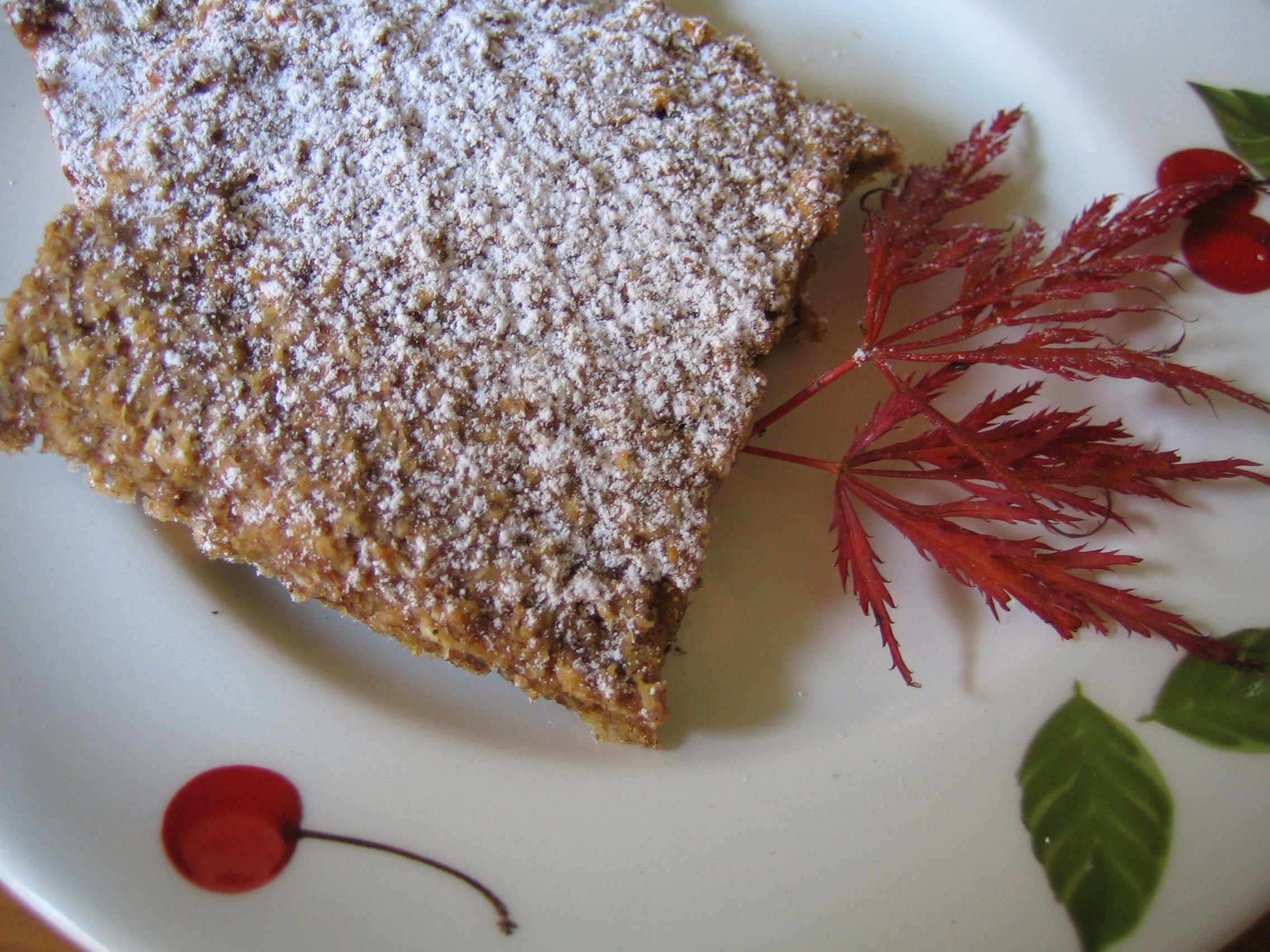
It’s really well into Autumn now and there was a very pretty spiders web on our Acer tree – unfortunately my photography skills really doesn’t do it justice, you can only see the twinkling colours of the water droplets in the web at the bottom of the picture. Made these breakfast bars this morning, I’m getting a little bored with my usual breakfast so I thought I would try this instead:

110g of oatmeal bran

20g of milled flaxseed

80g of oatmeal

1 heaped tsp of cinnamon

1 heaped teaspoon of mixed spice

3 teaspoons of artificial sweetner powder

1 tin of gooseberries in light syrup

50 mls of ginger cordial

50 mls olive oil

Sieve out the gooseberries and retain the fluid (should be around 150ml), to this add olive oil, ginger cordial and mix well.

Place all dry ingredients into a mixing bowl (typed bowel initially – ha ha ha,  lol 🙂 just shows my job is in my unconsciousness.)

Mash the gooseberries, make a well in the centre of the dry ingredients and add liquid and gooseberries, mix well till amalgomated.

Spread out the mixture on an oiled baking tray and place in a preheated oven at gas mark 6, or 200 degrees C for about 20 minutes, check after 15!

Cut into 8 or 12 bars, cool on a baking tray and sprinkle with icing sugar.

These bars do have fibre therefore please ensure you have a drink if liquid when you have these, a cup of tea, coffee, or glass of water would suffice. Take care if you are not used to eating foods containing fibre – don’t scoff too many at one go! These should also fill you up as they are based on oats – a low glycaemic food choice, they are also nice with yoghurt.

Fast eating – speedy way to make your IBS worse, the benefits of slow eating.

Why is it suggested to help IBS you need to ensure you relax, take time over your meals and chew food slowly? How does this advice help with reducing symptoms?

If you don’t chew your food well you are more likely to swallow air with your food, this can pass into the intestines and increase bloating. After your mouth your digestive system does not have teeth, your gut moves and squeezes to mix and push food through it, but this not break down tougher foods – you need to chew these foods well, prior to swallowing.

If you are eating whilst working you may experience stress, particularly if you are answering a discourteous email that demands some diplomacy in its response, or dealing with a complaint on the telephone. It does not help your digestion (or your IBS) if your body is experiencing stress whilst you are eating a meal. Stress causes an increase in adrenaline, a hormone that gets the body ready for action, and this hormone slows the digestive tract, slowing down digestion. Adrenaline reduces the amount of digestive juices that are secreted to help digest your food, therefore it is perhaps not surprising that you feel so uncomfortable if consuming food when stressed. Sitting up straight can also help – use gravity to help your digestion and don’t slouch when eating.

Sometimes it is difficult to change what we do, particularly if you feel that you may be penalised in some way if you take a break at work, but it is worth considering. Under the current economic climate it is difficult to insist on taking breaks if your colleagues do not, so perhaps it is time we all support each other and take back our work breaks and lunchtime, to allow everyone time to sit down, relax and ‘rest & digest.’

Self care for your irritable bowel – worth a look?

This month The IBS Network launched is new interactive on-line self-care plan for IBS, you may be wondering what it’s all about, and possibly not being a member you wouldn’t have access to it to try it out. Well, this blog will give you some more information to allow you to make your mind up before taking the plunge. Some questions you may be thinking of:

Why should I take responsibility for my IBS – surely I pay my taxes or health insurance to pay doctors to sort this out for me? 

So, has this happened then? If your IBS has been helped you probably wouldn’t be looking for answers. IBS is a chronic condition that is poorly understood by the medical profession, and they freely accept this is the case. This condition is very similar to other misunderstood syndromes such as chronic fatigue and fibromyalgia, IBS is a problem of how the digestive system functions, or moves – looking at it using tests and instruments doesn’t lead to a diagnosis, as there is nothing yet that can be seen. This is either because it is caused by something that researchers haven’t yet found or it is purely a dysfunction in the way the gut moves (think of it as being similar to the different speeds your heart can beat.) It does not mean that it’s all in your head, or you do not feel pain or you do not suffer from difficult diarrhoea or constipation. The plan can give you information that will help you think of what else it could be, but sometimes accepting IBS for what it is will allow you to move on and try to help yourself. Everyone’s IBS symptoms are different, you are best placed to be able to help with your own IBS as you understand what makes your IBS flare up.

But I don’t understand what affects my IBS – it’s so complicated! 😦

This is where the self-care plan can help, you can use the symptom tracker for two to three weeks, it is a simple tool that helps you log areas that affect your IBS such as life events, diet, medication, disturbed sleep and exercise. We have kept it fairly simple so that you can focus on general areas initially making it easier to design your self-help package. You can then print a report that will show you when you feel better or worse and what happened to cause a change. This is also a very good report to take along to your healthcare provider, to help them to identify the best course of treatment for you.

For example – So my symptom checker has shown that every time I eat pasta I feel worse and every time I have a meeting with the MD at work I get diarrhoea. You can then use the information contained in the plan to check out how to change your diet to help you feel better and what can be done to relax before your meeting or what medications may help you.

This is fine to talk about but I find it really difficult to change my life!

The answer to this is we all find it difficult to change from time to time. Make one change at a time if you can, this will make it easier for you to use your symptom tracker to see if the change has helped – be SMART with your changes

Specific goals – makes them easier to manage. e.g. “I wish to reduce my levels of stress”, this is not specific enough, how are you going to reduce stress? By doing what?

Measurable – you need to be able to see the effect to feel really great about your achievement – use your symptom checker, or a food & mood diary.

Achievable – How are you going to make the change? Try to choose parts of your plan to change that you feel are much easier to achieve, this will give you lots more confidence to try the harder changes. For each change ask yourself the following question

‘on a scale of 1-10, 1 being very easy and 10 being very difficult – what would I score the ease of making this change?’ Try the ones that score lower initially.

Realistic –  Think about if you can really achieve what you have planned – if it’s just too difficult to do, you will be setting yourself up to fail. Sometimes we can’t change some aspects of our lives, it is fine to accept this and PUT IT TO ONE SIDE, don’t keep focussing on what you can’t achieve. Another question to ask would be, is it the right time for me to make this change?

Time focussed – how long is it going to take? It may take a minimum of three weeks to change some aspect of your life and thinking how long you will need will help you to keep focussed.

Changing our lives, what we eat or how much exercise we do is a challenge, we all behave in a way that makes it easier to live our lives, but think about your symptoms – if you always do the same thing you will always get the same result – ask yourself do you want this to continue? what are you gaining from your IBS? What will changing mean? The care plan will help you think about your IBS and it contains exercises to help you understand your condition. Changing can take time and lapses are to be expected, it is what you do about a lapse that’s important – don’t put yourself down and feel a total failure, put it behind you as something that has happened (and was probably likely to happen!) and try again – small steps! Think and plan what you would do if you have a lapse in your planned changes before they happen and this will help. Don’t allow a lapse to become a relapse. Also plan to reward yourself when you reach each goal this will positively reinforce the changes you have made.

I have heard that having a practitioner actually helps with IBS? How will helping myself work?

All the information contained in the care plan has clinical evidence or experts in health have come to a consensus through experience that the information will help – we don’t yet have evidence that the self-help plan works as a whole, as it has only just been developed – this is something we hope to prove when people are starting to use it. There is a study that on-line self-help for other chronic conditions such as chronic fatigue* works, and whilst this doesn’t directly relate to IBS, with 10 – 20% of the population diagnosed a new way of helping needs to be developed.

If you are interested in the plan follow the link on the right hand side of this page or copy and post the following link

http://www.theibsnetwork.org

*Nijhof, Bleijenberg, Uiterwaal, Kimpen, Putte (2012) Effectiveness of an internet based cognitive behavioural treatment for adolescents with chronic fatigue syndrome (FITNET): a randomised controlled trial The Lancet published on line March 1, 2012

Surely these digestive enzymes I’ve found can help – or are they money down the toilet?

You may be aware of ‘digestive’ enzymes and if you are currently in ‘gut hell’ you might have considered these of use. This post will give you the facts about digestive enzymes and whether they are of real benefit to everyone – or just those with a real clinical need!

I apologise now, but we have to discuss the business of stools (poo,) so if you are not happy with this I suggest you choose some of my other posts to read! Our bodies are generally very effective at producing enzymes, substances in our gut, which help break down the food we eat and allow it to pass into our bodies. Sometimes these do not work as effectively, or our bodies start to produce less, or we may have a genetic (family) link, which means our bodies don’t produce the enzyme at all (as with some Lactose Intolerance.)

You may have noticed that food passes right through your digestive tract and looks very similar when it comes out – to when it went in, this can be a bit shocking! Typical examples are sweetcorn. You may feel that digestive enzymes are therefore needed to help to break down the food you have eaten so you can utilize the nutrition it contains. Recognizable food in stools can suggest that you are not chewing your food well enough – your digestive tract mixes food, but past your mouth it does not have teeth!! So ensure you chew each mouthful well, this may reduce symptoms of bloating & pain and helps your body to get all the nutrients from the food you eat.

The picture ‘The Bristol Stool Chart‘ helps you identify the types of stool your body produces to help you to modify your diet to keep your gut healthy. 6927778-3x4-700x933Now ☺️ do you look in the toilet pan? Or are you a bit squeamish about matters below 😲 ? Not looking is NOT an option, how do you know that you are leaving the lav in a clean condition for the next user, if you flush and run? Going to the loo is a natural part of life, and for your health, you need to look – so get over it! The chart is about consistency, type 1-3 and you are constipated, check out post on fibre, type 4 is normal and type 5-7 means you have diarrhoea. This chart will be discussed in more detail in future posts.

So, have you heard also that digestive enzymes can help reduce the dreaded bloating that sometimes occurs? Who have you heard that from, producers of digestive enzyme ‘health’ supplements? Have you asked them how they know that the supplements they make are effective? – Do they put them through rigorous randomised controlled trials? Probably not.

We need to discuss digestive enzymes in two distinct areas – lactose and fructose intolerance and FODMAPs are a specific case and will be dealt with separately. But, how effective are ‘mixed’ digestive enzymes? Well, medications recommended by doctors are very effective, and if you doctor has prescribed pancreatic enzymes (containing lipase, amylase, proteases) to help with a medical condition, then you need to take them. If your body is producing ‘floaty’ greasy stools and you need to flush the loo more than once and they don’t go away, or your stools are very pale, like the colour of clay, then I would advise a trip to the doctors to get this investigated further. However mid brown stools are normal and should not require any ‘over the counter’ digestive enzymes to help your digestion. Diarrhoea means that your food is moving too quickly through your body, this may mean that you don’t get the full benefit of food, however this needs treating by a doctor, to resolve the situation – they may advise you see a dietitian. Any blood in stools, or black coloured stools (when not taking iron supplements) needs a trip to the doctors, with some urgency! Health food supplements containing mixed ‘digestive enzymes’ are generally not that effective, as the doses they contain are not adequate to be of any real use, and some ‘health food’ brands do not even state how much enzymes are in their product – positive obfuscation! How unhelpful :-(. I wouldn’t waste your money on these supplements, all they are good for is reducing your bank balance. Your doctor will prescribe you pancreatic enzymes should they be necessary.

Some food we eat never gets digested and these are generally starches that form part of the fibre in our diet. Our bodies do not produce the type of enzymes to help their digestion, examples are Fructo-oligosaccharides, sugar alcohols, Galacto-oligosaccharides. Sometimes they can be problematic if you are prone to bloating (See FODMAPs link below.) Since writing this post links to a website producing Fructosin a supplement that is suggested to help with fructose malabsorption has been removed and the company website has no reference to this supplement, so I can only assume they no longer supply this product. I will keep looking for this and post again if their is an update.

For galacto-oligosaccharides a product called Beano has been available for some time, but not widely in the UK, this may be worth considering but again efficacy may not be guaranteed for all. You need to check the labels of these products for other FODMAPs, such as polyols (sorbitol, mannitol, xylitol) – no enzyme helps with polyol digestion unfortunately.

Lactose intolerance is a condition where the body does not produce enough of the enzyme lactase to digest lactose (a sugar found in milk,) it can be as a result of a genetic family link and sometimes can occur after gut infections or as a result of coeliac disease (this usually resolves on following a strict gluten-free diet.) Lactose then ferments in the gut leading to lots of bloating and diarrhoea. The amount of lactose that is tolerated varies and lactase supplements are suggested to be helpful. The reference below is a very good piece of work on the effectiveness of lactase supplements, they need to be taken with the food and the study suggests that they are not that effective in manufacturers recommended doses, enteric coated* tablets are better. This is only true for the supplements that were tested, but it is worth a read. Other recent studies suggest that they might be of benefit, again we have an example of medical dichotomy so how do we resolve it? Looking at the harm of products might help, do lactase supplements cause harm? Probably not in doses advised for most people, therefore if you wish to try them as long as you are happy to buy them with the possibility that they may not work, I don’t have a problem with it! However if you suffer from galactosaemia you should avoid using enzymes to help milk digestion see the link below for more information. We are always questioning the efficacy of treatments by undertaking studies and new advice is always welcome, it is not that the medical community are always changing their minds without good cause.

http://www.patient.co.uk/doctor/Galactosaemia.htm

* allows supplement to pass through your stomach unchanged to where it’s needed, – your small intestine.

O’Connell, S., Walsh, G., (2005) Physicochemical Characteristics of Commercial Lactases Relevant to Their Application in the Alleviation of Lactose Intolerance Applied Biochemistry and Biotechnology Vol. 134, 2006 (revised)

Post updated May 2016