Which path will you choose?

You might consider that this post is not relevant to IBS, but everyone has to make some changes, when diagnosed with a medical condition. Changes perhaps try a new diet, a new medication or treatment, these naturally will require some change to a persons usual lifestyle. I was lucky enough to train with an inspirational dietitian during my clinical placements and one experience I had during training was listening to my mentor explaining to a patient, using the metaphor of a path, for explaining the challenges of changing any behaviour that we need to, in life. She explained that choosing to change a behaviour is like choosing a path to walk and the path we all use as a default, as human beings, is often the easy, well trodden route. Or the path of least resistance. This is a human trait – it is certainly not being lazy, a comment I often hear from people – you are not lazy – you are human. Making changes is challenging, a difficult path to follow, often with steep slopes, an uneven, meandering, overgrown path – a formidable terrain. Initially both paths follow close to each other.

Often, when starting out on a demanding route, it is very easy to start to follow the more difficult path and step from the difficult route back to the easy one. This is very much to be expected – but when this happens, look behind you – how far have you come? You now have a decision to make – and this decision is solely yours, so take full ownership of it. You can continue to follow the well trodden route, consider what this will ultimately achieve – weigh up the costs and benefits of staying on your chosen path. If you choose to stay on the well trodden path then do not feel disappointed, don’t berate yourself for your choice. You have made a choice and there will be very good reasons for it. Maybe this is not the time for difficult challenges and believe it or not, it is perfectly acceptable to reach such a conclusion. Walk a little further and consider again whether you are ready to try the more difficult path, it will always be possible to step back onto it, from the easy route. People can hop from one path to the other a few times before they find that they are actually some way down the tough route and realise that the path actually does have very manageable sections. Now the easy path is some way in the distance and this tougher path has surprisingly become the new default. Think about the achievement you can make and the views you can expect to see, when following the challenging paths in life!

Stuffed Aubergine

Aubergines are my favourite vegetable and suitable for a Low Fodmap diet. Aubergines have been stated to be the vegetable to use if you wish to replace meat in a dish as they have a good texture and is satisfying to eat, but they will not replace some of the nutrition when replacing like for like. A vegetarian diet is great to have and can be very healthy if some regard is taken to ensure that it is nutritionally complete and not too high in energy. But some people really struggle to follow a vegetarian Low Fodmap diet because the diet on the exclusion phase excludes sources of protein from legumes and pulses.  This recipe contains nuts and just a small amount of low fat hard cheese – sources of protein – you can change the cheese for a vegan alternative cheese but use it sparingly as it tends to be quite high in fat and is a possible source of Fodmap, so check the label. Quorn and quinoa are good sources of protein but again check the label for Fodmaps if you choose Quorn products (not suitable for vegans as Quorn contains egg). To ensure you have adequate iron in your diet include some dark green leafy vegetables (chard and spinach are reasonably good sources,) along side a small amount of citrus fruit (or small amount of juice – 100 ml maximum) to improve the absorption. You could also include some fortified breakfast cereal to add to your iron intake. Egg yolk is a source of iron too, if you do eat them. Very small amounts of canned lentils and chickpeas can be included and these do contain iron, but again the iron is more difficult for the body to absorb, so need a source of vitamin C consumed at the same time – rinse well before use. See a dietitian if you need more individual advice – in fact I would encourage any vegan considering the Low Fodmap diet to ask their GP for a referral.

Do remember the Low Fodmap diet is a learning diet and not a diet for life – most people find they can re-introduce some Fodmap foods back in, if only in smaller amounts. This is important to help your bacterial populations in your bowel and to increase the variety of your diet. If you are struggling to find a dietitian as your GP to refer you – the National Institute of Health & Care Excellence advise you should see a trained healthcare practitioner to follow the Low Fodmap diet for IBS – at the moment this is Registered Dietitians only, or you could see a freelance dietitian, check out www.freelancedietitians.org.

Ingredients

4 Aubergines

Small amount of olive oil

1 teaspoon of coriander seeds

1/2 lemon (juice only) and slices to decorate the top

1 teaspoon of peanut butter

20 g of pumpkin seeds

25g red skinned peanuts

Salt + pepper to taste

60g of gluten free couscous (based on corn)

50g of low fat hard cheese

Method

Slice the aubergine length way season and rub the surface with a little cooking oil.

Roast in an oven for 20-30 minutes.

Remove and cool.

Remove the flesh and mash with the other ingredients except the cheese. Use around 40g of aubergine per portion.

Divide the mix between each aubergine skin.

Grate the cheese and sprinkle on the top and add a slice of lemon.

Cook till the cheese has melted and the aubergine is cooked (20-30 minutes) Serve with fresh green salad.

DSCF2468 (2)


My annual toilet rant

I have to say I find the price of toilets rather expensive and unlike last year when I travelled to London, this year I am going to blog about the problem. My bladder is partly at fault here, because it does not feel the need to empty whilst I am on the train but as soon as I arrive at any railway station I have to go, and usually quickly.

DSCF0977mod

Toilets are a problem for many people with bowel disorders, or lack of them to be precise, many people feel anxious at going out because they need to know where the toilet is, as they can need to go with some urgency. This can increase feelings of anxiety increasing symptoms, making the problem worse. I have recently written an article on IBD and quality of life and the survey (The IMPACT study) I used for the article contests to this very fact in people with this condition. The UK part of the survey revealed that during a flare 97% of IBD sufferers needed to open their bowels urgently, this only dropped to 70% between flares – this therefore represents the majority of responders. Episodes of diarrhoea were 5-10 times per day for 38% during a flare, this level remained at 11% during remission, and this clearly has a major impact on an individual’s ability to travel, work and to function day-to-day. Perhaps not surprisingly this affected the unemployed to a greater extent. One of the primary reasons for work absence is frequency of needing the toilet (38%) and anxiety due to the risks of incontinence (33%).

posterimpact

The British Toilet Association says that the provision of public toilets is a vital service for those people with medical conditions. They campaign for ‘provision of clean, hygienic and safe publicly accessible toilets that are available where and when needed, for all types of users. They request an end to public toilet closures and authorities acceptance that access to safe, discrete toilet facilities are a basic human need. The IBD quality of life study also highlights the need for accessible facilities, unavailability of toilet facilities can increase a persons’ anxiety at going out, which can make symptoms worse. 26% of people with IBD have found they have had to be rude with staff in public areas, whom often do not appreciate the person with IBD’s needs, and have refused to allow people access to staff toilet facilities.

ots-british-toilet-association-southport-ots-onthespot-ots-otsnews.co_.uk_0

This can lead to an individual being housebound by their symptoms, reducing access to society, friends and family. 81% of people with IBD reported that they are anxious about toilet facilities when travelling somewhere new. Perhaps surprisingly, the Impact survey found that the level of concern about toilet access increased with increasing age, clearly these worries are a very personal and significant problem for people with IBD. I suspect that the same is likely true for people with IBS and other bowel conditions. I do feel that it is the responsibility of the station operators to keep these prices in proportion, particularly when we are having to experience price hikes in other areas and many people who rely on government aid to live, especially those with bowel conditions, whose anxiety at trying to make ends meet can have a direct impact on the symptoms they experience. So come on guys please consider your toilet prices – available toilet facilities are a basic human need, not an excuse for making money.

Can’t wait cards can be purchased from

www.theibsnetwork.org

www.nacc.org.uk

Radar key for disabled toilet facilities and guides are available from

www.radar-shop.org.uk/Detail.aspx?id=44

Read Peter’s blog on toilets and IBD here

http://www.crohnsupport.com/toilet-finder/

The impact study can be downloaded from

http://www.efcca-solutions.net/country.php

Alcohol is the anaesthesia by which we endure the operation of life – George Bernard Shaw

I have been wrestling with this post for some considerable time, I am getting fed up with it being in my drafts – hanging over me every time I look at my list. I promised Alex Gazzola that I would write about this topic so I have decided to go ahead. It is nearly twelve months since I went out for lunch and asked for a small glass of wine…………

The picture on the right hand side is a portion of alcohol 125 ml – note the size of the glass, having asked for a small glass of wine I couldn’t help feeling rather disappointed at the arrival of what looks like a virtually empty glass. This is what the supersizing of alcohol has achieved, the old portion is now far from the norm and leaves you feeling slightly peeved when it is served. It is now no longer acceptable to have this size of glass offered as an option, so therefore, it rarely is.

We need to address this issue, increasing levels of alcohol use will no doubt increase the levels of alcoholic over consumption and the resulting health issues that result from it. We have rising levels of alcoholic liver disease in this country and this costs everyone. It is comparable with the obesity epidemic in some respects as the problem of alcohol is multifactorial and as a consequence extremely difficult problem to address. But make no mistake it does need to be addressed, I have treated patients with malnutrition associated with decompensated liver disease, and shockingly some of those patients have been under thirty years of age – it is tragic, at any age to be informed that you are to have palliative treatment and are unlikely to survive as a consequence of something you were unaware was causing damage, and very sad when this occurs at a young age. Neither do I wish to be a scaremonger, as liver cirrhosis won’t happen to everyone, however when it does it happens quickly, without warning and numbers are rising. Malnutrition occurs in a number of ways, poor absorption of nutrients due to the digestive tract being inflamed, poor storage capacity of glycogen and vitamins by a damaged liver, people choosing to drink rather than eat and poor processing of nutrients due to damage to liver cells. But how can we achieve change?

In 2005 the UK drank >12.5 litres per capita (who) with lower-income individuals consuming approx 75% more than higher income individuals. 4% of deaths worldwide are attributed to alcohol (who.) The problem of alcohol dependency has been around for considerable time – one of the first enduring images of this was Hogarth’s Beer Street and Gin Lane etching of the social effects of alcohol in support of the Gin Act in 1736. This act increased taxes, required a maximum amount of gin sold to individuals and a licence required, this was in response to the government encouraging distilling to increase trade and prop up grain prices. Increases in drinking alcohol were reported to have increased crime, increased levels of ill-health among children and produced an ungovernable people. So government encouraged the production and consumption of alcohol – seem familiar? Or is this the individuals responsibility? Shall we consider the issues?

Responsibility

This is obviously needed, you may feel – someone has to be held to account for the situation – but at whose door do you place this responsibility? Perhaps you may feel that it is the individuals responsibility to address their excessive alcohol consumption? This may be the  governments view, but is it just party rhetoric to blame the individual and allow the government to abdicate its responsibility in this regard? I would feel that some individual responsibility is required, here – however you also need to look at the overall picture and how easy is it for a person to change and accept this responsibility. It is easy to change when you are highly motivated to do so, but this is more difficult when you are affected by consuming alcohol – it impairs judgement, so this might be more of a challenge. The more you drink the less likely you are to be able to change – swings and roundabouts. The title of this post also suggests another reason people have issues in changing – life. When you are poor, have little to look forward to and your money doesn’t go very far, what do you spend your money on to treat yourself? What you can afford – food that lacks nutritional balance, cigarettes and alcohol. Now, cigarette smoking has become less socially acceptable and more difficult to actually do, are we seeing a shift in cigarette smoking to alcohol consumption I wonder? It is also very easy to get alcohol as this can be purchased very easily and very cheaply, but does making alcohol less available work in reducing the amount people consume?

Temperance movement, abolition and prohibition

Is this the answer to make alcohol less available or perhaps not available at all? During the nineteen twenties and early nineteen thirties in the USA alcohol was prohibited for thirteen years looking at what happened during this time we could make a judgement. Cirrhosis of the liver dropped by 2/3 during this time, but those people who were determined to get alcohol still did.

One unforseen consequence was that drinking became more normal in women in the speakeasies and this allowed a new untapped market to be accessed by the alcohol industry. We also have those who say why should the average majority be penalised because a few people cannot handle their alcohol.

Can ‘have it all’ generation and individualism

We could say that we have just lived through a period of rampant individualism, to some extent at the expense of society – perhaps you can’t have both. Margaret Thatcher famously said in a quote to Womens Own magazine – “there is no such thing as society.” We are now living through a period of austerity, now I don’t want to go into detail about the politics of individualism in this post but it is relevent to alcohol consumption, we have come to imagine we can have it all without consequences – this goes for both alcohol and the individual and society.

It is entwined, the more people drink to excess the more society suffers in the costs of alcoholism, this will no doubt be expected to change with austerity – but maybe the damage has been done. It perhaps is easy to imagine that people who have less money during a period of austerity will be able to afford less alcohol – I send you back to the paragraphs on responsibility and temperance. Those who want to drink to excess will find a way and as people can afford less they perhaps rely more on cheap fixes. Both increasing alcohol costs within a period of austerity is needed. The more I think about this subject the more complicated it becomes. Political rhetoric has changed however with David Cameron’s Big Society which is proposed to allow people more control to improve communities, but can a reduction in the excessive consumption of alcohol be achieved in an overtly commercial society?

http://healthculturesociety.wikispaces.com/A+Culture+of+Excess+-+How+Consumerism+and+Individualism+has+shaped+Generation+Y%E2%80%99s+health+behaviours

Industry, corporate responsibility and market demand.

Industry has in my view some responsibility for the society we live in. Is it ok to sell alcohol and then suggest that people drink responsibly whilst offering happy hours, having alcohol available for a longer time period and in more outlets than ever before? This is contradictory, companies should have some social responsibility and perhaps should alleviate some of the burden of the added costs to the NHS of the increase in alcohol and the health problems it creates. But this is not actually addressing the problem, prevention is better than cure. I also wonder why there is a large number of older individuals who drink alcohol, perhaps some intervention is needed here and a bit of thinking out of the box. Is it due to social isolation of the elderly perhaps? Would some funding to help with increasing social inclusion be effective in reducing numbers of elderly people who rely on alcohol?

If you look at the statistics they are truly shocking – if you are interested in knowing about the cost of alcohol in your local area check out the following website

http://www.alcoholconcern.org.uk/campaign/alcohol-harm-map

For Calderdale area there were 40,916 admissions and attendances in 2010/2011 including 4907 hospital admissions perhaps surprisingly only 307 of these were from 16-24 years of age and perhaps more shockingly 1027 people were over 75. The cost of this was 12.9 million pounds.

This topic is very complex – I can’t begin to consider what the solutions are, in problems such as this it does take lots of different initiatives to chip away at the problem. We do need people to think of different ways of solving these problems but at least writing this post has helped me to understand the issues. It will hopefully help people to understand that this perhaps is not a problem that should be thought of as the individuals responsibility, but the answer should be found for that person individually, with help from alcohol services as each person will have different reasons for needing help.

Reflection on a year of blogging.

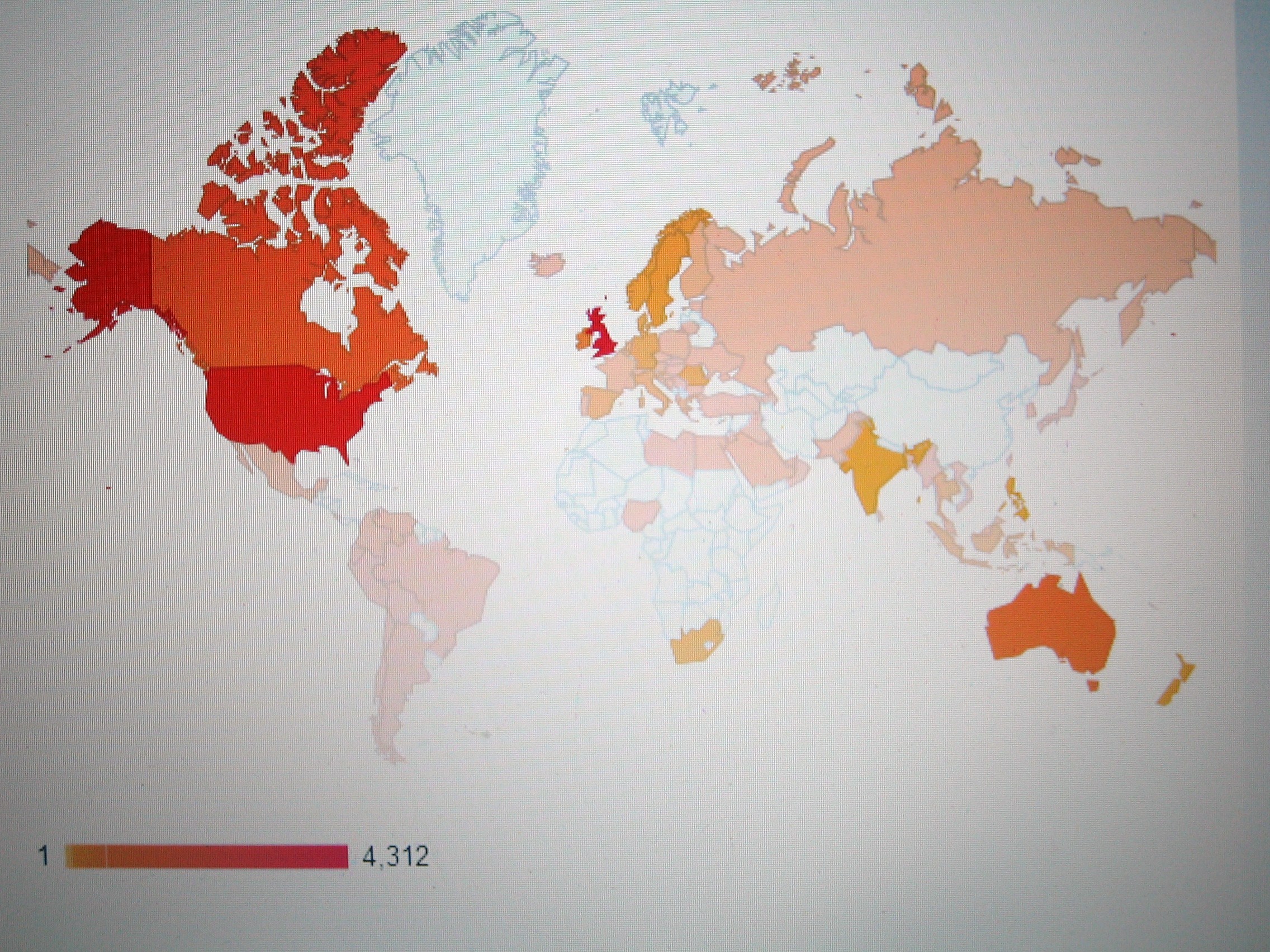
IMG_1650I have just had my anniversary of my blog, I started the site a year ago and did wonder how it would go, but I have been really hooked on writing and cooking recipes. Watching my stats I am also surprised at the breadth of countries who are interested in looking at my site, plus an interest in which countries have not viewed my site yet – so, come on guys I want to complete the full globe this year, as sure as anything you can bet that someone has some digestive complaint that would benefit.

I have experienced writers block for the last month and a paucity of recipes too. I am hoping that IBS Awareness Month spurs me on with writing more and I would also appreciate some ideas about what people would like to read on digestive disorders. The plans for the next twelve months include more book reviews and recipes, I hope to expand the blog to a website – and perhaps most exciting of all I hope to be running a clinic for patients who have intolerances, allergy and low FODMAP dietary requirements very soon, email me if you are interested.

http://www.arikhanson.com/wp-content/uploads/2010/08/InspirationPoint.jpg

I have attended The IBS Networks AGM today, my third one and the future in IBS is looking really positive, new ideas, treatments (including the Low FODMAP diet) and new research into the gut microbiome (bacterial population) and it’s effects on health and disease have made IBS more of an attractive area for research and medical management. If you are interested in getting involved, maybe you would be interested in running a support group in your area, The IBS Network can provide support if you do.

ibsnetwork

So watch this space and any ideas on what you would want to read are gratefully appreciated!

Change is not made without inconvenience, even from worse to better – (Samuel Johnson 1755)

IMG_1634

Happy New Year to our my readers and I hope you will have a year of gut calmness in 2013. January is a natural time for contemplating change and you might be wondering how successful New Year resolutions are, I am sure the majority of people have attempted to make changes in the New Year. I know I have joined gyms and weight loss groups in January, signed up for twelve months only to lapse and end up wasting my money. So what is the trick here? Can we be successful in what we choose to renew? Looking into the actual evidence one study that compared New Years resolvers with those who wanted to change later in the year, the authors found that 46% of those choosing to change in the New Year were successful compared with 4% of those choosing to change later on. The reasons for their success were that they were contemplating change, really thinking about how it can be achieved and feeling confident of being successful. It might have been possible that the study was biased, those choosing to take part were more likely to be successful because of being more proactive for example, but even if the figures are an overestimation this is still pretty impressive. Other surveys have suggested that New Year isn’t the time to plan changes; a very large survey by Richard Wiseman suggested that 88% of people fail but the details of this survey were difficult to access.

After the Christmas indulgence in rich foods it is perhaps natural to want to look after your body and wipe the slate clean, this is a time of year when detox diets or programmes are promoted to help you cleanse your body, in general but also for people with IBS. I know from personal experience I always crave fresh foods after Christmas, fruit for example never gets eaten at Christmas in our home – I often wonder about the reason, every year in fact! Detox is the process of removing toxins from the body and I’ll let you into a little secret, we have a fantastic organ in our body called the liver, it really is a wondrous organ, it is our bodies detox machine and it normally works very effectively in removing toxins from inside our body, helped by our kidneys. But there is a natural need to look after our body this time of year and there is no harm in pampering it by eating a more healthy diet, within the restrictions of your IBS symptoms, of course. For example higher fibre is not advisable for everyone; check out the IBS Network Self Care Plan for more advice on changes to help changing to a healthier lifestyle. Perhaps getting back to your normal pattern of eating after the Christmas splurge might be a good goal to begin with, then choosing one more change to a healthier lifestyle to keep things manageable. Personally and professionally the problem I have with detox diets and regimens is that they don’t do what they propose to do. Sometimes they can be very expensive and are, in the main, just a very restrictive diet – which will result in rapid weight loss initially, making you feel lighter, less bloated and fresher, but this feeling is unlikely to be maintained. So what do you do to fulfil the need for a fresh new you? Your body will thank you if you make changes to make your life generally healthier and you can feel really positive that you are helping in the long-term. Being a little more active can help your digestion and changing to eating perhaps a little more healthily for your IBS, check out the Self Care Plan for advice about how to eat and manage your IBS. Perhaps all that is needed is planning to include some ‘me time’ in your life, this will be helpful, if you find your life is very busy. A thought to changes to help your well-being is also a possibility – the overriding consideration is that whatever you decide to do it has to be your choice and shouldn’t harm you in any way.

Here are some tips to help make those changes more permanent.

1. Think carefully about what you wish to change, I mean REALLY think, not just a transient ‘light-bulb’ moment, put the kettle on, get a pen and paper or use your laptop, deliberate and plan what you are going to do.

2. On your paper write a heading of positive and negative or pros and cons. How is changing helpful? What positive benefits are there to what you are planning? The more you can think of here the better.

3. What are the negative aspects of your change? These are very important to consider as we all choose to live the way we do as it is somehow easier for us, what makes it easier? The content of this list is possibly what is going to stop you changing or result in a relapse. How are you going to manage this aspect? Write a plan of action for if you lapse, remember lapses are likely and if you plan for the possibility, it’s less likely to become a fully blown relapse.

4. How are you going to put your plan into action? What exactly are you going to do? You need to be specific here.

5. You might find that thinking about your change results in deciding that it really isn’t the best time to do it, this is acceptable, maybe keep the pros and cons list somewhere safe and come back to it sometime in the future. Ensure your choice is an easy goal for you to achieve; being successful will help you make other changes. Goals need to be realistic and achievable deciding that it is perhaps not the right time to change is a positive step. Changing one aspect of you life at a time is more manageable.

6. How will you know whether you have made a positive change? It is important to measure this aspect as this is your motivation to continue, write it down or draw a graph, use the symptom tracker or there are lots of apps available to help with this and never forget to congratulate yourself on your achievements.

7.  How long is it going to take to see an achievement? Measuring daily might not be helpful, weekly might be better. It depends on what you choose to do, but if you measure too much you might not see a change and this can be disheartening.

8.  What do you do when you lapse? Well look at your measurements – what you have already achieved, congratulate your self for all that effort, use that motivation to continue. Also review your list of positive reasons you wrote at the start to refresh yourself on why you decided to change that aspect of your life.

If we live our lives without considering changing then we will carry on having to manage the negative aspects of what we choose to do. New Year is a really good time for people to consider what it is about our lifestyles can be improved and as such it is a really useful time, also getting others involved can also help people to keep up with resolutions.

J. C. Norcross, M. S. Mrykalo, M. D. Blagys (2002) Auld Lang Syne : Success Predictors, Change Processes, and Self-Reported Outcomes of New Year’s Resolvers and Nonresolvers Wiley Periodicals, Inc. J Clin Psychol 58: 397–405, 2002.

http://richardwiseman.wordpress.com/2009/12/29/how-to-keep-your-new-years-resolution/