“Read your labels” – retrospectively is no good! A reflection, a survey and slight feeling of dietetic hypocrisy.

It’s Saturday, I wake and stumble down the stairs bleary eyed, hairdo that wouldn’t look amiss on Edward Scissorhands. Cat’s breakfast is made first and then I make my morning cup of tea. First mistake of the day, I use cows milk – damn, now my inner consciousness devil voice starts to say “it’s only a splash of milk can this make a difference?, go on drink it” I think for a couple of seconds and decide that I will make another cup of tea with lactose free milk, then I make my porridge, again with lactose free milk. First critical lapse incident managed, cool!

Now for the confession. On Saturday I like to go for a coffee at a cafe and have my weekly treat a small biscuit or cake with my coffee. Now I asked for lactose free milk coffee  – ok so far, and then chose a coconut macaroon, wheat free – I did enquire if this was the only wheat free choice and I was told it was. Now, I’m not that fond of macaroons but it was the only choice, so I bought it and sat down to drink my coffee and read the paper. The more savvy of you here will be shouting at the screen “DID YOU READ THE LABEL?”, did I? Well, err, (feeling REALLY sheepish) not before I had bought it and certainly not before I had eaten a good portion of the biscuit :-(. I then decided unconsciously to take a peek at the ingredients list. This is where I was totally disappointed with myself because guess what? Yes!! Someone had added a FODMAP to my biscuit. SORBITOL of all

I don’t go this far! No finger wagging in my clinic.

things, in my biscuit, I felt so disappointed and really guilty of hypocrisy. You may be wondering why I feel hypocritical, well, in my clinic when I see people who have to use special diets reading labels is very important. When it gets to this part I furrow my brow and look quite serious and say “reading your labels is very important to following your diet and here is a list of what to look for”. People often say when I see them again that they have made mistakes and a good proportion of those are through not looking at the label. I suggest to them that this is part of the learning experience and then the advice is then reiterated, read the labels FIRST, before you buy and certainly before you eat.

So, I have joined the ranks of people who make retrospective label reading mistakes, perhaps this is a normal part of changing your diet and maybe everyone does this? At least I suppose you read it to see and are then aware of your mistake, but the damage is already done. It really makes you consider human behaviour in this, why would I do this now, when I was successful earlier on in the day? Was it because earlier I had another choice available, do you think? How many of you make this mistake – perhaps we could do a survey?

Survey is anonymous and will close in 1 month – if you wish to know more check this out  http://polldaddy.com/privacy/ or contact Polldaddy directly http://polldaddy.com/about/
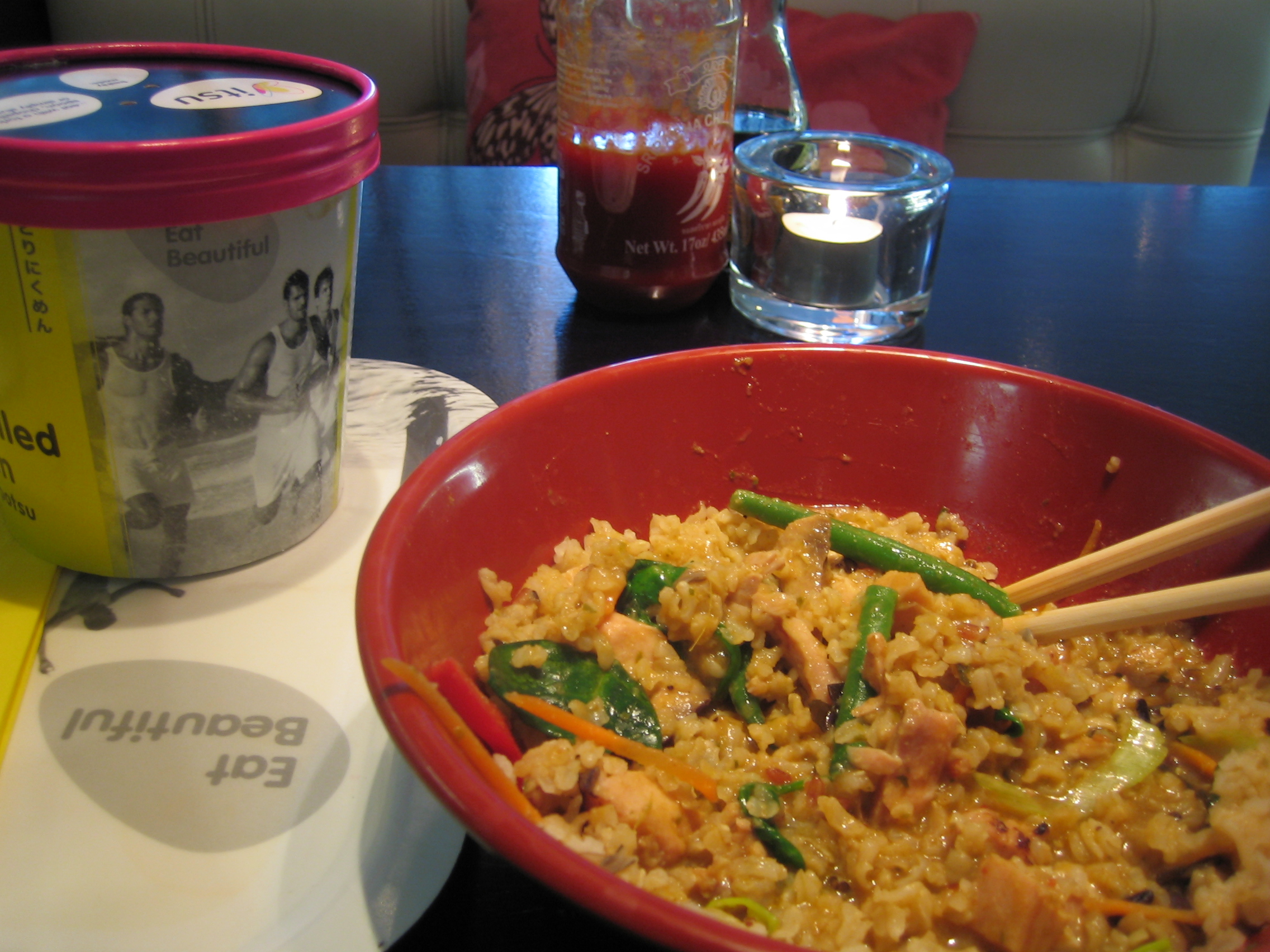
Mistake! – off the ball with the Low FODMAP diet

Decided to go to a japanese fast food establishment today as I suspected that following a low FODMAP diet might be slightly easier here, but I was mistaken and should have been more aware of watching my veggies! I asked about wheat but thought that I could perhaps pick out any vegetables that were not appropriate for the diet, I forgot about spring onion being a staple item. The green parts are OK, but the meal came with all parts of spring onion, cut small, which was impossible to pick out making it quite an issue really. So failed here big style and I knew I had as soon as the dish was served and I could actually see the problem. I also noted after I had ordered that the list of vegetables were on a notice board behind the service area, perhaps I should have been more vigilant, but I had been out all day so I was really tired. I was annoyed with myself but I suppose we can put this down to a learning experience. I am also wondering why most of the noodles available in the UK are wheat based? Surely you would imagine that as rice is the main carbohydrate in the east that rice based noodles would be more available, despite thorough searches at supermarkets the majority of noodles are based on wheat. Perhaps this is because our main stable grain is wheat – does anyone else have any ideas as to the reason for the lack of rice based noodles? Rice based noodles can be purchased from Chinese supermarkets and health food shops if you need to have them.

Book Review The Complete Idiots Guide to Eating Well with IBS Kate Scarlata RD

This book is a comprehensive guide to eating with irritable bowel syndrome. It is very user-friendly, you can dip in for a quick read or take your time. I liked the summaries at the end of every chapter and the hints and tips are very useful. The book contains lots of recipes all with nutritional breakdown and a gut fact attached to each one! Covering the fact that healthy eating – with foods that are tolerated – is very important.  The foods that can be problematic are covered and Kate does explain, in user-friendly terms, the reasons why these foods can result in symptoms, but also adds that everyone’s symptoms are individual, so it’s advisable to use the advice accordingly. She also explains how to use a food and symptom diary to identify problematic foods, which is extremely useful for those people who are managing their IBS symptoms themselves.

The book is published for the American market, red flag symptoms are discussed, however one area that does differ in the UK is the identification of people with coeliac disease. Please note that everyone (children and adults,) who have IBS should be, or have been, screened by serological testing (blood tests – endomysial antibody (EMA) IgA and/or tissue transglutaminase antibody tTGA) for coeliac disease, in the UK. At the time of the writing of the book, the emphasis on testing IBS patients for coeliac disease was geared more toward those with IBS-D in the US, the author (in her private practice) however, recommends that all of her IBS clients be tested for coeliac prior to altering their diet. These are guidelines from the National Institute of Clinical Health & Excellence (NICE) available here:-

http://guidance.nice.org.uk/CG86

I have seen patients’ whose main symptom of coeliac disease is constipation, so everyone is at risk and should be tested. Ask your GP and eat wheat, barley and rye (bread, pasta, chappatis, some breakfast cereals) before your test, see above guidelines. Read what Coeliac UK have to say here:-

http://www.coeliac.org.uk/coeliac-disease/how-to-get-diagnosed

Other differences I noticed was histamine intolerance was mentioned in the book – this is not well recognised in the UK, but it can be identified by your dietitian by using elimination diets and is likely to be covered somewhat in an additives free diet (benzoate additives for example, but substances that promote a histamine response are also found naturally in some fermented foods.) It is also advised for people on certain antidepressants – the MAOI (Monoamine Oxidase Inhibitor) diet, to help people avoid dangerous rises in blood pressure, this diet is rarely seen now in general dietetic practice.

http://en.wikipedia.org/wiki/Monoamine_oxidase_inhibitor

Other food intolerances are also mentioned, it is important to see a state registered dietitian if you suspect you have histamine intolerance as identifying these rare intolerances can be challenging.

This book is certainly worth considering if you want to buy a book to help you manage your IBS symptoms, I particularly liked the chapter on travelling and eating out, often areas where it is difficult to acquire advice. The book also discussed lifestyle factors and other areas outside the area of Low FODMAP foods, which is also included, and as such it should contain advice that can help most people with IBS who feel that their diet, or eating in general is problematic.

This book was provided free of charge by the author.

What not to say to people with IBS – a response – #supportallGUTfolks

2014 update

This post was written in 2012 and since this date the offending comment still exists in Health Magazine and unfortunately the comment facility has been closed. If you feel aggrieved at the comment I suggest you write to them – although both Nina’s comment (IBS Impact) and my requests have fallen on deaf ears, so how successful you would be is debatable.

I was reading an article for help for people diagnosed with inflammatory bowel disease (IBD,) in Health Magazine, really good useful tips actually, on how to be empathetic for those people with IBD. However I did start to see red when I read a comment of you should keep your symptoms of IBS to yourself, when empathizing with people who have IBD. Now, I do get angry really quickly when people make the suggestion that IBS is somewhat insignificant – is this because it is a ‘syndrome’ perhaps? I had a rant and a cup of tea (to gather my thoughts,) then I wrote a response to this article. Not an angry response – quite a nice balanced one, explaining that it is not helpful to people with irritable bowel syndrome (IBS) for the magazine to make this comment, with the reasons why. I also requested that they remove this particular comment from the site – to ensure that it was empathetic to all. My response was deleted from the site by the system administrators, this denies my freedom of speech as an advocate for the UK charity for IBS, and my professional ability to support all those people living with difficult GUT symptoms, despite the diagnosis. I was pleased that IBS Impact still have a well-balanced comment on the site, but they have not asked for it to be moderated – perhaps that was the difference. You can see the article here:-

http://www.health.com/health/gallery/0,,20533275,00.html

I am not in any way suggesting that crohns disease or ulcerative colitis, or any other GUT disorder is not significant, quite the contrary, but people should understand that for some people the symptoms of IBS can be very disabling. Neither am I using this article to promote IBS’s cause, I am just advocating promoting tolerance for all. So how do you empathise with someone with IBS? You can start by not saying the following:

IBS is all in your head.

This is not true, symptoms are very real. Is it the age-old view of society that IBS is ‘all in your head’ and therefore your symptoms cannot surely be real. Irritable bowel syndrome is a functional bowel condition, it is a condition where the digestive tract moves in a disordered way, producing symptoms, also the gut is hypersensitive to bloating causing pain. Yes, tests are negative, but most tests do not measure the speed the GUT moves. These symptoms are not a normal condition for the body, therefore it is difficult to understand how this disorder can be ‘imagined’. Now the gut does have a connection with the brain and the way someone is feeling can affect the way the digestive tract moves, but it certainly does not all start and end in their head. Read more about what Dr Bolen says about the brain GUT connection and five reasons why IBS is not all in someone’s head here:-

http://ibs.about.com/od/symptomsofib1/a/braingut.htm

http://ibs.about.com/od/symptomsofib1/a/notstress.htm

Oh – are you one of ‘those’ people that have a self diagnosed (thinking here – made up) food ‘intolerance’?

This is misguided, we are all aware of the popularity of alternative diets for celebrities, this does not help the cause of individuals who may have intolerance to certain foods. This can result in some level of disdain when a person with intolerances asks for a meal or product free from a certain ingredient. Please accept that not everyone has had access to professional help to identify what is causing symptoms and you should trust them, they know their bodies and what they can tolerate. You can ask them to help you to provide a meal or product that will not make them ill, most people respond very favourably to a request for help.

You are so fussy when it comes to food, you just need to get over it and eat your meal.

Comments like these are really suggesting there is nothing wrong with the person with IBS – therefore I don’t believe food affects you at all – so pull yourself together. Do you really want to tell your friend or family member that you don’t believe what real symptoms they have? This statement reinforces negative feelings and can result in mealtime arguments, really unhelpful for all involved, this will not help anyone’s digestion. Feelings do need to be discussed in a useful way, but choose a suitable time to do so and make it a positive experience by listening to each other to start.

You told me you couldn’t eat what? Oh sorry I forgot, I’ve made a vindaloo, its wheat free, will that do? You can have a large glass of milk to help reduce the heat, if you want.

The best way around this is to understand what your friend or relative is sensitive too and then perhaps you can hold some store cupboard items, that can be relied upon in an emergency. It is better to plan so that everyone can eat the same meal, but perhaps you can have an alternative in case of unannounced visits, or if you forget. Basic examples would be eggs (omelettes, poached) plain chicken or fish, boiled rice, fresh boiled warm potato, frozen carrots, salad leaves and you could also put a loaf of sliced wheat free bread in the freezer.

What do you mean you can’t come out?

Some people with IBS do not want to travel without preplanned toilet facilities and they may not wish to discuss their personal symptoms with you. Please try not to be offended. What is useful to say is that you are sorry that the person cannot come on the trip, and if you are a real friend you can offer help, if it is wanted – no questions asked, please! Wait for the person to discuss their symptoms, they will, if they feel happy and comfortable to do so. If they ask for help then the IBS Network makes a can’t wait card for trips out, it can be used in shops and stores. You could plan the trip together or wait to go till the persons symptoms are a little better controlled before you go. Arranging to visit the person in their own home is always an option, to make them feel less excluded, if the trip cannot be cancelled.

HA,HA,HA, lol,  those are Dave’s symptoms????? Really?? OMG! Just wait till I tell……..

If this person you are talking about is a friend or work colleague or even an acquaintance, then imagine how you would feel if someone were to say those things about you. Your ‘friend’ does not deserve this sort of treatment, behaviour like this causes stress and could be viewed as very hurtful – please think before you speak. Les Floyd who writes a cool blog wrote a blog about Socrates and the triple filter test, ask yourself these questions before you speak – 1. Have you made sure what you are going to tell is true? 2. Is what you are going to tell something good? 3. Is what you are going to tell something useful? If what you are going to say does not fulfil the truth, goodness or usefulness filter then simply don’t open your mouth – end of. The blog, which is really worth reading can be found here

http://lesism.blogspot.co.uk/2012_05_01_archive.html

We don’t have a special fussy eaters menu.

Remember the fact that the customer is king, the best retort you can give is to say that you may not have a good understanding of the persons requirements BUT YOU ARE WILLING TO LEARN (this is the most important part.) “What can we get for you to eat?” Then listen carefully and try to avoid contamination of their food – prepare it separately. This will make the person comfortable in what you are going to provide, it will also keep you a customer – and never forget, people with food intolerances always eat with others. If the person has had a good visit they are more likely to return and spread the good word with friends and family. Web sites that can help are

http://www.coeliac.org.uk/food-industry/caterers-and-restaurateurs

http://allergytraining.food.gov.uk/

(for ‘allergy’ also read intolerance, plenty of information about how to cater for food intolerances on the site.)

Everybody gets tired.

Tiredness is a symptom of IBS, it is not known what the cause is, but it is a symptom. Yes everyone does get tired at times but some people with IBS can have the added complication of tiredness to cope with as well as the hustle and bustle of life. The person with IBS will have some idea of how much they can cope with, please be empathetic and listen.

Some of the comments or questions discussed here are a little bit exaggerated, but I am sure that everyone has had similar comments made to them at some point. I was also a little disappointed with some of the comments on the Health Magazine site – but each to their own I suppose, all I ask is please be sensitive when speaking to someone with IBS. You know what, though? Some of the answers will also help others with GUT symptoms to eat well, so people with GUT conditions really do have very similar experiences and should be able to support each other.

Orange superfood, cheap and not too hard on the digestive tract ‘THE CARROT’ – yes, seriously!

Before I studied to be a dietitian I disdained the carrot, cheap nasty veggie filler, used too often in cheap food in my uninformed view. However as they say, knowledge is power, and I’ve had a bigger sheepish U-turn than David Cameron (they often use carrots in pasties too, you know, although this is less than traditional!) Carrots are full of fibre, and not too much of the gut fermentable stuff, so they are an excellent vegetable to choose. The main nutrient the carrot contains is beta carotene, the veggie Vitamin A, more available to the body if carrots are cooked, but they are also really nice grated raw, as crudities with low-fat dips. Carrots are also very good when cooked with cumin, thyme and coriander. Carrot juice also reduces the acidity of orange juice, making orange juice a less sharp drink, if you find its acidity a problem. Beta carotene is stored under the skin and converted to vitamin A (retinol) by the liver. Carrots are also suitable to have frozen as well as fresh, beta carotene is a fat soluble vitamin it is not easily leached during cooking or storage of the vegetable. Does eating carrots help you see in the dark? Well retinol is a required vitamin for vision, but most people do get adequate amounts, it helps you see better in the dark only if you are deficient in this vitamin, replenishing low stores will improve your vision. But it doesn’t improve it if you are eating enough, it is not exponential e.g. you do not get better and better vision if you eat more and more. Retinol is also needed for skin, teeth and to help your bones grow. Also a word of warning here – as with any food, variety is key to getting the range of nutrients your body needs – seriously overdosing on beta carotene – carrot juice or supplements, will turn you orange, carotenosis, although harmless and reversible on stopping consuming the offending item. 😉 Actually the lesson here is that there are no real ‘super’ foods eat a variety of foods to get what you need.

Coeliac Disease – What you need to know, by Alex Gazzola.

This comprehensive guide was published in 2011, is available from most major outlets and from Coeliac UK’s website (www.coeliacuk.org. or click on the link below right) Don’t let it being a book put you off, as it’s written in a succinct style, with short chapters and bold headings, so it’s easy to quickly find what you need to know. Newly diagnosed coeliacs will find it an invaluable companion to learn more about the disease and its management, when they have lots of questions that need answers. It will also be a good resource for dietitians and health care professionals new into practice who may be wondering how to answer patients’ questions. New regulations are covered, with regard to food labelling, important for those who need a pertinent update on the recent changes in this area. Above all, I was impressed by the chapter on emotional well-being, particularly important for those who have followed the diet for some considerable time and finding it difficult not to be tempted by foods containing gluten, or those who are really struggling to come to terms with their diagnosis and the lifelong commitment to following a gluten-free diet. This book will likely need updating in years to come with changes in treatments and regulations, but it has been written with much thought and empathy and should prove a valuable tool for those with a need for knowledge on coeliac disease. This book has been shortlisted for the Guild of Health Writers Writing Awards 2012 – Best Health Book category. For further information copy and paste the following link: http://foodallergyandintolerance.blogspot.co.uk/p/coeliac-disease-what-you-need-to-know.html

This book was provided free of charge by the author.