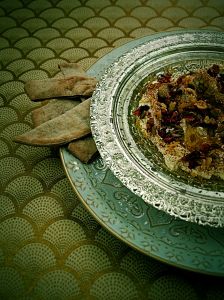
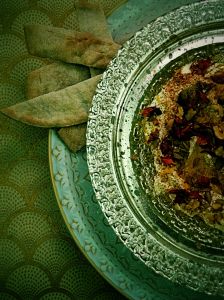
lactose free labneh dip – low fodmap

What is labneh? It is a middle eastern strained yoghurt that removes some of the whey component – some individuals can tolerate yoghurt when they have lactose intolerance however it is unclear if the draining of the whey will concentrate the lactose sugar or remove some of it. Unfortunately Wikipedia has a very unhelpful ‘reference’ in this regard suggesting that it is lower in lactose – the magazine that published the article (not a scientific reference) had to retract the statement although no actual testing appears to have been completed. It would be interesting to have Labneh made from standard yoghurt tested before and after making it, to see what the lactose content is. I however, knowing about how difficult it can be for people with lactose intolerance to be confident in what they eat, have chosen to make labneh with lactose free Greek yoghurt. This was purchased from Tesco, which do appear to have a good range of refrigerated lactose/dairy free products available. The other issue I have with some of the free from products is that they can be high in fat and the Tesco product is classed as moderate total fat (10.3 percent) this will be a high component of saturated fat – draining the whey will increase the fat percentage of the dish by a small amount. labneh is thicker than standard yoghurt and sometimes it is called a cheese, some recipes call for 48 hours straining which results in a product that can be rolled into balls and coated with delights such as seeds and nuts. I couldn’t wait that long 😄 so my version was just very thick, rich and tasty. Some recipes call for the addition of salt but my version worked just as well without adding any.

Ingredients

1 tub of Greek style lactose free yoghurt

Drizzle of oil

1-2 chopped walnuts

1/2 Teaspoon of Lebanese 7 spice mix

Grated rind of 1 lemon

Drizzle of olive oil

Sprinkling of sunflower seeds

A few edible rose petals to decorate

Serve with strips of toasted gluten free pitta breads
Equipment

1 muslin cloth or bag

1 bowl

Wooden doweling or a chopstick to hold the muslin over the bowl

1 elastic band
Method

Wash the muslin before using it and allow it to dry

Add the yoghurt to the muslin held over the bowl

Bring up the edges of the muslin to make a bag and using an elastic band secure the top.

Tie the top to the doweling and balance the doweling and bag over the bowl

Allow the whey to drain off over 24-48 hours in the fridge.

Serve in a dish and sprinkle over the other ingredients

ENJOY 😋

serves 4 as a starter

No funding was provided or free samples were used to make this recipe.
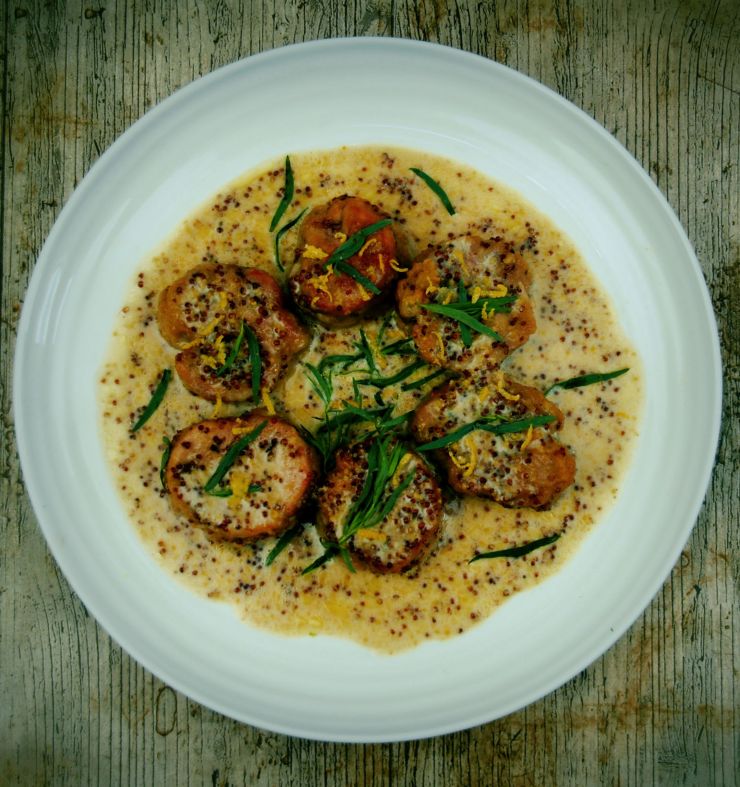
Pork loin with maple and mustard sauce – low fodmap

This is a great recipe for dinner parties with friends and is really easy to do! No one will guess that you are following a low fodmap diet at all. Often on the low fodmap diet people have a very dry diet without sauces so it is good to have an option that is less dry. You can serve this with boiled rice, new potatoes or low fodmap pasta choices and a green salad. I hope you enjoy it.

Ingredients

For the stock – 250mls of water

1 Inch of carrot chopped small

2-3 Celery leaves

A handful of black peppercorns

1 Teaspoon of asafoetida

salt

small 1 inch square of celeriac chopped small

1 bay leaf

For the rest of the dish

6 1 inch thick pork loin steaks

Juice of 1 lemon

1 tablespoon of garlic infused oil

2 tablespoons of grained mustard

2 tablespoons of maple syrup

Maize flour for dusting the pork loin

2 tablespoons of cream (suitable – but if you are very sensitive you can buy lactose free if you wish)

Grated lemon and tarragon to dress the dish

seasoning

Method

Add the water to a pan with the ingredients for the stock

Heat to simmering point and cook for 10 minutes

Drain off the solids and keep the liquid

Whilst the stock is simmering dust each loin in maize flour – add it to a plastic bag and shake

Fry the pork loins using the garlic infused oil till lightly browned in a frying pan

Add the stock and the rest of the ingredients (except the cream) to an oven proof dish.

Cover the dish and cook for 15 minutes then remove the lid and cook for another 5 minutes to drive off some of the water.

Remove from the oven and rest the pork loin – add the cream to the sauce and mix well.

Serves 2-3 depending on your appetite!

Enjoy!

Pecan and radish salad with strawberry ketchup – low fodmap

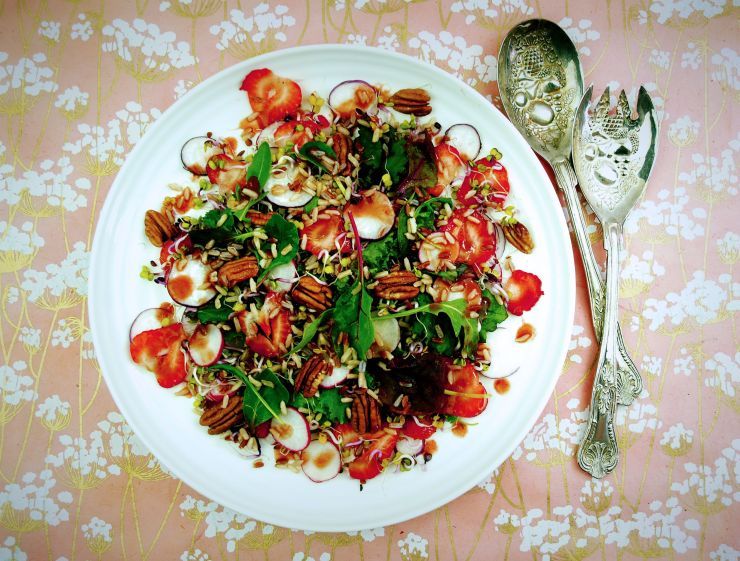
I had to use the rest of the radish I bought and thought I would make a bright salad for this very sunny day. Balsamic vinegar enhances the flavour of strawberry and when combined with radish shoots and sliced radish the strawberry reduces the heat of the salad nicely. The dressing tastes a little of ketchup – but more decadent than the standard tomato variety! I hope you enjoy it! If you have problems with resistant starches you may want to use the rice whilst it is still warm.


Ingredients

A large handful of pecan nuts

8 radishes sliced thinly

A large handful of radish sprouts

A handful of green leaves (rocket, kale, lettuce or chard – it really doesn’t matter)

3 strawberries sliced thinly

100g of cooked wholegrain rice

Dressing

1 tablespoon of hazelnut oil

2 teaspoons of balsamic vinegar

3 strawberries (mashed)

seasoning

Method

Combine all the salad ingredients together

Mix the dressing ingredients and drizzle the dressing over the salad

Season then serve

enjoy!

Serves 2

Chive salad – for low fodmapers missing onion.

This salad has onion flavour as it’s base and uses chives to achieve this. It can be made without the chive flowers but if you can get them they do make a really pretty addition to this dish. I am really lucky where I live as we have the Incredible Edible scheme. This is a organisation that has planted lots of edible herbs and fruit trees around the town that are available for all residents and visitors to sample for free – as long as you know what you are looking for and what flowers are edible and can be used. I have gathered the chive flowers (the light purple ones – see image below), fennel leaves and borage flowers (the deep blue ones that I have used for garnish.) So for me this recipe was reasonable in cost because the herbs were free. There was also a pleasure gained in going for a walk and gathering my own food.

800px-Allium_schoenoprasum_in_NH_01
Attribution ShareAlike 3.0

You can modify this recipe to make it more simple by just using chive stems and any green/red salad leaves to base the salad on, plus the borage flowers are not a necessary ingredient for the integrity of the dish. I produced this recipe without dressing as I felt the chives added plenty of strong flavour but you can add some if you wish- do check the label for fodmap ingredients. If you struggle with resistant starches then serve the rice whilst it is still slightly warm.

OLYMPUS DIGITAL CAMERA

Ingredients

75g of cooked wholegrain and red rice

4 chive flower heads and stems

4 chard leaves and stems

1/2 packet of low lactose mozzarella

2 sprigs of fennel leaves

seasoning

OLYMPUS DIGITAL CAMERA

Method

Chop the chive stems and chard stems into small pieces

Rip the chard leaves into small pieces

If needed cook the rice by covering in cold water and bringing it to the boil – season then cool and drain.

If using the chive flowers cut the individual flowers from the flower head

Rip the low lactose mozzarella into bite size pieces

Pull the fennel leaves into small pieces

Combine everything and serve

Serves one – enjoy!


Is juicing or liquid meal replacements good for IBS?

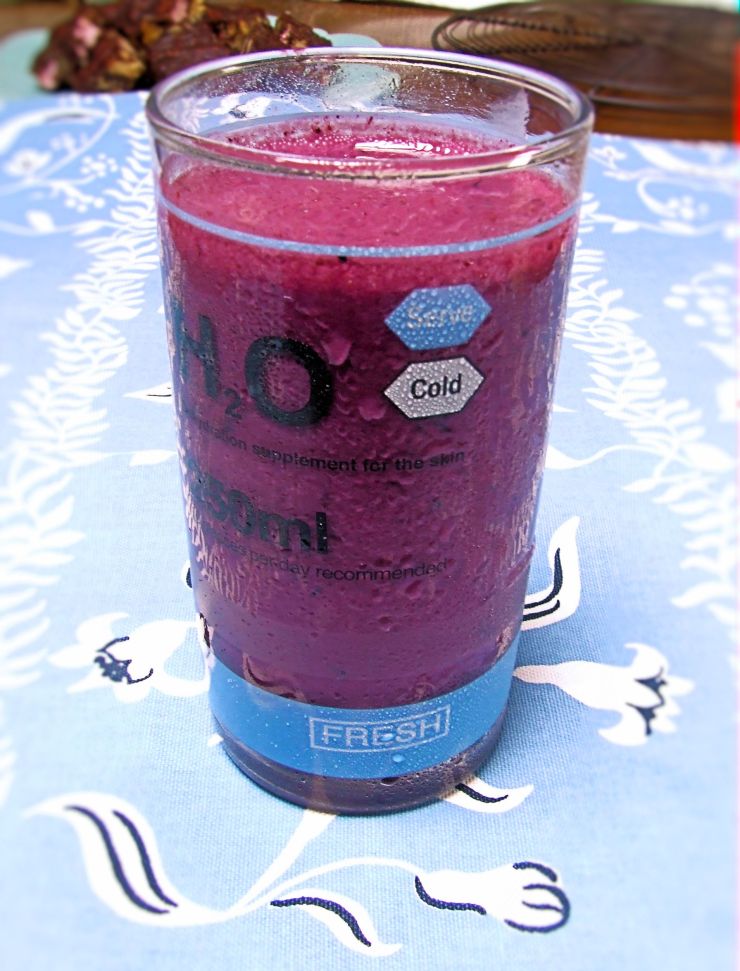
There is a plethora of information on the internet on how to improve IBS or even how to ‘cure’ IBS (if you see the word ‘cure’ you should be very skeptical – we have no cure unfortunately at this moment in time.) Despite the fact that we have no cure, we do have treatments that work to reduce or eliminate symptoms – one of these is the low fodmap diet. It is a really progressive time with research into IBS increasing knowledge and slowly improving access to services in the NHS – good reasons to be positive. What about the social media information on following a ‘juicing’ diet or liquid meal replacements for IBS – is this likely to help? The juicing hype is likely on the wane through concerns about the sugar content of juices but it is the fodmap sugars that these products contain that is the issue for many people with IBS. It could be argued that food that is chewed well and mixed with digestive juices is in-fact liquid – so why not drink liquids to reduce digestion and ease symptoms?

The answer is juicing is unlikely to help, it is neither a suitable option long term or an option that will reduce digestion processes within the digestive tract. Digestion continues despite what you consume and having liquids is not necessarily ‘easier’ on your digestive tract. If symptom improvement is reported by people it might be that the person was not chewing thoroughly to begin with. Not chewing your food can mean that excessive air is swallowed leading to bloating. Drinking your meals is not really a great idea, for other reasons. Drinking your meals can impact on the amount of fermentable carbohydrates that are consumed – juicing can mean that more of these FODMAPs can be consumed, as you are more likely to to have a larger portion in a drink, than if you consume the ingredients whole. Also dietitians advocate eating behaviour for people with IBS is an important consideration – juicing all meals is not sustainable in the long term and what happens when you break this regimen and return to old habits? Dairy free manufactured juices and shakes are often based on Soya, which is limited to 60 ml on the Low Fodmap diet – so again this can cause symptoms if consumed in excess of this amount. Testimonials are very convincing – but again, time to employ your skeptic radar, is this testimonial written by someone with something to gain from promoting a product or diet lifestyle? Many companies now employ bloggers to write posts from ‘their experience’ but they are often paid for blogging about a product and are therefore biased in their opinions.

There is another hidden issue with juicing for IBS – another promoting benefit of juicing is that it promotes fast consumption, which has always been a bad idea with IBS. Savour your food and chew your food well don’t ‘eat – or drink – on the go’.

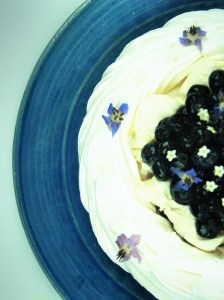
Elderflower and blueberry pavlova – low fodmap low lactose

Imagine you are going to a party and have no time to prepare a dessert. If you have made the elderflower cordial recipe then you can whip up this beautiful dessert to take to a summer party and impress your friends! It will take just ten minutes to prepare. I have used frozen blueberries – cheaper than the fresh variety, when defrosted they are softer and have more juice than the fresh varieties. Forgive me for also using a purchased pavlova base – again another time saving tip. This dessert is again another treat to have occasionally in your diet – there are plenty of healthy eating recipes on my blog, sprinkled with the occasional dessert. I have not added any sugar to the blueberries as the pavlova contains plenty. It is important that people who have to follow free from diets know how to produce all recipes in my opinion – so that people can make a choice in their diet. The only concession to the ‘free from’ isle is the lactose free mascarpone cheese, which is divine.


Ingredients

1 Shop bought pavlova base

200g of frozen blueberries

1 tub of lactose free mascarpone cheese

70ml of Elderflower cordial

Method

Add the elderflower cordial to the lactose free mascarpone cheese and mix well

Add this to the pavlova

Pile the blueberries on the top of the pavlova

Enjoy!

Serves 6


The pavlova base was purchased by me from Morrisons, the lactose free mascarpone cheese from Tesco and the pavlova was decorated with elder flowers and borage flowers – these are not an essential addition to the dish.