Adventures with Quinoa Flour

Due to a fortuitous reduction in the price of Quinoa flour at a local health shop I have purchased some to try baking with it, for you. I decided to bake some blondies – ginger ones, or may be I should call them gingies! I love the flavour ginger – in fact ALL things ginger. Now THIS particular quinoa flour, according to the packet, is sugar-free, saturated fat-free, cholesterol free, trans fat-free, sodium free, low-fat, (as is all flour – nothing new here, then ) non-gmo, gluten-free AND ‘caution extremely organic’ – but not that funny – or clever! What they forgot to tell me was wheat free, milk free, egg free but unfortunately no mention of nuts. Really great then? The protein content of the flour is not really that high at 4g /100g but quinoa has a good amino acid profile as a grain, although the flour is a fine milled white flour (- contains some fibre though at 3.5g/100g,) so it cannot be assumed that the amino acid profile is exactly the same as the raw grain. It has not been tested for fermentable carbohydrate content although quinoa grain itself is completely suitable for people following a low FODMAP diet.

 DSCF1235mod

So how easy was it to use? My first attempt was a bit of a culinary disaster. I added some zanthan gum and 2 teaspoons of ginger and a small amount of chopped stem ginger. This resulted in a very gloopy texture and after baking, on tasting, the slice was really strongly flavoured, not that pleasant in fact. The taste reminded me of the taste of chickpea flour, again this is fine to use, but I would suggest that as both these flours impart a very strong flavour to baked items it might be better to use them for very strongly flavoured dishes. My second attempt was better and as I increased the ginger flavouring the taste was very much improved.

IMG_1570As part of a flour mix this flour would be suitable, as other free from flours, such as rice or gluten free flour as these should reduce the flavour. So was it worth the purchase – at full cost, or even discounted? I feel that the ‘benefits’ of this type of flour should not command such a high cost. Most people will not be able to afford to purchase and include it in their diet on a regular basis, so nutritionally you are not likely to see the benefits of the amino acids; gut ‘calmness’ wise – there are other options to choose, which do not impart strong taste or flavour. So I will not be buying this flour on a regular basis. However for your enjoyment I have included the recipe for you – you could try it with other flour mixes! Also as this recipe is high in fats and sugars the gingie is really just suitable for an occasional treat. The random images in the post are my whistful desire for summer – it’s really cold today.


Ingredients

135 g Quinoa Flour (or other free from flour)

120 g dairy free margarine

2 eggs

100 g of dark muscovado sugar

1 tablespoon of crystallised ginger liquor

3 teaspoons of powdered ginger

40 g of chopped crystallised ginger

Pinch of salt

Chopped dried ginger to decorate

Melted dark chocolate with ginger to decorate (milk free if needed.)


Method

Add the flour, ginger & salt to a mixing bowl

Melt the margarine in a pan with the sugar, and chopped crystalline ginger and ginger liquor, warm slowly do not boil.

Cool the melted mixture slightly, add the two eggs and mix well.

Add the liquid ingredients to the dry ingredients then add the mix to a paste. Add this to a tray and bake at gas mark 5 for 25 minutes. Cool on a cooling rack and melt the chocolate and pour this over and sprinkle with finely chopped dried ginger pieces.

IMG_1759

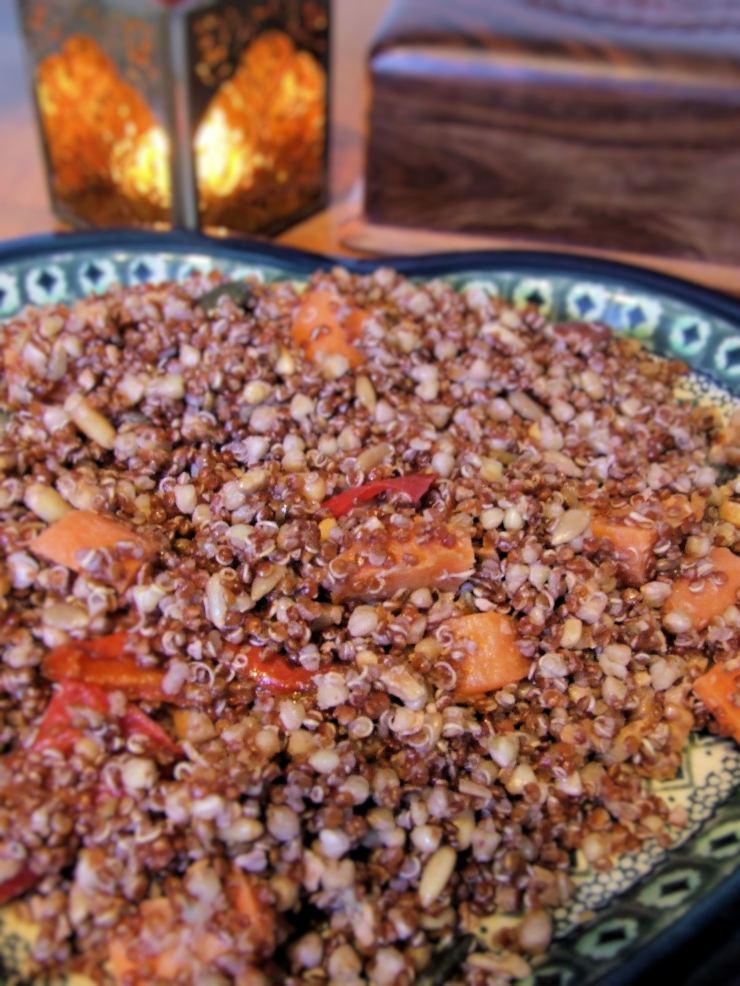
Toasted quinoa and buckwheat salad – gluten free, dairy free, vegan

DSCF1140mod

It is a little more of a challenge to follow a free from diet if you are vegan and rely on pulses in your diet – I am going to attempt to produce more recipes to facilitate a good variety of foods for you to choose, during the exclusion phase, here is one recipe – but check out the links below for others.

Ingredients

25 g Mixed sunflower and pumpkin seeds

25 g Walnuts

25 g Pine nuts

1/2 Teaspoon of smoked paprika

1/2 Teaspoon of cinnamon

1/4 Teaspoon of ginger

1  dessert spoon of garlic infused oil

1/2 Lemon

2 Carrots

1 Red pepper

150 g Red quinoa

80 g Buckwheat

Spray oil

Method

Add the spices to the garlic infused oil and mix into the chopped nuts and mixed seeds.

Toast for 5-10 minutes in an oven – watch this closely as it can easily burn.

Remove from the oven and cool.

Add the buckwheat and quinoa to a pan and add some water to cover and simmer till soft.

Cool.

Chop the pepper and carrot into medium pieces and spay with oil and roast in the oven.

Mix ingredients together and add lemon juice.

Check the labels of the spices to ensure they are free of contamination with gluten if you have coeliac disease

Serves 4-6

 https://clinicalalimentary.wordpress.com/2012/12/16/dippy-over-hummus-oh-sigh-to-find-a-low-fodmap-alternative

https://clinicalalimentary.wordpress.com/2012/10/13/snack-time-spicy-paprika-crackers-low-fodmap-wheat-free-dairy-free-gluten-free/

https://clinicalalimentary.wordpress.com/2012/10/04/midweek-low-fodmap-special-veggie-chilli-a-warming-meal-for-chilly-nights/

 updated 22.11.14

To wish you a Merry Christmas – Gluten Free, low Lactose, chestnut and chocolate Yule log!

yulelogBuche de Noel – or chocolate log, this is the last treat recipe of the holidays – yule log, chocolate & chestnut flavour. It uses chestnut spread a really tasty alternative to cream. The sponge is a fat-free one – however just because it is low-fat does not make it a healthy option, it contains plenty of sugar – just a treat for once a year! Obviously 😉

Ingredients

1 tin of chestnut spread

4 eggs

4 tablespoons of castor sugar

50 g of gluten-free cocoa powder

50 g of self-raising gluten-free flour

150 g of gluten-free dark chocolate for serving (at least 70%)

Method

Line two 30 x 19 cm sandwich trays with baking parchment.

Beat the eggs and sugar till the mix is aerated, sieve the dry ingredients and add to the mix, fold with a metal spoon till incorporated.

Add the mix to the tins and cook in the middle of an oven gas mark 6, 200 degree C for 10 minutes – watch them closely, as they are thin and at risk of burning.

Before you remove the sponge from the oven open your tin of chestnut spread and be prepared to use it.

Remove one sponge from the oven and working quickly remove the baking parchment and spread it with the chestnut spread. Roll into a log – it will crack a little but don’t worry, this will add to the overall log appearance. Keep the other sponge warm, then repeat with the process and cut the sponge at an angle to simulate a branch.

Melt 1/3 of the chocolate in a basin over boiling water – remove and add the rest of the chocolate and cool the mix to temper it. (I am not sure this was wholly successful as it still looked a little dull on setting of the log.) Pour this slowly over the log to ensure it is covered, add some to each end of the log using a palette knife. Allow to set then serve!

Serves 6-8

I wish all my readers a happy holidays and a calm gut New Year!

My annual toilet rant

I have to say I find the price of toilets rather expensive and unlike last year when I travelled to London, this year I am going to blog about the problem. My bladder is partly at fault here, because it does not feel the need to empty whilst I am on the train but as soon as I arrive at any railway station I have to go, and usually quickly.

DSCF0977mod

Toilets are a problem for many people with bowel disorders, or lack of them to be precise, many people feel anxious at going out because they need to know where the toilet is, as they can need to go with some urgency. This can increase feelings of anxiety increasing symptoms, making the problem worse. I have recently written an article on IBD and quality of life and the survey (The IMPACT study) I used for the article contests to this very fact in people with this condition. The UK part of the survey revealed that during a flare 97% of IBD sufferers needed to open their bowels urgently, this only dropped to 70% between flares – this therefore represents the majority of responders. Episodes of diarrhoea were 5-10 times per day for 38% during a flare, this level remained at 11% during remission, and this clearly has a major impact on an individual’s ability to travel, work and to function day-to-day. Perhaps not surprisingly this affected the unemployed to a greater extent. One of the primary reasons for work absence is frequency of needing the toilet (38%) and anxiety due to the risks of incontinence (33%).

posterimpact

The British Toilet Association says that the provision of public toilets is a vital service for those people with medical conditions. They campaign for ‘provision of clean, hygienic and safe publicly accessible toilets that are available where and when needed, for all types of users. They request an end to public toilet closures and authorities acceptance that access to safe, discrete toilet facilities are a basic human need. The IBD quality of life study also highlights the need for accessible facilities, unavailability of toilet facilities can increase a persons’ anxiety at going out, which can make symptoms worse. 26% of people with IBD have found they have had to be rude with staff in public areas, whom often do not appreciate the person with IBD’s needs, and have refused to allow people access to staff toilet facilities.

ots-british-toilet-association-southport-ots-onthespot-ots-otsnews.co_.uk_0

This can lead to an individual being housebound by their symptoms, reducing access to society, friends and family. 81% of people with IBD reported that they are anxious about toilet facilities when travelling somewhere new. Perhaps surprisingly, the Impact survey found that the level of concern about toilet access increased with increasing age, clearly these worries are a very personal and significant problem for people with IBD. I suspect that the same is likely true for people with IBS and other bowel conditions. I do feel that it is the responsibility of the station operators to keep these prices in proportion, particularly when we are having to experience price hikes in other areas and many people who rely on government aid to live, especially those with bowel conditions, whose anxiety at trying to make ends meet can have a direct impact on the symptoms they experience. So come on guys please consider your toilet prices – available toilet facilities are a basic human need, not an excuse for making money.

Can’t wait cards can be purchased from

www.theibsnetwork.org

www.nacc.org.uk

Radar key for disabled toilet facilities and guides are available from

www.radar-shop.org.uk/Detail.aspx?id=44

Read Peter’s blog on toilets and IBD here

http://www.crohnsupport.com/toilet-finder/

The impact study can be downloaded from

http://www.efcca-solutions.net/country.php

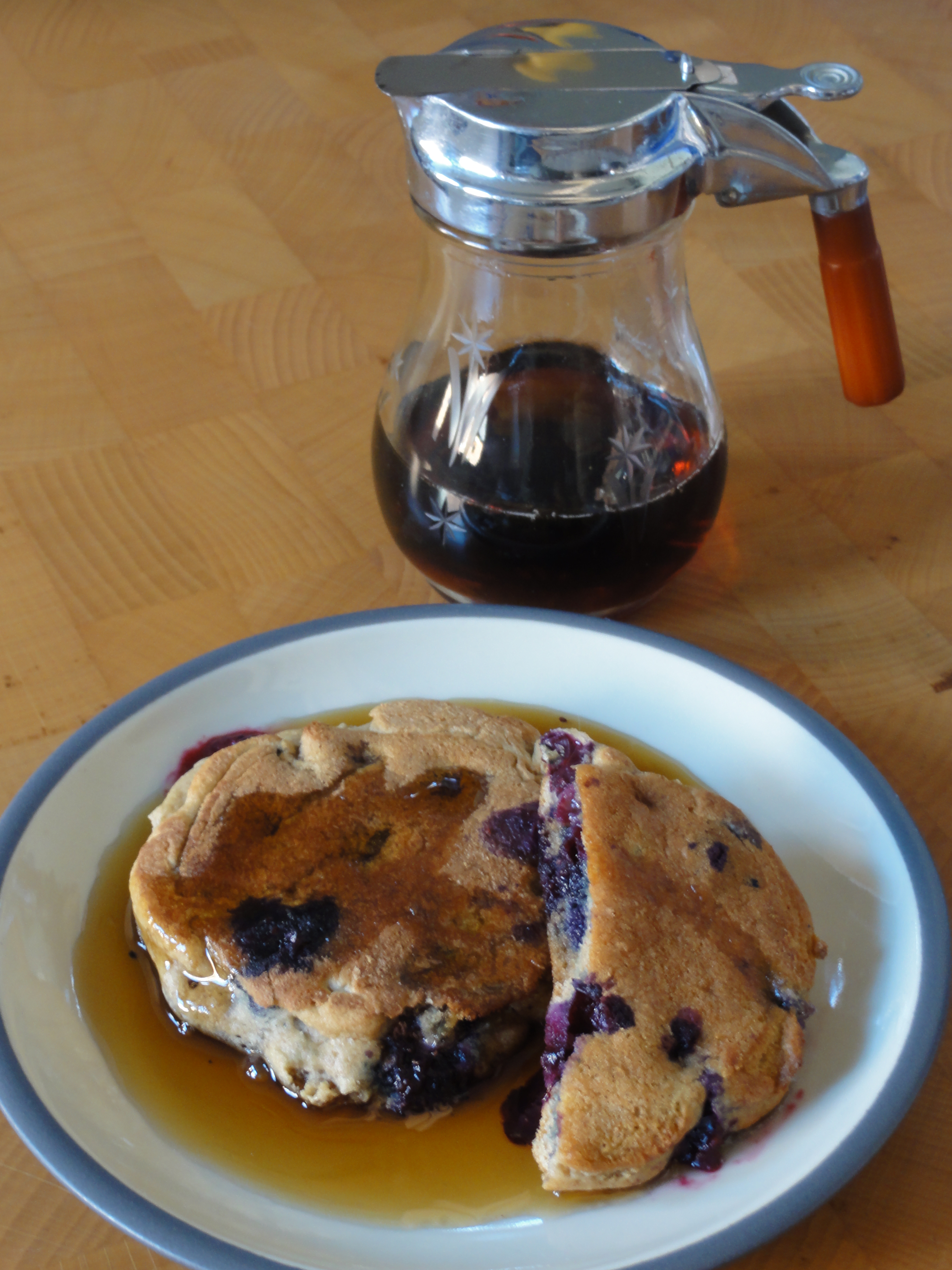
Buckwheat blueberry pancakes with maple syrup

Don’t be mistaken – buckwheat is not wheat, it is related to rhubarb and is therefore suitable for a gluten-free , low lactose, wheat free diet. Buckwheat is used widely in Europe and makes the most wonderful pancakes, hence the following recipe. I also find that blueberries make a very tasty addition to pancakes, cakes and biscuits. So an occasional treat for a special breakfast – these pancakes won’t be around for long!

DSC00595Ingredients

2 eggs

175g Wholegrain buckwheat flour

1 teaspoon of bicarbonate of soda

2 teaspoons of cream of tartar

300ml of lactose free milk (or other dairy free alternative)

200g fresh blueberries

2 tablespoons of castor sugar

salt

spray oil to fry

maple syrup to serve

Method

Mix together eggs and milk.

Weigh out buckwheat flour, bicarbonate of soda, cream of tartar and salt. Mix together and add to the milk & egg mixture and mix well.

Add blueberries and mix well.

Spray oil into a non stick frying pan and drop some of the mix into the pan and turn when the base is cooked. Remove from the pan and place in an oven at gas mark 5 till cooked through.

Serve whilst still warm with maple syrup.

The pancakes are not too sweet but are obviously sweet when the syrup is poured over!

**Please be careful and DO NOT try to eat these when hot from the oven – the blueberries get very hot and will burst and leak hot juice if eaten too soon** Also buckwheat has been the cause of some allergic reactions, so if you have not eaten it before just try a little to start with.

Updated 22.11.14

Pork loin, Low FODMAP, dairy free, lactose free, gluten free

The following recipe is for lovers of Thai flavours, I am not really a huge fan, I always feel that coriander tastes a bit soapy.  I was tempted to call this Soapy Pork Loin, but thought better of it – plenty of people love coriander though! (I don’t mean to offend my readers in Thailand, you will have to let me know what you think of my recipe.) I have sacrificed my tastes to make you a gut friendly recipe – I hope you like it.

Ingredients

1 tablespoon of low-fat peanut butter

1 tablespoon of tamari soy sauce (gluten-free)IMG_1792

2 star anise

2.5cm (1 inch) stick of fresh ginger

15 g of fresh coriander

1 tablespoon of garlic infused oil

100 ml Stock (home-made, vegetable or pork)

1/2 lime (squeezed)

Salt (to taste!)

1 pork tenderloin trimmed and cut into strips

3 Pak-Choi (chinese cabbage)

2 carrots (peel in strips with a potato peeler)

Sesame seeds to decorate.

Method

Trim and cut the tenderloin and place the pieces in a dish

Add the star anise, peeled ginger, peanut butter, oil, soy sauce, coriander and stock in a strong blender and blend well to make a sauce. If you wish you can add chilli or chilli powder if your stomach can stand it.

Pour this over the pork, add lime juice, salt and leave to marinate at least two hours.

Cook the pork mix and sauce in a pan until tender, then add to a wok with the carrot & pak-choi, cook with the vegetables still al dente.

Serve, sprinkle over sesame seeds and serve with boiled rice.

Serves 3