Aubergine stuffed with lamb and pine nuts

This recipe is another Ottolenghi recipe which I have modified to make it low fodmap and is quite simply delicious the original version can be found in his Jerusalem recipe book. It was very easy to modify really- just don’t add any onion to the recipe! Cinnamon is low fodmap and one of my favourite spices. It does take time to prepare so it is probably a recipe for a Sunday evening meal – slow food and great for fodmaper’s with IBS. Serve with wholegrain rice for a complimentary starchy carbohydrate.

OLYMPUS DIGITAL CAMERA

Ingredients

4 aubergines

6 tablespoons of oil

11/2 teaspoons of ground cumin

11/2 teaspoons sweet paprika

1 tablespoon of ground cinnamon

500g mince lean lamb

50g pine nuts

20g flat leafed parsley

2 teaspoons tomato puree

3 teaspoons of sugar

150 ml water

1 teaspoon of tamarind

4 cinnamon sticks

1 tablespoon of lemon juice

seasoning

OLYMPUS DIGITAL CAMERA

Method

Slice the aubergine length-ways and place skin side down in a roasting tin. Brush with 1 tablespoon of oil and season. Cook at 220 degrees C, gas mark 7 for about 20 minutes.

Whilst the aubergines are cooking make the sauce. Add the remaining olive oil to a pan and add half the dry spices and cook for 2 minutes to release the flavour of the spices. Add the lamb, pine nuts, parsley, 1 teaspoon of the tomato purée, 1 teaspoon of sugar and seasoning. Cook for about 10 minutes till the meat is browned.

Place the remaining spices in a bowl and add water, lemon juice, tamarind, remaining sugar, 1 teaspoon of tomato purée, cinnamon sticks and season well. Remove the aubergines from the oven and top each with a quarter of the mince. Pour the sauce into the bottom of the roasting tin. Place the dish back in the oven cover with foil or a lid, reduce the temperature to 195 degrees C or gas mark 5 and cook for another one and a half hours. Serve with a sprinkling of chopped parsley.

Serves 4

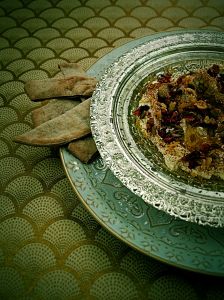
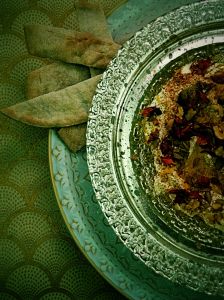
lactose free labneh dip – low fodmap

What is labneh? It is a middle eastern strained yoghurt that removes some of the whey component – some individuals can tolerate yoghurt when they have lactose intolerance however it is unclear if the draining of the whey will concentrate the lactose sugar or remove some of it. Unfortunately Wikipedia has a very unhelpful ‘reference’ in this regard suggesting that it is lower in lactose – the magazine that published the article (not a scientific reference) had to retract the statement although no actual testing appears to have been completed. It would be interesting to have Labneh made from standard yoghurt tested before and after making it, to see what the lactose content is. I however, knowing about how difficult it can be for people with lactose intolerance to be confident in what they eat, have chosen to make labneh with lactose free Greek yoghurt. This was purchased from Tesco, which do appear to have a good range of refrigerated lactose/dairy free products available. The other issue I have with some of the free from products is that they can be high in fat and the Tesco product is classed as moderate total fat (10.3 percent) this will be a high component of saturated fat – draining the whey will increase the fat percentage of the dish by a small amount. labneh is thicker than standard yoghurt and sometimes it is called a cheese, some recipes call for 48 hours straining which results in a product that can be rolled into balls and coated with delights such as seeds and nuts. I couldn’t wait that long 😄 so my version was just very thick, rich and tasty. Some recipes call for the addition of salt but my version worked just as well without adding any.

Ingredients

1 tub of Greek style lactose free yoghurt

Drizzle of oil

1-2 chopped walnuts

1/2 Teaspoon of Lebanese 7 spice mix

Grated rind of 1 lemon

Drizzle of olive oil

Sprinkling of sunflower seeds

A few edible rose petals to decorate

Serve with strips of toasted gluten free pitta breads

Equipment

1 muslin cloth or bag

1 bowl

Wooden doweling or a chopstick to hold the muslin over the bowl

1 elastic band

Method

Wash the muslin before using it and allow it to dry

Add the yoghurt to the muslin held over the bowl

Bring up the edges of the muslin to make a bag and using an elastic band secure the top.

Tie the top to the doweling and balance the doweling and bag over the bowl

Allow the whey to drain off over 24-48 hours in the fridge.

Serve in a dish and sprinkle over the other ingredients

ENJOY 😋

serves 4 as a starter

No funding was provided or free samples were used to make this recipe.

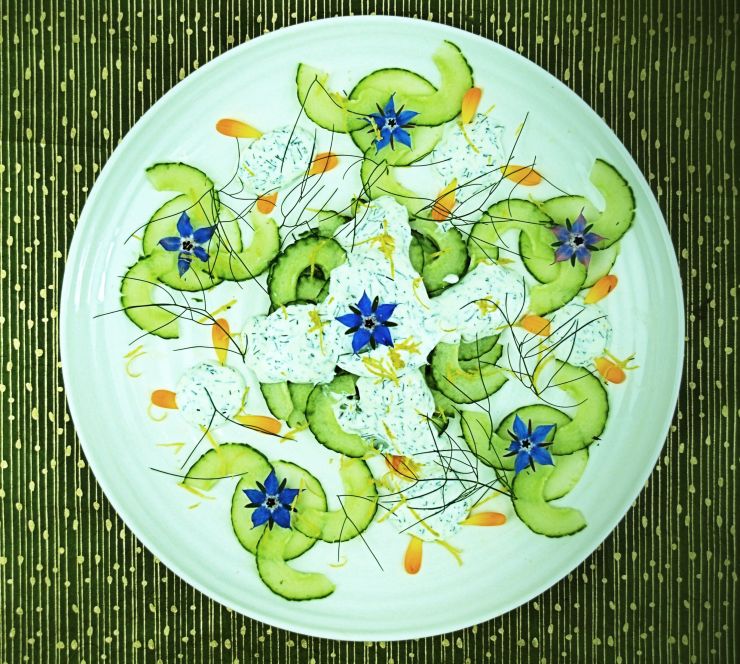
Fennel leaf and mint cream cheese dressing – low Fodmap

Just the ticket to dress thinly sliced cucumber for a fresh salad or sandwich filler. The cream cheese is lactose free but not cows milk protein free. If you have a small amount (less than two tablespoons) you could use standard cream cheese dressing as this is entirely suitable in that portion size for the low fodmap diet – this dressing is also gluten free.

Ingredients

2 Tablespoons of low lactose cream cheese

2 shoots of Fennel leaves

2-3 mint leaves

Grated lemon rind

1/2 grated cucumber

OLYMPUS DIGITAL CAMERA

Method

Chop the fennel and mint leaves finely

Grate the rind of 1 lemon

Mix with the low lactose cream cheese

If the dressing is too thick you can add a little water to thin down the dressing, if needed.

Serve as a sandwich filler with cucumber or as a dressing on half a finely sliced cucumber as a salad. Serves 1-2 depending on it’s use.

OLYMPUS DIGITAL CAMERA

A word about the flowers: these have not been fodmap tested but fodmap and food intolerance is all about the portion size you have and very small amounts are not likely to be an issue, however if you do wish to avoid using them that is also OK – they are not integral to the dish. These flowers used to dress the dish are borage and calendula (pot marigold) flowers, which are edible – (only use calendula petals in small amounts). There are lots of anecdotal reports of the benefits of these flowers – I have used them simply because they are pretty. If you do forage for these ensure you know what you are looking for, take care about where you are gathering – some flowers may have been treated with insecticide so it is best to avoid those – and do wash them thoroughly before use.

Hot radish salad

Do you want a side salad with some heat but avoiding chilli and spices? Then radish is your choice. Here I have used three coloured radish but this works just as well with the basic red variety that is common in most supermarkets. This is a salad to accompany other dishes, it is not a good source of carbohydrate or protein so cannot form the only part of a balanced meal. I have also added some nasturtium petals – these can be omitted if you are strictly following the low fodmap diet, they can also add to the heat of the dish.

OLYMPUS DIGITAL CAMERA

Ingredients

1 bag of radish

A bag of green salad leaves (I used mixed chard and red lettuce.)

One or two edible washed nasturtium flowers

OLYMPUS DIGITAL CAMERA

Method

Wash then prepare the radishes three ways. – thinly slice, slice in two and prepare radish flowers.

Radish flowers are made by cutting a zigzag pattern with a knife half way along the radish then separating it in half – makes two flowers, then slice the base to provide a flat surface for it to sit on.

Add the washed salad leaves and radish to the dish with some nasturtium petals and chopped chard  stems for colour.

Serve as a side salad, you could add some dressing – but do check for those fodmaps!


Pasty

I can’t claim that these are the Cornish variety but they are tasty and the celeriac gives a nice celery flavour to them. The pasty is a portable treat that can be taken on any picnic and these are low fodmap and very filling.

Ingredients

300g of gluten free plain flour

1 tsp xanthan gum

1 tsp salt

50g butter

1 egg

1 extra egg for glazing and extra flour for rolling out the pastry

500g of beef skirt

1oog of celeriac

Fresh Thyme

Salt and pepper

Method

Add the flour to a bowl and salt and pepper and xanthan gum – stir well into the flour

Cut up the butter into cubes and rub into the flour

Add the egg and extra water if required and bring the pastry together

Knead the pastry till smooth

Chill

Whilst the pastry is chilling chop the meat and celeriac into small cubes

Add the thyme

break the second egg into a bowl and whisk

Roll out the pastry in between cling film

Cut out disks about the size of a small plate

Add a small amount of meat and celeriac and thyme to half the disk

Add salt and pepper

Brush egg around the pastry edge on the half of the disc with filling

Bring over the other half of the disk to make the lid and crimp

Brush the top of the pastry with egg wash

Cook at 165 degrees C or Gas mark 3 for 50-55 minutes

OLYMPUS DIGITAL CAMERA


Garlic – the fodmaper’s enemy?

Garlic contains fructans (an oligosaccharide) and is for some people a potent cause of symptoms in IBS. It is a shame that it does as it is found in many ready meals and processed foods so can be a challenging part of the diet to avoid. Fructans is a non absorbable sugar that increases fermentation in the gut and gives some people with IBS symptoms. Cooking method is the key with avoiding fructans, they are soluble in water and this property means that if you use oil only, to cook the garlic, the flavour is imparted but non of the fructans. As the fructans are not soluble in oil. So, by all means fry your garlic in a small amount of oil then remove the garlic pieces from the pan before adding any water based liquid to the pan, such as stock, sauce or tomatoes. If you don’t wish to do that, then a good option is garlic infused oil, ensure the oil is clear and free of garlic pieces and you should not go wrong.

One reason why it is important to re-introduce fodmaps to the diet is to relax the diet and you might find that you can tolerate a small, or large amount of garlic. This means that you can have foods containing garlic and it makes looking for suitable foods a little easier.

What about wild garlic, or Ramsons? Is it low in fructans? It might be assumed that because the green leaves of spring onion and leek are, so must the leaves of wild garlic. As far as I am aware they have not been tested, so it is wise not to assume. It is also wise, if you do not have an issue with garlic to use the foragers code – if you are unsure of what you are gathering, then don’t pick the leaves. See the image below from Compoundchem.com which explains about poisonous plants that have a similar appearance to wild garlic and you would not want to get them mixed up.

So, is garlic an enemy? For some people, for sure – it results in symptoms but my opinion is that we have no food ‘enemies’. For some lucky people they can eat garlic with impunity. This is always the case with IBS – every situation is different.

If you can eat it the image is a salad based on cucumber, pine nuts, capers, anchovy, pea shoots wild garlic flowers and drizzle of balsamic vinegar – yum.

But if you can’t eat garlic you can impart that glorious flavour in other ways and to see a carpet of garlic flowers in the spring is a joy that is guaranteed not to have any untoward effects!