Tomato free moussaka – low FODMAP

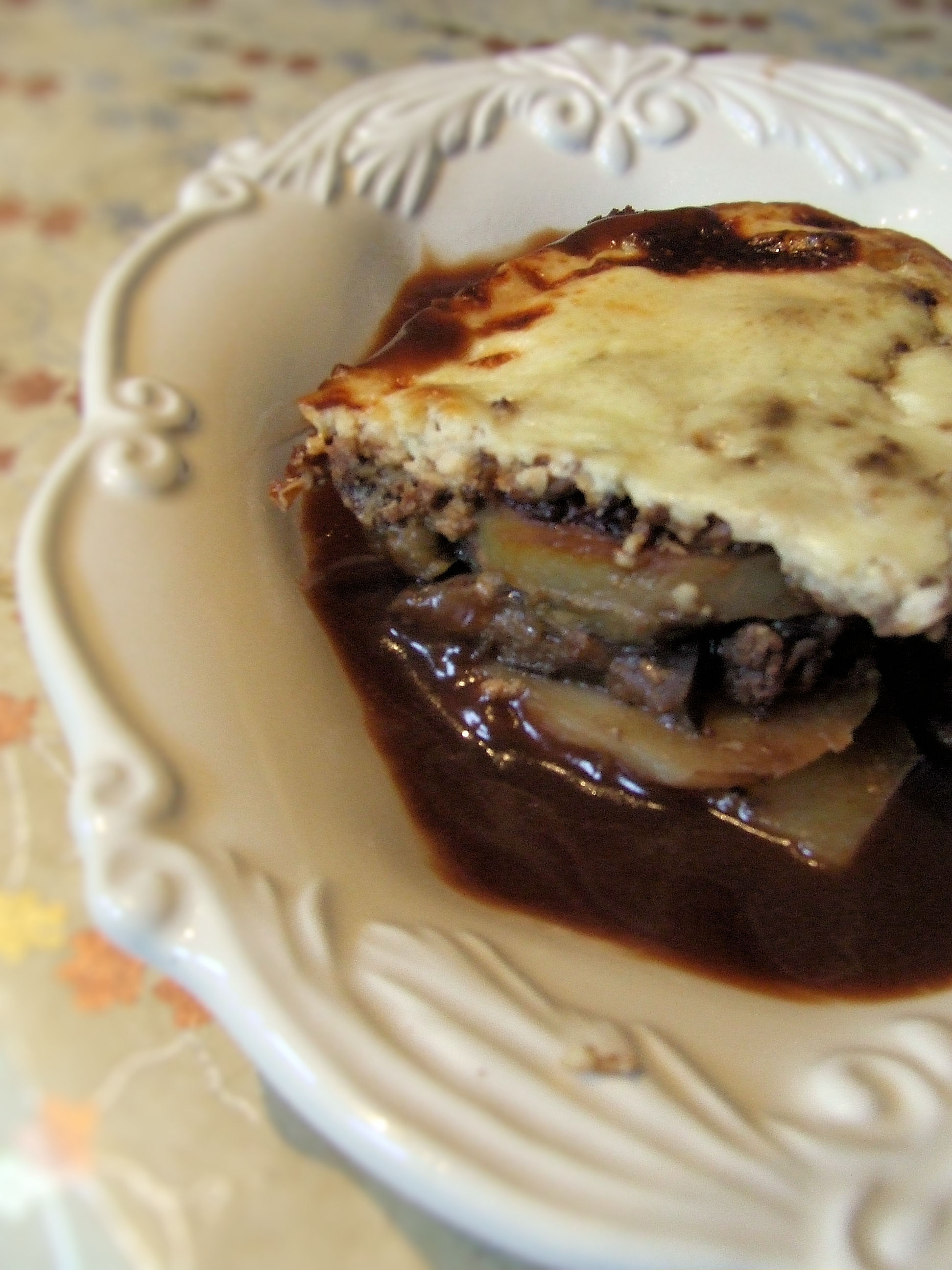
DSCF1197modMoussaka is one of my favourite dishes, in my humble view it has to have cinnamon included – and lot’s of it. You might feel that adding a spice used in sweet dishes in the UK sounds strange, but it rounds off the flavour really well. It can be a high calorie dish particularly when lamb is the main component but it is possible to reduce the high fat load. I may be performing moussaka sacrilege by suggesting that it can be made without tomatoes, but I feel the essential flavours are included, so the dish doesn’t miss much by not using them.

Ingredients

2 medium aubergines

1 tablespoon of garlic infused olive oil

4 potatoes

500 g lean lamb mince

2 teaspoons of cinnamon

1 teaspoon of asafoetida

2 teaspoons of dried oregano

1 pint of skimmed lactose free milk (Yes you can get it now!!!)

75 g grated strong mature cheddar

2 eggs

200 ml of red wine

1/2 teaspoon of gravy browning

100 ml of water

4 teaspoons of cornflour

Salt & pepper to taste

Method

The method is time-consuming but I don’t eat this dish regularly, I usually have it on special occasions so it is worth making an effort to make it well.

1) Dry fry the mince and add cinnamon, asafoetida, oregano and gravy browning. Drain off the cooking juices and allow the mince to cool. Put the cooking juices in the refrigerator till the drained lamb fat has gone solid, scoop off the fat and throw it away.

2) Pour the remaining cooking juices in a frying pan, add red wine, water and cook. Mix 2 teaspoons of the cornflour with a little water then add to the gravy, cook till thickened.

3) Slice the aubergines into 4-5 mm circular slices, sprinkle with olive oil and roast in the oven till brown. Cool.

4) Slice the potato to the same thickness as the aubergine and par boil for 10 minutes – do this just before you are ready to assemble the dish, you don’t want them to go cold.

5) Grate the cheese, pour the milk into a pan and add the cheese and the rest of the cornflour (mixed with a little water.) Cook till thickened, cool and add the eggs – mix well.

6) Add a layer of aubergine, potato, meat – add gravy. Continue to build up the layers till the ingredients are used up. Pour the cheese sauce on the top.

7) Cook for 1 hour at gas mark 6 (200°C), or until the potatoes are soft and the top has browned.

Serves 6

Taking your IBS on holiday – too scary to contemplate? Or perhaps it might help!

January is a time when we start to think about holidays later in the year. However many people who suffer from IBS don’t travel as a consequence of having symptoms. Travelling can be a daunting prospect if you suffer from symptoms of IBS, sitting for too long can make constipation worse or having dreaded diarrhoea and anxiety of not being able to access toilet facilities quickly, can often put people off travelling too far from home. I often find that people tell me that their symptoms can reduce on holiday so, might it be worth the aggravation of getting to your destination to have the symptoms improve once you are there? Here are some tips that might help and this has been posted in time for you to think about arrangements that you might need to make. This post was originally written for Patient UK last year.

1. Ensure you have plenty of time to get to the airport or to your destination if staying in the UK. Don’t rush, try to use travelling as part of the holiday experience. It doesn’t matter if it takes longer to get to your destination, sometimes using A road routes might be a good alternative to motorway travel, you can drive through some stunning scenery in the UK.

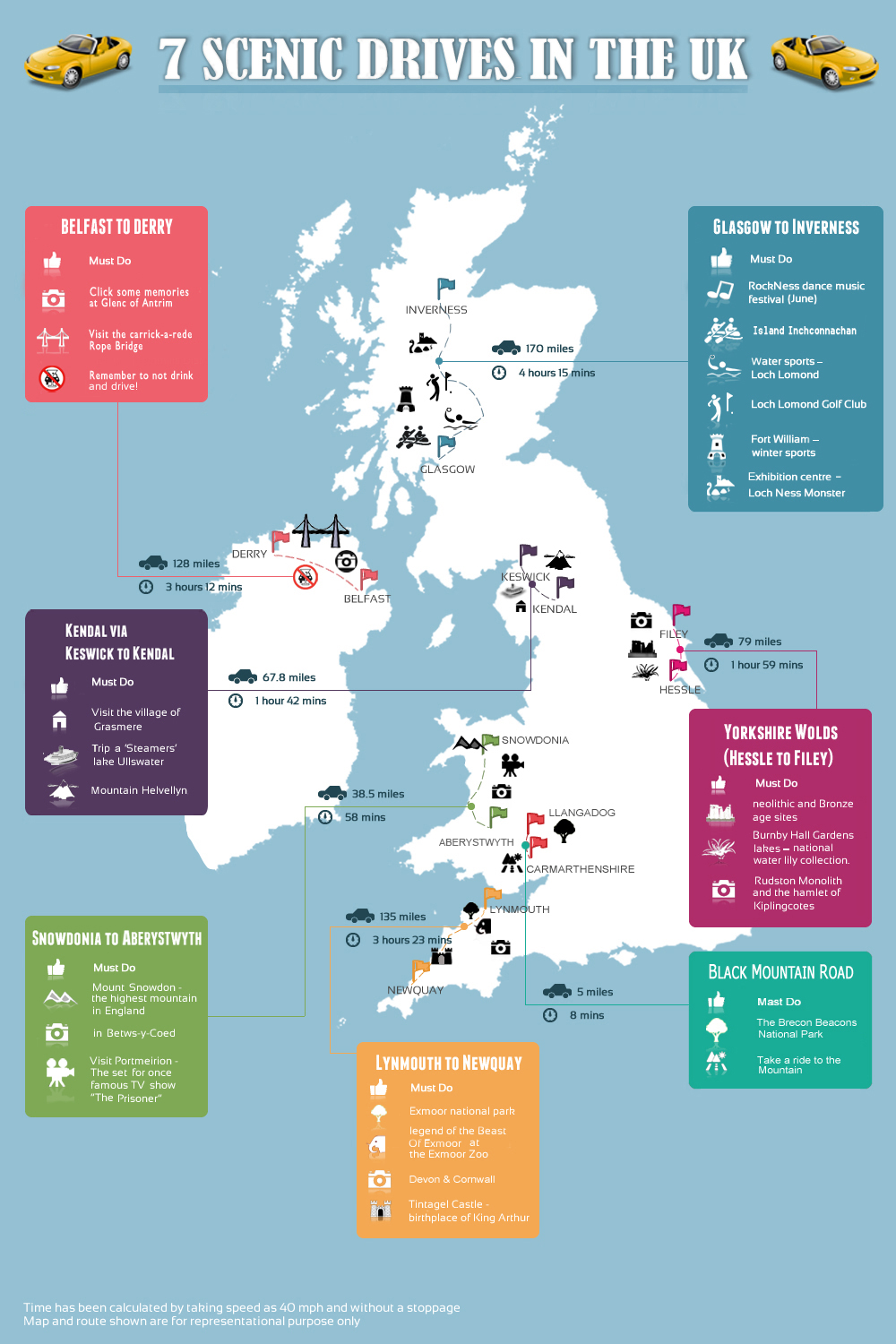
Infographic from Hertz https://www.hertz.co.uk/rentacar/misc/index.jsp?targetPage=scenic-drive-in-uk.jsp

2. Before travelling plan toilet stops along the route if driving in the UK – Patient UK have a very useful new app for this and perhaps more importantly, useful for those unplanned panic stops! See the link at the bottom right hand side of the blog.

Work within your symptoms – if they are worse at a particular time of day, plan to travel outside of those times if you can.

3. If flying or travelling by train book you seat in advance as near to the toilet as you feel comfortable – don’t forget your can’t wait card or translation card* have this in your hand luggage (just about as important as your passport!) Do check the train you are planning to travel on (and the station) has toilet facilities.

Chiltern Railways transformed via Thame Gazette. Lets hope that this is not just a superficial attempt at improving toilet provision.

Get up and move around, if you can, during your flight or train journey – this will also help your risk of blood clots!

4. If you suffer from food intolerances book your in-flight meal in advance contact the airline and discuss your needs with them. If you follow the Low FODMAP diet, or exclude any other foods, avoid foods that result in symptoms at least 48 hours prior to travelling.

5. Take some spare clothing, wet wipes or toilet paper in your hand luggage to freshen up and to use in emergencies. Use a discrete bag to store them in your hand luggage so if your bag needs checking at customs you won’t feel too embarrassed.

6. Do some research about the food in the country you are travelling to, sometimes patient organisations available in the country you are travelling to can be helpful if you are intolerant of gluten for example – https://www.coeliac.org.uk/gluten-free-diet-and-lifestyle/holidays-and-travel/

Don’t plan to do too much during your vacation – less is more! You are more likely to enjoy the experience if you choose one or two visits rather than a very packed itinerary.

7. Contact the hotel to discuss food requirements before you travel – or you may wish to go self catering if you have more than one food intolerance and would find it difficult to manage. Often plain food such as rice, chicken & fish are abundant so do think about your dietary needs when planning your holiday.

8. Be aware that toilet facilities abroad may be very different to what we are used too at home, again being prepared for this can help.

How to use a toilet demonstrated in 2012 by Bryce McGowan – Solomon Islands

9. Take some rehydration salts in your first aid pack as you can become dehydrated very quickly in hot climates especially if you experience diarrhoea. Ensure you have plenty of fluids to drink, 8-10 glasses are usually adequate but you may need more, dark coloured urine (wee) is usually a good indication that you are not having enough.

10 Be very aware and follow travel food hygiene advice at your destination, as the last thing you would want is a case of travellers diarrhoea during your holiday http://www.nhs.uk/conditions/Diarrhoea/Pages/Introduction.aspx  More information on food safety abroad can be found at http://www.nhs.uk/livewell/travelhealth/pages/travellersillnesses.aspx

*Can’t wait and translation cards are available with the membership package for The IBS Network.

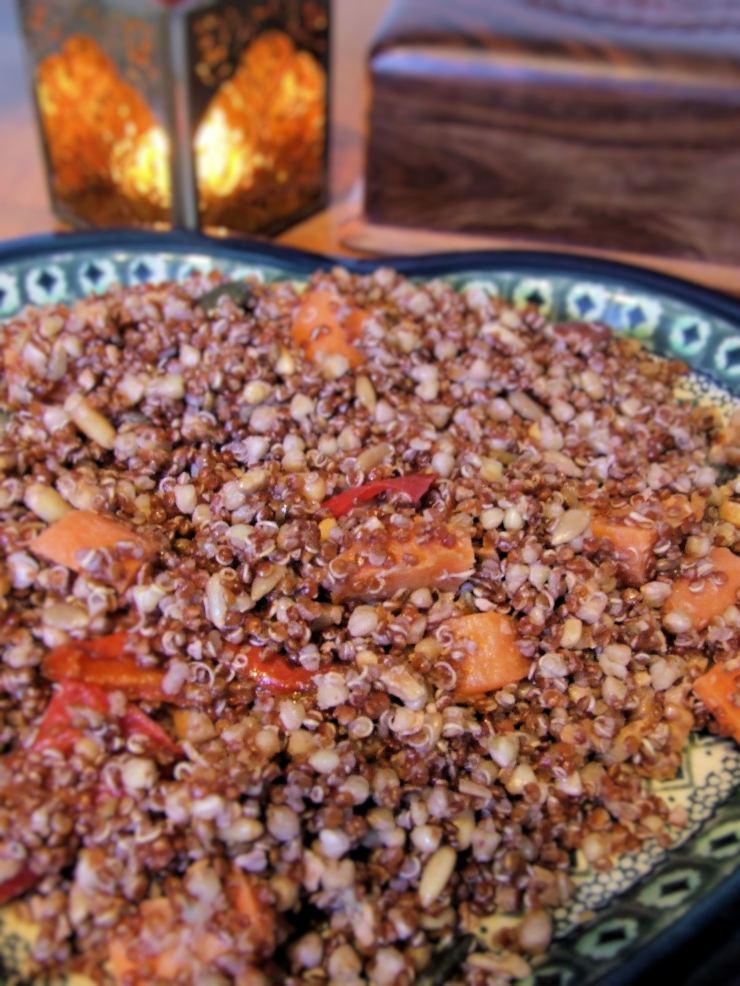
Toasted quinoa and buckwheat salad – gluten free, dairy free, vegan

DSCF1140mod

It is a little more of a challenge to follow a free from diet if you are vegan and rely on pulses in your diet – I am going to attempt to produce more recipes to facilitate a good variety of foods for you to choose, during the exclusion phase, here is one recipe – but check out the links below for others.

Ingredients

25 g Mixed sunflower and pumpkin seeds

25 g Walnuts

25 g Pine nuts

1/2 Teaspoon of smoked paprika

1/2 Teaspoon of cinnamon

1/4 Teaspoon of ginger

1  dessert spoon of garlic infused oil

1/2 Lemon

2 Carrots

1 Red pepper

150 g Red quinoa

80 g Buckwheat

Spray oil

Method

Add the spices to the garlic infused oil and mix into the chopped nuts and mixed seeds.

Toast for 5-10 minutes in an oven – watch this closely as it can easily burn.

Remove from the oven and cool.

Add the buckwheat and quinoa to a pan and add some water to cover and simmer till soft.

Cool.

Chop the pepper and carrot into medium pieces and spay with oil and roast in the oven.

Mix ingredients together and add lemon juice.

Check the labels of the spices to ensure they are free of contamination with gluten if you have coeliac disease

Serves 4-6

 https://clinicalalimentary.wordpress.com/2012/12/16/dippy-over-hummus-oh-sigh-to-find-a-low-fodmap-alternative

https://clinicalalimentary.wordpress.com/2012/10/13/snack-time-spicy-paprika-crackers-low-fodmap-wheat-free-dairy-free-gluten-free/

https://clinicalalimentary.wordpress.com/2012/10/04/midweek-low-fodmap-special-veggie-chilli-a-warming-meal-for-chilly-nights/

 updated 22.11.14

To wish you a Merry Christmas – Gluten Free, low Lactose, chestnut and chocolate Yule log!

yulelogBuche de Noel – or chocolate log, this is the last treat recipe of the holidays – yule log, chocolate & chestnut flavour. It uses chestnut spread a really tasty alternative to cream. The sponge is a fat-free one – however just because it is low-fat does not make it a healthy option, it contains plenty of sugar – just a treat for once a year! Obviously 😉

Ingredients

1 tin of chestnut spread

4 eggs

4 tablespoons of castor sugar

50 g of gluten-free cocoa powder

50 g of self-raising gluten-free flour

150 g of gluten-free dark chocolate for serving (at least 70%)

Method

Line two 30 x 19 cm sandwich trays with baking parchment.

Beat the eggs and sugar till the mix is aerated, sieve the dry ingredients and add to the mix, fold with a metal spoon till incorporated.

Add the mix to the tins and cook in the middle of an oven gas mark 6, 200 degree C for 10 minutes – watch them closely, as they are thin and at risk of burning.

Before you remove the sponge from the oven open your tin of chestnut spread and be prepared to use it.

Remove one sponge from the oven and working quickly remove the baking parchment and spread it with the chestnut spread. Roll into a log – it will crack a little but don’t worry, this will add to the overall log appearance. Keep the other sponge warm, then repeat with the process and cut the sponge at an angle to simulate a branch.

Melt 1/3 of the chocolate in a basin over boiling water – remove and add the rest of the chocolate and cool the mix to temper it. (I am not sure this was wholly successful as it still looked a little dull on setting of the log.) Pour this slowly over the log to ensure it is covered, add some to each end of the log using a palette knife. Allow to set then serve!

Serves 6-8

I wish all my readers a happy holidays and a calm gut New Year!

Got Leftovers? A Christmas rice salad Low FODMAP and Gluten Free

DSCF1100modI have a hobby – I collect vintage Christmas decorations. The one in the picture, the watering can, was part of my granddad’s Christmas decorations and I remember it when we used to visit his house. It does look a little the worse for wear now, and granddad passed away a number of years ago, but I have happy memories when I use it so I would not throw it away. I have a number of other family decorations that come out every year and I have also bought some more – second-hand, this year. A number of the shops are selling vintage look baubles – but in my view you can’t beat the real thing! Using second-hand or ‘left overs’ is a really good idea – too much in life is disposable these days and this is a really environmentally friendly and economical way of living.

I have made this recipe using chicken as we had some chicken to use up, but it can also be used with turkey leftovers, I am sure you will have some to spare!

Ingredients

150 g Brown basmati rice

30 g Wild rice

20 g Camargue red rice

1 Tablespoon of garlic Infused oil

15 g Fresh Tarragon

2 Chicken breasts

1 Tablespoon of grained mustard gluten-free

1 Tablespoon of light mayonnaise (gluten-free or egg free mayonnaise if needed)

40 g pine nuts

5 Radishes

5cm Slice of cucumber

Salt + pepper to taste.

Fresh salad leaves to decorate

Serves 3-4

Method

If using fresh turkey or chicken coat the meat in oil and chop the tarragon and add it to the chicken – roast in an oven till cooked. Cool quickly. If using cooked meat then add the oil and tarragon to the rice and use the meat cold.

Add the rice to a pan with water and simmer till cooked and soft, cool quickly.

Mix the mayo and grained mustard together and add to the rice with the chicken, pine nuts, sliced radishes and chopped cucumber add salt + pepper to taste and serve.

If you are sensitive to resistant starches this dish can be served freshly cooked and hot – just serve the radish and cucumber on the side of the plate.

I wish all my readers a happy calm gut holiday!

http://www.digsdigs.com/40-beautiful-vintage-christmas-tree-ideas/

Blooming blinis this should be a good holiday!

This recipe is really easy to make and is gluten-free and low lactose. You shouldn’t need to buy these, the recipe makes about 30. A great treat for Christmas eve parties to have with a glass of wine to toast to the season.

Ingredients

300g Buckwheat flour

1 teaspoon of dried yeast

2 eggs

3/4 pint of lactose free milk

Salt + pepper

Method

Remove the eggs from the fridge and leave to warm to room temperature. Heat the milk till luke warm (body temperature.) Weigh out the flour and add the eggs, milk, yeast salt and pepper. Mix well, heat a frying pan and using spray oil to fry, drop some of the mixture into the pan and leave to cook, you should see small bubbles forming on the surface of the blini. Turn over and cook through.

Serve with smoked salmon and dairy free cream cheese and a glass of chilled white wine. Cheers!


If you are following the Low FODMAP diet this recipe works just as well with gluten free self raising flour.

Contamination free Buckwheat four (Gluten Free) can be sourced from Infinity Food Organics and was purchased for this recipe.