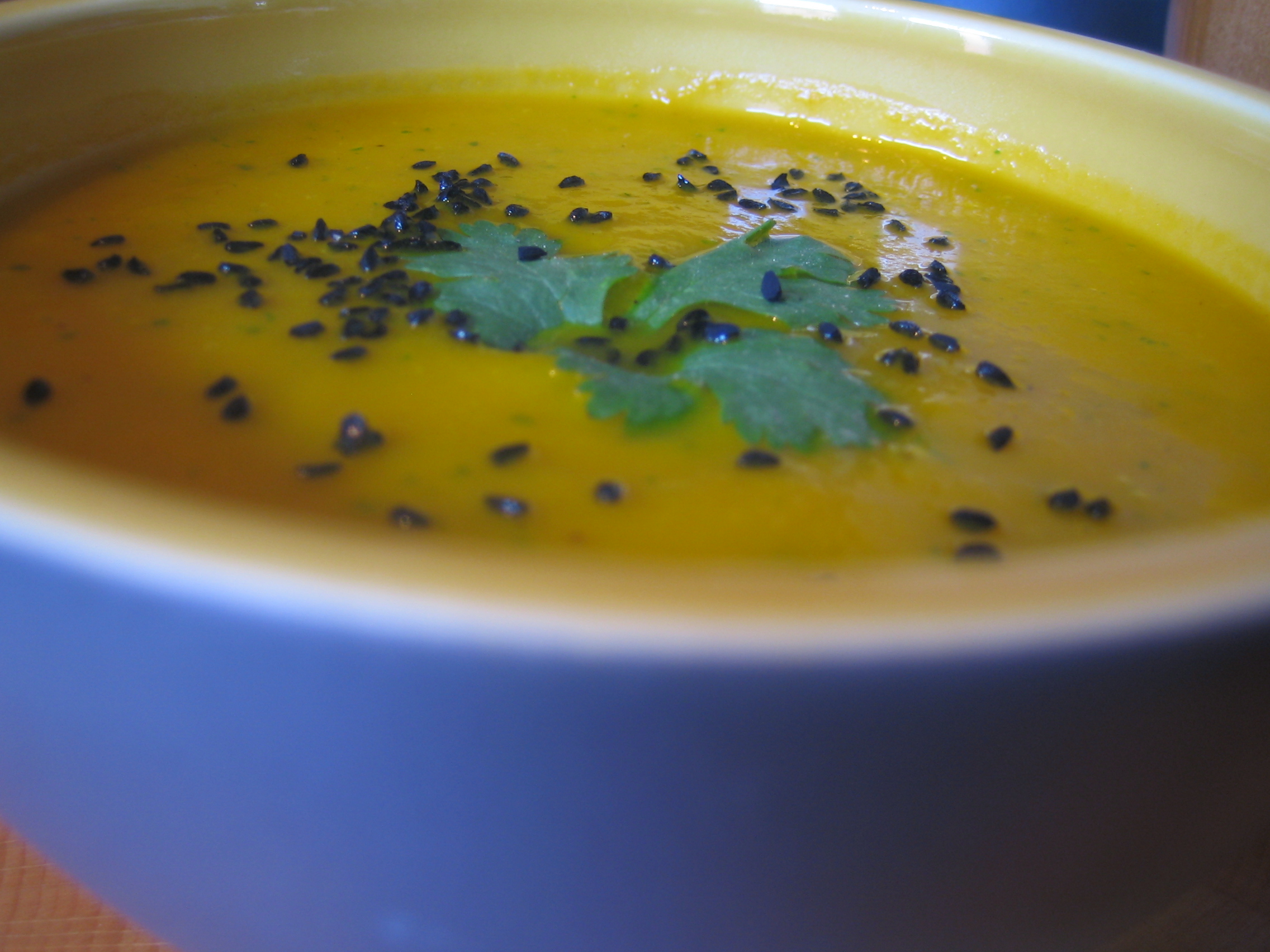
Autumn thick warming roasted carrot and pumpkin soup, lactose free, milk free, egg free – vegeliscious!

Roasted carrot and pumpkin soup

600g peeled carrots, cut into 4 lengthwise

500g pumpkin

1 tablespoon of garlic infused olive oil

1 teaspoon of turmeric
1 teaspoon of cumin

1 teaspoon of coriander

1 teaspoon of ground ginger

1.2 litres of water

small bunch of coriander leaves (depends how much you like the taste.)

Salt & pepper

coriander leaves and nigella seeds to serve

Method

Peel and slice carrots and pumpkin and place in a roasting tin, pour in the olive oil and coat the vegetables well. Sprinkle on spices and mix well.

Roast till the vegetables are soft in texture.

Place in a food processor or blender, add the other ingredients and blend well.

Warm the soup again then serve with a sprinkling of nigella seeds and coriander leaves.
Serves 6

(approximately per serving)

Kcal 67

Protein 1.2

Fat 2.9

Carbohydrate 9.0

Fibre 2.8

There is some debate as to whether pumpkin is safe for the FODMAP diet – it contains mannitol – amount varies on where it is grown, the one I used was grown within 10 miles of home. If you have problems with pumpkin, or are on a FODMAP exclusion you could replace the pumpkin with more carrot and this should work just as well.


Paella Low FODMAP, dairy free, gluten free, wheat free – obviously!!

1 Dessert spoon of garlic infused oil

1/4 teaspoon of asafoetida (check wheat free)

1 teaspoon of Spanish smoked paprika

1 generous pinch of saffron

1/2 teaspoon of turmeric

6 skinned boned chicken thighs

250g of seafood selection (skinned)

4 cups of basmati rice

500 ml chicken stock (ensure you check the label for onion & garlic)

One orange bell pepper

Pinch of salt & pepper

Method

Measure oil into a pan and add spices (except saffron)

Fry chicken, remove from oil and place in an oven at gas mark 6 (admittedly mine were a little over cooked, but I prefer it that way – honest!)

Add rice to oil and fry for 30 seconds and the add chicken stock

Add the pinch of saffron to a small dish and cover with boiling water to leach out the saffron, add this to rice mix.

Cook till rice is softened and add pepper, cook then add back the chicken, add the seafood selection and cook till warmed through.

Serve.

One of my favourite pastimes when I am on holiday is to look around the food markets, here is a market in Barcelona. I love to wander and look at the different foods that are sold and to get some ideas of what to cook when I get home.

Book Review The Complete Idiots Guide to Eating Well with IBS Kate Scarlata RD

This book is a comprehensive guide to eating with irritable bowel syndrome. It is very user-friendly, you can dip in for a quick read or take your time. I liked the summaries at the end of every chapter and the hints and tips are very useful. The book contains lots of recipes all with nutritional breakdown and a gut fact attached to each one! Covering the fact that healthy eating – with foods that are tolerated – is very important.  The foods that can be problematic are covered and Kate does explain, in user-friendly terms, the reasons why these foods can result in symptoms, but also adds that everyone’s symptoms are individual, so it’s advisable to use the advice accordingly. She also explains how to use a food and symptom diary to identify problematic foods, which is extremely useful for those people who are managing their IBS symptoms themselves.

The book is published for the American market, red flag symptoms are discussed, however one area that does differ in the UK is the identification of people with coeliac disease. Please note that everyone (children and adults,) who have IBS should be, or have been, screened by serological testing (blood tests – endomysial antibody (EMA) IgA and/or tissue transglutaminase antibody tTGA) for coeliac disease, in the UK. At the time of the writing of the book, the emphasis on testing IBS patients for coeliac disease was geared more toward those with IBS-D in the US, the author (in her private practice) however, recommends that all of her IBS clients be tested for coeliac prior to altering their diet. These are guidelines from the National Institute of Clinical Health & Excellence (NICE) available here:-

http://guidance.nice.org.uk/CG86

I have seen patients’ whose main symptom of coeliac disease is constipation, so everyone is at risk and should be tested. Ask your GP and eat wheat, barley and rye (bread, pasta, chappatis, some breakfast cereals) before your test, see above guidelines. Read what Coeliac UK have to say here:-

http://www.coeliac.org.uk/coeliac-disease/how-to-get-diagnosed

Other differences I noticed was histamine intolerance was mentioned in the book – this is not well recognised in the UK, but it can be identified by your dietitian by using elimination diets and is likely to be covered somewhat in an additives free diet (benzoate additives for example, but substances that promote a histamine response are also found naturally in some fermented foods.) It is also advised for people on certain antidepressants – the MAOI (Monoamine Oxidase Inhibitor) diet, to help people avoid dangerous rises in blood pressure, this diet is rarely seen now in general dietetic practice.

http://en.wikipedia.org/wiki/Monoamine_oxidase_inhibitor

Other food intolerances are also mentioned, it is important to see a state registered dietitian if you suspect you have histamine intolerance as identifying these rare intolerances can be challenging.

This book is certainly worth considering if you want to buy a book to help you manage your IBS symptoms, I particularly liked the chapter on travelling and eating out, often areas where it is difficult to acquire advice. The book also discussed lifestyle factors and other areas outside the area of Low FODMAP foods, which is also included, and as such it should contain advice that can help most people with IBS who feel that their diet, or eating in general is problematic.

This book was provided free of charge by the author.

Bilberry and lemon fairy cakes – gluten free, low fodmap, dairy free, lactose free.

Went on the hunt for bilberry again – however a less successful foraging trip. Hiked for two and a half hours up hills, through bramble (will be back for bramble berries later next month!) and over bogs and moorland. I did find some, but less that last time and really only enough to add to cake, or breakfast, or yoghurt. I chose to bake some fairy cakes, as I will take some in to work on Friday and share them (keeps the family from eating them all – a good tip!) The weather was a little cloudy but I did see a little sun, I am glad that I decided to go in the morning as it is raining again now, but this is the reason we have such beautiful plants and wonderful countryside.

Ingredients

175g of wheat free gluten-free self raising flour*

125g dairy free margarine

175g of golden castor sugar

juice and grated peel of 1 lemon

A few bilberries (depends how many you can gather!)

1 cap full of vanilla extract.

2 eggs

Icing sugar and decorations (please ensure these are gluten-free if coeliac and following gluten-free diet, however a small amount of contamination from wheat should not cause a problem if you are following the Low FODMAP diet)

Method

Heat up your oven to gas mark 4.

Add margarine and castor sugar and vanilla essence to a mixing bowel and mix till pale with a hand mixer.

Add 1 egg and a tablespoon of the flour to the mix.

Mix till well incorporated. If the mix curdles slightly (starts to separate) you should add a little more flour.

Add the other egg and another tablespoon of flour and repeat the above process.

Grate the rind off the lemon and add to the bowl and mix well.

Add the flour and fold the mix using a metal spoon till all the flour is incorporated.

Cut the lemon in two and juice on half – add to the mixture and mix well.

Add bilberries and mix.

Spray silicone moulds with spray oil add some mixture to each, this makes about 15 buns.

Cook for 20 minutes or until golden and well risen.

Place on a cooling rack – do not remove the buns from the cases till fully cool, or you may find that they stick.

Juice the other half of the lemon and add to a bowl incorporate icing sugar into lemon juice till you have a runny consistency. Drizzle icing sugar over the buns and add decoration.

These are no higher in fats and sugar than normal buns – but they are high, so have one, don’t eat too many if you have IBS, as fat can cause symptoms if you eat too much. Share the rest with friends and see if they can tell that they have no wheat. *Please watch the flour if you are following a low fodmap diet as some gluten-free wheat free flour contains psyllium husk flour – to keep things moist, this can cause symptoms for some people.

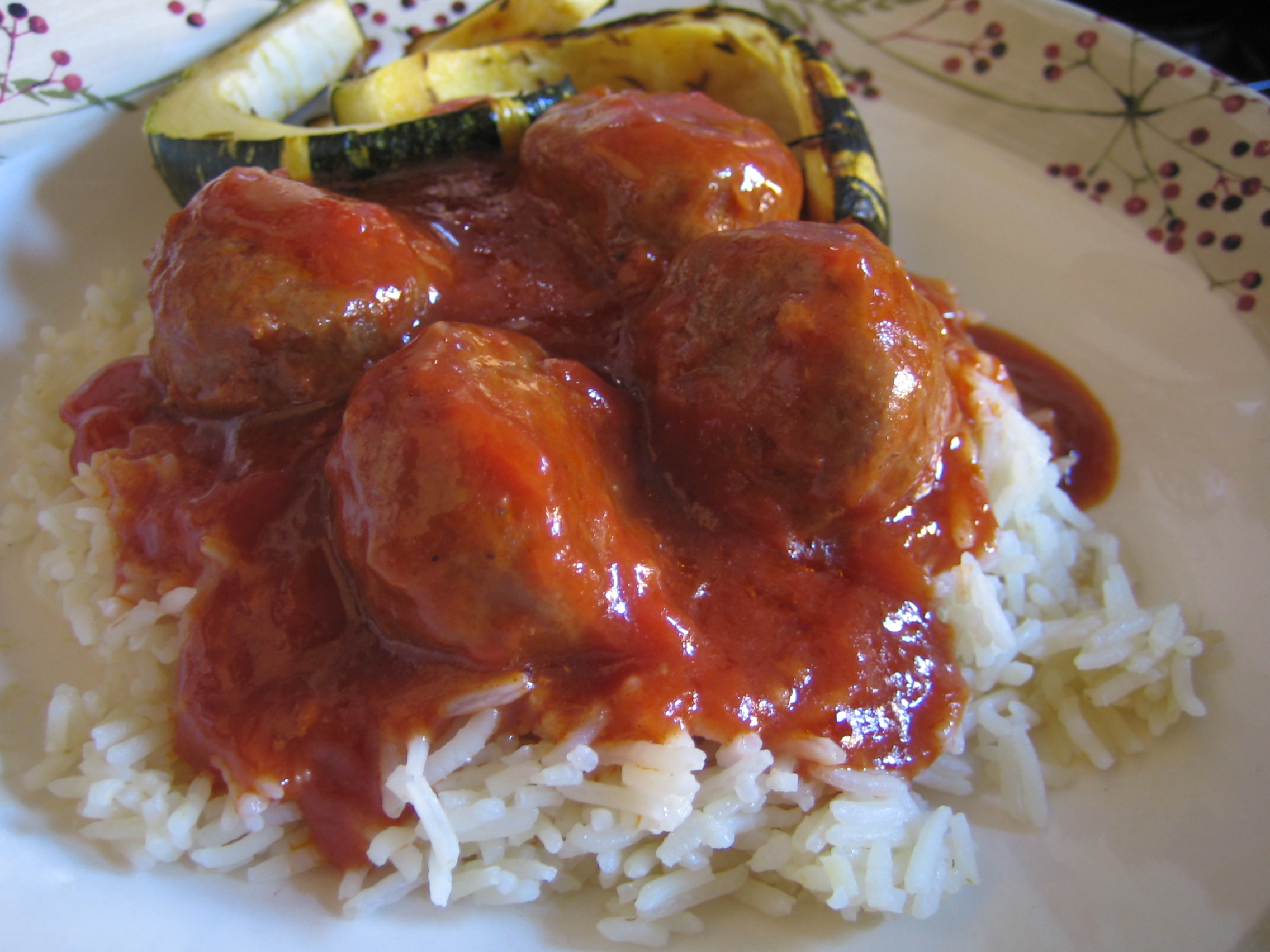
Paprika Meatballs – Low FODMAP

Ingredients

400 g lean beef meatballs (ensure no onion in ingredients)

400 g tin of chopped tomato

2 teaspoons of Spanish Smoked Paprika

2 teaspoons cornflour

1 teaspoon of cinnamon

1 teaspoon of granulated sugar

1/4 – 1/2 teaspoon of asafoetida

1 teaspoon of garlic infused oil

Method

Place meatballs in a casserole dish.

Pour the tomato into a measuring jug, add to this the paprika, cinnamon, sugar, garlic infused oil and asafoetida (take care to ensure that you place your asafoetida in a tightly sealed container – it smells very strong but adds a real depth of onion flavour to the dish.)

Then add this mix to the casserole dish.

Measure out the cornflour into a small dish and then add water to form a paste (cornflour is really great to use to thicken dishes – its wheat free and mixes very well with cold water – therefore NO LUMPS 🙂 yay!)

Add this to the dish and mix well.

Cook in a preheated over at gas mark 6, 200 C, for at least 1 hour (more if you can stand to wait to try it!)

Serves 4 – served here with freshly boiled rice and roasted marrow.

Low FODMAP, wheat free (ensure that asafoetida is pure if you have coeliac disease or a wheat allergy – it can sometimes be diluted with wheat flour) gluten-free, egg free, dairy free. Check spice labels for allergens.

Violet and Chocolate Biscuits – egg free/wheat free/gluten free/low fat/Low FODMAP

150g Rice Flour

100g Soft Brown Sugar

50g dairy free low-fat margarine

125g pot of dark chocolate soya dessert (made from hulled soya beans)*

2 teaspoons cocoa powder (ensure gluten + Wheat free)

1 tsp of gluten-free baking powder

Crystallised violets.

Weigh all ingredients into a mixing bowl and mix using a hand mixer till the batter is smooth.

Draw heart shapes onto grease-proof paper and shape mixture, makes about 12 biscuits.

Cook for 5 minutes gas mark 170, then add one crystallised violet decoration to each biscuit, cook for further 10 minutes at the same temperature.

Cool and sprinkle with icing sugar

These biscuits are suitable for wheat free, gluten-free, egg free, dairy free.

Suitable for LOFFLEX when chocolate has been introduced with no problems and Low FODMAP – nb contains soya products check for other FODMAP ingredients and use products made from hulled soya beans – do not consume if soya intolerant.

updated 22.11.14