Elderflower Cordial

On a walk this afternoon I gathered a handful of elderflowers. This recipe is based on a recipe from the book Hedgerow Cookbook. The elder is a wonderful bush although it generally doesn’t look that way when you find one. It is generally a wizened looking gnarled tree with moss growing on it but it produces the most wonderful flowers and fruit – the only decision to be made is whether to pick the flowers or save them till the berries arrive later. Or you could pick a smaller amount and save some berries for later in the year, if you can get to them before the birds do. Making this squash fills the whole house with the odour of elderberry blossom and is a wonderful treat – don’t forget this is concentrated squash and yes it does contain some sugar – but this can be drunk occasionally as a treat.


Ingredients

12 elderflower heads

18g citric acid

1 unwaxed lemon

400g granulated sugar

3/4 pint water


Method

Wash the flower heads under running water and add to a bowl with lemon peel and sliced lemon.

Add the water to a pan and then the citric acid and granulated sugar.

Heat the water till the sugar and citric acid has dissolved

Pour the liquid over the flowers and lemon and leave overnight to steep.

Strain off the liquid and put it into bottles.

This will keep a few days in the fridge.

Warm Potato Salad

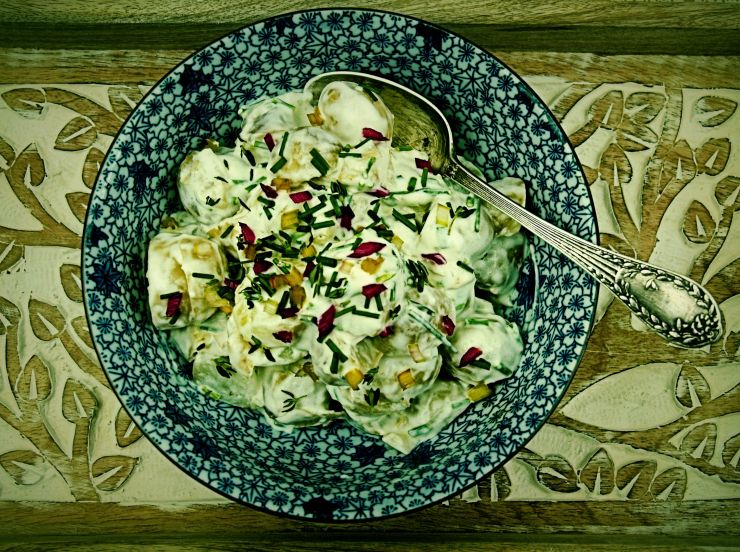
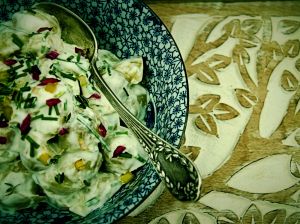
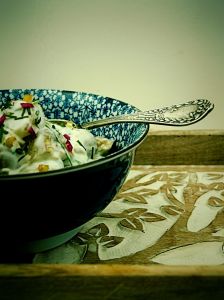
This potato salad is great for a summer barbecue and really easy to make. I have used lactose free plain yoghurt with mayonnaise to keep the calories lower and chives to flavour the salad. If you serve it slightly warm the mayonnaise soaks into the potatoes and also it means that if you have a problem with resistant starches you can avoid these too. I used Jersey potatoes – the best, but any salad potato will be suitable to use. It really couldn’t be easier to make!

OLYMPUS DIGITAL CAMERA

Ingredients

450g small jersey potatoes or small salad potatoes

1 tablespoon of mayonnaise

1 tablespoon of lactose free plain yoghurt

Chopped chives

Salt and pepper to taste

OLYMPUS DIGITAL CAMERA

Method

Boil the potatoes in salted water till soft.

Drain well.

Add the yoghurt and mayonnaise to a dish, season and add finely chopped chives.

Mix with the warm potatoes.

I decorated with some thyme leaves and chopped chard stems.

I hope you enjoy it!

Lebanese grilled lamb with lactose free yoghurt

I adore Ottolenghi recipes but he does use lots of fodmaps in them so I was very surprised to find a Lebanese seven spice rub in Marks and Spencer that is low fodmap and just the right spice mix for rubbing into meat and using on a grill or barbecue. so here is a good lamb recipe for those hot days when barbecues and eating al fresco is such a good idea.

Ingredients

2 lamb steaks

Enough Lebanese seven spice mix to coat both steaks

Cook on the barbecue still well cooked*

1 pack of chard

Lactose free yoghurt (Tesco Greek)

Chopped chard stems

1 lemon

Salt and pepper to taste.

Method

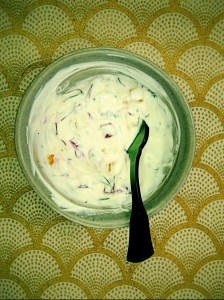
Mix 2 heaped tablespoons of yoghurt with half a grated lemon peel and 3-4 chopped chard stalks

Take the lamb steaks and coat in Lebanese seven spice powder and grill for 2 minutes at high heat on each side – then 5 minutes extra to cook through.*Do you like your meat pink? If you do then ensure that you cook the edges till they are well seared and reach a temperature of 70 degrees C. This should ensure that pathogenic bacteria on the surface of the meat are killed. The foods to cook well through on a barbecue are hamburgers (the mince surfaces are found throughout the burger so it needs to be cooked through.) Chicken also needs thorough cooking – cook a little in the oven or microwave before finishing on the barbecue.

Blanch the chard leaves is hot water for a few seconds and serve with olives, grated lemon rind and chard. This recipe serves two people.

Courgette and walnut salad – low fodmap

Raw courgette adds another dimension to this dish it is crunchy and refreshing. This dish uses the yellow variety but is just as good with the green courgette.

Ingredients

2 yellow courgettes

1 handful of walnuts

1 handful of pumpkin seeds

100g of corn based couscous

2 teaspoons of grained mustard

Red leaved lettuce

1 yellow pepper

salt and pepper to taste

Method

Spiralise the courgette into thick spirals. Pour boiling water onto the corn based couscous and leave to soak up the liquid and cool, add the mustard and mix well. Combine all the ingredients to the salad season and mix well. Serve and enjoy.

Serves 2


Lactose free rice pudding topped with blueberry brittle

Rice pudding is a real comfort food and often advised for people who need to have nutrition support for weight loss as it is easy to eat and tastes great. If you have lactose intolerance however, this might be a food you wish to avoid. But using lactose free milk means that you can have lactose free rice pudding – a joy!

Recipe

100g short grained rice

1 pint of lactose free milk (more may be required – depending on how thick you like your rice pudding.)

2 tablespoons of lactose free cream

2 tablespoons of table sugar

A handful of blueberries.

Sugar to sweeten to taste

Method

Add rice to the pan and cover with half the milk and cream and bring to the boil.

Keep stirring and adding milk till the rice is cooked.

Taste – then add just enough sugar to sweeten.

Add the two tablespoons of table sugar to a pan with a small amount to water and cook till dissolved. Add the blueberries and coat in the sugar. Add to the top the rice pudding and serve.

Serves 2


Garlic – the fodmaper’s enemy?

Garlic contains fructans (an oligosaccharide) and is for some people a potent cause of symptoms in IBS. It is a shame that it does as it is found in many ready meals and processed foods so can be a challenging part of the diet to avoid. Fructans is a non absorbable sugar that increases fermentation in the gut and gives some people with IBS symptoms. Cooking method is the key with avoiding fructans, they are soluble in water and this property means that if you use oil only, to cook the garlic, the flavour is imparted but non of the fructans. As the fructans are not soluble in oil. So, by all means fry your garlic in a small amount of oil then remove the garlic pieces from the pan before adding any water based liquid to the pan, such as stock, sauce or tomatoes. If you don’t wish to do that, then a good option is garlic infused oil, ensure the oil is clear and free of garlic pieces and you should not go wrong.

One reason why it is important to re-introduce fodmaps to the diet is to relax the diet and you might find that you can tolerate a small, or large amount of garlic. This means that you can have foods containing garlic and it makes looking for suitable foods a little easier.

What about wild garlic, or Ramsons? Is it low in fructans? It might be assumed that because the green leaves of spring onion and leek are, so must the leaves of wild garlic. As far as I am aware they have not been tested, so it is wise not to assume. It is also wise, if you do not have an issue with garlic to use the foragers code – if you are unsure of what you are gathering, then don’t pick the leaves. See the image below from Compoundchem.com which explains about poisonous plants that have a similar appearance to wild garlic and you would not want to get them mixed up.

So, is garlic an enemy? For some people, for sure – it results in symptoms but my opinion is that we have no food ‘enemies’. For some lucky people they can eat garlic with impunity. This is always the case with IBS – every situation is different.

If you can eat it the image is a salad based on cucumber, pine nuts, capers, anchovy, pea shoots wild garlic flowers and drizzle of balsamic vinegar – yum.

But if you can’t eat garlic you can impart that glorious flavour in other ways and to see a carpet of garlic flowers in the spring is a joy that is guaranteed not to have any untoward effects!