Ginger, pumpkin and rice noodles Low Fodmap

This tasty recipe can be served with fish or chicken but it can be used as a lunch meal – hot or cold by itself, if you don’t eat meat. The noodles were ginger and pumpkin rice noodles – gluten and wheat free and suitable for a low fodmap diet, they are made by King Soba.

Ingredients

150g of noodles

1 teaspoon of cumin seeds

1 tablespoon of pumpkin seeds

1 tablespoon of pine nuts

2 carrots

Spray oil or 1/2 teaspoon of garlic infused oil

A few drops of soy sauce.

Method

Cook the noodles till soft in boiling water with a small amount of salt.

Peel then trim the carrot till the sides are straight and peel down the length of the carrot to produce strips, then cut them in half lengthwise. This makes thin strips that can cook quickly in a wok.

Add the oil to a wok and fry the cumin seeds for a few seconds to release the flavour.

Add the pine nuts and pumpkin seeds and a few drops of soy sauce (ensure gluten free if you have both IBS and coeliac disease.)

Then add the carrot and cook till softened.

Add the cooked noodles and mix well, then serve.

Serves 2.

DSCF2672 (2)

I use these noodles regularly and the dish was made from stock from my store cupboard.

Minted Boston runner beans

What on earth are Boston beans? I am, as many of you know, a down to earth Lancashire gal and labelling food with a new name to boost sales really doesn’t go down too well with me. Not impressed, however I am wrong, it seems – after a Google search – that Boston is a variety of bean which is a smaller variety and a plant which grows a good crop of French beans. A good crop – therefore these beans should not be expensive then, but they are a smaller bean, therefore exclusive? I also suspect that someone will label them a ‘super’ runner bean and a vegetable that you can’t possible live without. Anyhow, enough of me getting into a tizzy and being slightly cynical about the vagaries of available supermarket runner bean varieties. Some people might be very interested in the differences in crop variety, but it’s not for this blog, plus ordinary beans are just as super and will work just as well for this recipe. It’s mothering Sunday tomorrow and I will be cooking a chicken so this really simple runner bean recipe should go really well with it.

Ingredients

1 sprig of fresh mint

1 packet of runner beans

Juice of 1/2 lemon

1/2 lemon sliced

Salt

Spray oil

1 teaspoon of sesame seeds

Method

Spray the beans with oil and pour over lemon juice. Chop the mint and mix into the beans, then add a small amount of salt, roast for 15 minutes till soft. Spray lemon slices with oil and roast them at the same time as the beans. Garnish the beans with roasted lemon slices and sesame seeds. Serve – simple!

DSCF2068


Lasagna – low Fodmap

This is a recipe for lasagna – many people with IBS find that lasagna is a dish that results in symptoms but this version is low fodmap and not too high in fat levels so should be suitable for most people. It is fairly easy to make but has a number of steps to complete.

Ingredients

1-2 roasted red peppers (or you can buy a jar of roasted red peppers if you don’t have the time or inclination to roast and peel your own.)

4 tomatoes

a packet of fresh basil

100 ml water

250g of lean red meat

1 tablespoon of garlic infused oil

1 teaspoon of asafotida

750 ml of lactose free milk (semi skimmed is suitable)

2 teaspoons of corn flour.

2 teaspoons of light spread

40g parmesan (and extra to grate on the top of the lasagne just prior to cooking.)

2 courgettes

1 egg

1 packet of gluten/wheat free pasta sheets

Small amount of salt to taste

Method

Blend together the red peppers, tomato and 4-5 sprigs of basil to form a sauce for the meat and courgette.

Using the tablespoon of oil fry the asafoetida to release the flavour and then add the meat and fry for 5 minutes. Add 1/5th of the red sauce to the pan and continue to cook the meat for 10 minutes. Prepare the white sauce add the spread to a pan and melt, then add the cornflour, it will form a ball. Slowly incorporate the milk into the spread and flour mix till it is all mixed in, then add the grated Parmesan cheese. Cook till the sauce thickens, then cool. When the sauce is cooled whisk in 1 egg.

Start to build the layers add any remaining basil leaves as you build up the layers – I started with a layer of pasta but you can decide how you want to make up the dish. Then add a layer of sliced courgettes and add some pasta pepper sauce. Then add pasta, and then the layer of meat sauce. Another layer of pasta and then courgettes and red sauce. Finally top with the white sauce and sprinkle with grated Parmesan cheese. Cook for 30 minutes and serve with a green salad.

Serves 4-5

DSCF2615 (4)


Lemon mustard roasted winter vegetables and chicken

Roasted vegetables are one of my favourite winter recipes and I have cooked them before for this blog. It is Halloween tonight and what better to come home from trick or treating to a warm filling meal? I have never cooked radish before but I will do again!

Ingredients

Chicken drumsticks 4-6

200g Turnip

(you don’t need to have baby turnips – these just look good in the picture – larger turnips are fine to use)

200g Carrots

(multi-coloured carrots look great but ordinary carrots are just as good)

50g Radish

1 large tablespoon of grained mustard

1 tablespoon of olive oil

juice of 1/2 a lemon

Salt and pepper to flavour – if you wish.

Method

Don’t wash the chicken drumsticks just add to a roasting tin.

Slice carrots into 2 or 3 using a diagonal cutting angle

Half baby turnips or chop the turnip

Slice the radish

Mix the mustard, oil and lemon juice and rub on the vegetables and chicken drumsticks

Roast in an oven gas mark 7 for 20-30 minutes – check drumsticks are cooked by ensuring juices are running clear.

Sprinkle with rocket before serving

Serve with wholegrain rice – don’t forget to include some carbohydrate! 🙂

DSCF2491 (2)

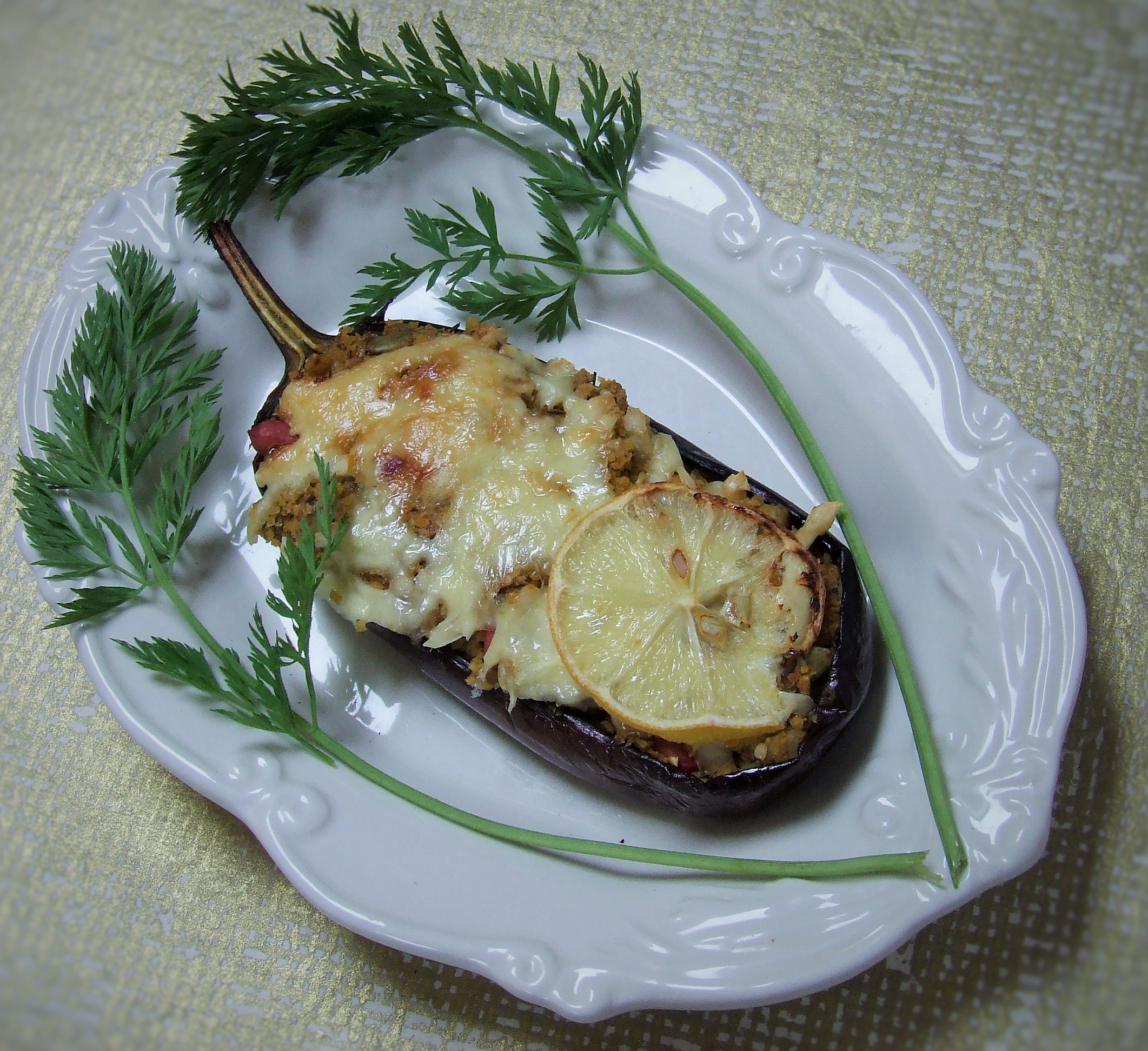
Stuffed Aubergine

Aubergines are my favourite vegetable and suitable for a Low Fodmap diet. Aubergines have been stated to be the vegetable to use if you wish to replace meat in a dish as they have a good texture and is satisfying to eat, but they will not replace some of the nutrition when replacing like for like. A vegetarian diet is great to have and can be very healthy if some regard is taken to ensure that it is nutritionally complete and not too high in energy. But some people really struggle to follow a vegetarian Low Fodmap diet because the diet on the exclusion phase excludes sources of protein from legumes and pulses.  This recipe contains nuts and just a small amount of low fat hard cheese – sources of protein – you can change the cheese for a vegan alternative cheese but use it sparingly as it tends to be quite high in fat and is a possible source of Fodmap, so check the label. Quorn and quinoa are good sources of protein but again check the label for Fodmaps if you choose Quorn products (not suitable for vegans as Quorn contains egg). To ensure you have adequate iron in your diet include some dark green leafy vegetables (chard and spinach are reasonably good sources,) along side a small amount of citrus fruit (or small amount of juice – 100 ml maximum) to improve the absorption. You could also include some fortified breakfast cereal to add to your iron intake. Egg yolk is a source of iron too, if you do eat them. Very small amounts of canned lentils and chickpeas can be included and these do contain iron, but again the iron is more difficult for the body to absorb, so need a source of vitamin C consumed at the same time – rinse well before use. See a dietitian if you need more individual advice – in fact I would encourage any vegan considering the Low Fodmap diet to ask their GP for a referral.

Do remember the Low Fodmap diet is a learning diet and not a diet for life – most people find they can re-introduce some Fodmap foods back in, if only in smaller amounts. This is important to help your bacterial populations in your bowel and to increase the variety of your diet. If you are struggling to find a dietitian as your GP to refer you – the National Institute of Health & Care Excellence advise you should see a trained healthcare practitioner to follow the Low Fodmap diet for IBS – at the moment this is Registered Dietitians only, or you could see a freelance dietitian, check out www.freelancedietitians.org.

Ingredients

4 Aubergines

Small amount of olive oil

1 teaspoon of coriander seeds

1/2 lemon (juice only) and slices to decorate the top

1 teaspoon of peanut butter

20 g of pumpkin seeds

25g red skinned peanuts

Salt + pepper to taste

60g of gluten free couscous (based on corn)

50g of low fat hard cheese

Method

Slice the aubergine length way season and rub the surface with a little cooking oil.

Roast in an oven for 20-30 minutes.

Remove and cool.

Remove the flesh and mash with the other ingredients except the cheese. Use around 40g of aubergine per portion.

Divide the mix between each aubergine skin.

Grate the cheese and sprinkle on the top and add a slice of lemon.

Cook till the cheese has melted and the aubergine is cooked (20-30 minutes) Serve with fresh green salad.

DSCF2468 (2)


French toast for breakfast? – gluten free, low fodmap

This is a great Sunday morning treat and is very easy to prepare and to relax and enjoy! French toast is not sweet but when combined with fresh fruit and a drizzle of maple or golden syrup the sweetness is added – you only need a drizzle and the breakfast is complete. Posted just in time for you to enjoy tomorrow morning.

Ingredients

2 eggs

70 mls lactose free milk

4 drops of vanilla essence

4 drops of orange essence

spray oil

2-3 slices of gluten-free bread (depending on the size of eggs used)

Maple syrup for drizzling

Strawberries, blueberries and raspberries – a small handful.

Crack the eggs into a bowl and mix with the milk, vanilla and orange.

Slice the bread and soak in to the egg mix until it is soaked through ( a minute or two)

Spray oil into a frying pan and fry the bread for 1 minute each side or until golden.

Serve warm with fruit and a drizzle of syrup – or you can use sweetener if you don’t want to use syrup – aspartame, stevia or sucralose is suitable.

Eat!


DSCF2272