Baba Ganoush – Low Fodmap

This is a dip recipe that is suitable for the low fodmap diet, many people really struggle to find dips, particularly when many are made with onion or garlic as ingredients. Baba Ganoush is a middle eastern dish made from aubergine which often contains onion but it is so easy to make and tastes really delicious without onion so give it a try today!

Ingredients

1 Aubergine

1 tablespoon of light mayonnaise

1/4 teaspoon cinnamon

1 teaspoon cumin powder

(you can add your own spices here to change the flavour)

A few toasted pine nuts

Lactose free yoghurt to serve.

Method

Roast the aubergine in an oven till soft and allow it to cool.

Remove the skin and add the flesh to a bowl with the mayonnaise and spices and a little salt to taste. Blend till smooth top with lactose free yoghurt and serve.

Simple!

DSCF2611 (2)

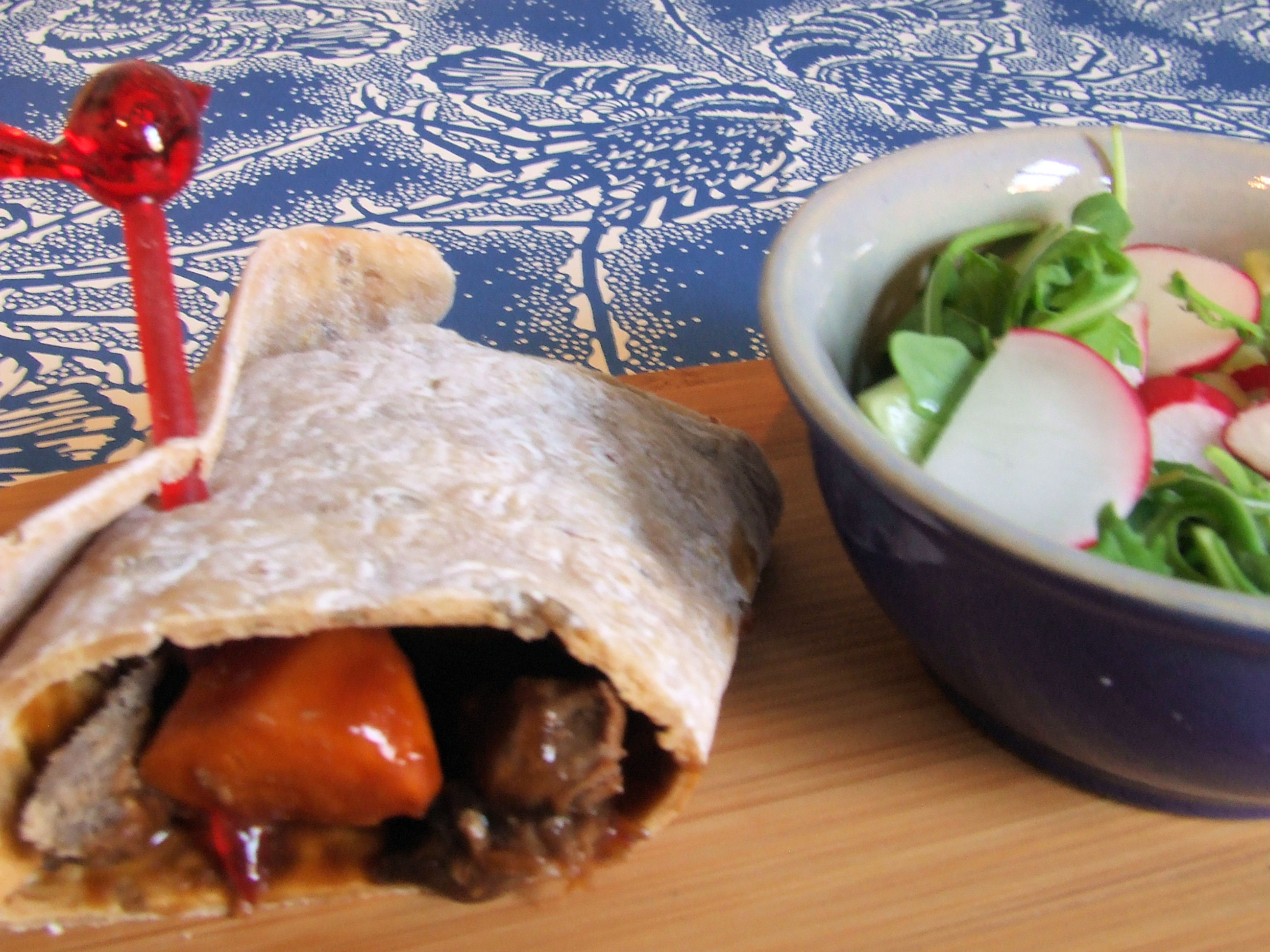
Hot surf and turf wrap – Gluten and wheat free

DSCF1513modIngredients

2 Steaks

200 g of large prawns

Wheat & Gluten free seeded wrap

Gravy browning – a few drops

2 teaspoons cornflour

Spray oil for frying

2 carrots

Green salad leaves and 5 radishes for the salad bowl

Method

Trim fat from the Steak

Fry steak till browned using spray oil

Cover with water and add a few drops of gravy browning

Cover with a lid and cook till tender

Chop carrots into bite size pieces and spray with oil.

Cook the carrots for 20 minutes in the oven whilst the steak is cooking.

Remove steak from the pan to rest and add cornflour to the sauce to thicken, cook.

Cook prawns

Taking a wrap add ingredients including gravy and fold wrap over. Serve with green leaves and sliced radish.

Serves 2

*If you are following a Low FODMAP diet then check your wrap for other Low FODMAP ingredients – the wrap in the image contains concentrated fruit juice of unknown source so it is unsuitable for the Low FODMAP diet. You can also serve the filling on other gluten-free breads such as gluten-free pitta, gluten-free ciabatta or gluten-free french bread for example.


Haddock Florentine with mustard roasted carrots (gluten free, low lactose, Low FODMAP)

IMG_1776It’s grim ‘up north’ today, the weather is grey and dismal at February’s threshold, still winter then? Few frosty mornings have occurred to evidence winters grasp on the landscape, just sodden foliage and waterlogged boggy moor – a relentless morass. The trees are coated in a thin layer of moss and everything is damp and dismal – great weather for ducks, but pretty uninspiring to everyone else! The ‘mood’ of the woods brings to mind one of my favourite poems by Rudyard Kipling, evoking feelings of nostalgia at its reading. It’s haunting theme I feel is more about sadness and loss, and I am often reminded of it whilst wandering in the woods around West Yorkshire –

The Way Through the Woods

They shut the road through the woods
Seventy years ago.
Weather and rain have undone it again,
And now you would never know
There was once a road through the woods
Before they planted the trees.
It is underneath the coppice and heath
And the thin anemones.
Only the keeper sees
That, where the ring-dove broods,
And the badgers roll at ease,
There was once a road through the woods.

Yet, if you enter the woods
Of a summer evening late,
When the night-air cools on the trout-ringed pools
Where the otter whistles his mate,
(They fear not men in the woods,
Because they see so few.)
You will hear the beat of a horse’s feet,
And the swish of a skirt in the dew,
Steadily cantering through
The misty solitudes,
As though they perfectly knew
The old lost road through the woods …
But there is no road through the woods.

http://www.kiplingsociety.co.uk/bookmart_fra.htm

Summer is some way off – need something warm and tasty bring comfort and lift the mood? This is a really nice fish recipe for using up any stale or spare gluten-free bread (if you have any that is!) Otherwise you could use shop bought gluten-free or rice crumbs, which is more easily available to you. It is warm and filling and not too hard on delicate malfunctioning digestive systems. Fish is not cheap these days but this dish works well with smoked river cobbler too which will help with the cost, tinned spinach is also a useful standby to use. If you suffer from bloating from resistant starches you could make the dish without the breadcrumbs if you wish.

 IMG_0858

Ingredients

1/2 packet of gluten-free/wheat free bread crumbs

2 smoked haddock or river cobbler fillets

1/2 pint of lactose free skimmed milk

3 teaspoons of corn flour

10 g of margarine

1 teaspoon of freshly grated nutmeg

25 g Gruyère

12 g of parmesan

1 tin of spinach

Method

Make the sauce, melt the margarine and add cornflour mix to a paste and slowly add milk till all the flour has been incorporated and add grated nutmeg, Gruyère and salt to taste. Mix till thickened, cool.

Wash the spinach and layer in the bottom of an oven proof dish, cut the skin off the fish and add a layer on the top of the spinach. Coat the fisn layer with the cooled sauce. Add salt and pepper to the dish.

Sprinkle breadcrumbs on the top of the sauce and cover with the grated parmesan.

Cook in a preheated oven at gas mark 5 or 180ºC. Serve with mustard carrots (roast carrots with a small amount of garlic infused oil and grained mustard.)

DSCF1224mod

Commonly malabsorbed sugar causes obesity! What? – I’m afraid its just not that simple.

What is Fructose?

Fructose is a hexose, a single unit sugar which occurs naturally in fruit and is a component of the disaccharide table sugar sucrose; it is also the building block of the long chain carbohydrate, fructans. This sugar is absorbed across the intestinal mucosa by facilitated diffusion (via GLUT 5 or GLUT 2, transporters) – a slow method of absorption, when fructose is consumed in equal amounts to glucose, by rapid active absorption. This sugar has been seen by many as a ‘healthy’ alternative to table sugar, however, recently high fructose corn syrup (HFCS) and fructose in beverages has been implicated in the rise in obesity. But fructose consumption (in excess of glucose) is often malabsorbed when consumed in large amounts, so what is going on here? It seems incongruous that a commonly malabsorbed sugar such as fructose should be implicated in increasing rates of obesity.

Fructose in foods

In recent years, availability of fructose in our diets has increased. HFCS or fructose-glucose syrup, in processed sweetened foods and beverages, and use of crystalline fructose sugar and Agave syrup seen as ‘healthier’ alternatives to table sugar, it is perhaps not surprising that fructose consumption in processed foods and drinks was reported recently by The Guardian as a current area for concern (2). A Guardian article stated that HFCS was to be re-branded to improve its image (1). A new worry is the amount of sugar contained in smoothies, promoted by beverage manufacturers as healthy drinks containing natural sugar and an easier way of increasing your fruit intake, to achieve your recommended five a day (2). Whilst the UK population average intake of HFCS sugar remains far lower than other countries, such as the USA (3),  individuals with weight management requirements may exceed these levels of intake easily, with HFCS being a component of sweet foods and beverages. High intakes are associated with obesity, type 2 diabetes and metabolic syndrome, however, Fulgoni, (4) consultant to the American food and beverage industry suggested that HFCS is no different in its metabolic obesogenic capacity than sucrose, as the structure of sucrose contains one fructose unit per molecule. Obesity is a multifactorial problem and focussing on one aspect in the diet may be misleading, anyone consuming large amounts of HFCS may also have a diet high in fats and other refined carbohydrates. These carbohydrates, when digested, may facilitate fructose absorption reducing the malabsorption effects that often result from excessive consumption.

Fructose absorption

Unpleasant gastrointestinal symptoms such as osmotic diarrhoea can result from excessive fructose intakes, as a consequence of exceeding the guts absorptive capacity. This malabsorption of fructose in excessive amounts perhaps suggests that the role fructose plays in obesity should be further studied, alongside other refined carbohydrates consumed in the diet, as fructose is not ingested in isolation. Intake of carbohydrates such as glucose and long chain refined carbohydrates may facilitate fructose absorption. Research suggests that intestinal adaptation to diets of pure fructose can occur in study animals (5, 8) to facilitate absorption, but it is not known to what extent this adjustment compensates for malabsorption in humans, who often have very varied and complex diets. Population studies have suggested a link between HFCS and fructose ingestion from beverages with obesity (3). But more needs to be known about the efficiency of absorption, degree of brush border adaptation (if this in fact does occur in humans) and a breakdown of carbohydrates consumed. In these groups it needs to be established whether correlation of fructose intake represents causation, or whether intake of HFCS represents just one of many aspects of the diet which ultimately leads to obesity.

Fructose malabsorption in functional gastrointestinal disorders

Excessive fructose intakes leading to diarrhoea perhaps should not be considered as a functional disorder per say, as most individuals will malabsorb fructose if consumed in large amounts. Intakes of 50g fructose in 250ml liquid are malabsorbed by 60-70% of individuals, when levels are reduced to 25g, 40% of people malabsorb fructose (7) Advice to reduce levels of intake in these cases would seem prudent. Individuals where visceral hypersensitivity and functional disorders (Irritable Bowel Syndrome, IBS) are an issue, fructose malabsorption should be considered as a possibility.

Individuals with functional gastrointestinal disorders can experience pain and diarrhoea with levels much less than 50g; the prevalence of fructose malabsorption in these patients can vary between 38-75% depending on which research source is viewed. A paper published by Gibson & Shepherd (6) studied the effect of a fructose modified diet in people with IBS and diagnosed with fructose malabsorption, the study reported 75% of participants had improvement in symptoms when fructose intakes were reduced. The prevalence of fructose malabsorption is higher than lactose intolerance in this patient group; however it largely remains under recognised as a factor (5). Use of the Low FODMAP diet in treatment of functional disorders has increased recognition of fructose malabsorption as a cause of symptoms.

Use of fructose breath testing for identification of fructose malabsorption has increased, to enable treatment with a low fructose diet to be utilised for those patients that need it. Gibson & Barrett recommend a diet low in FODMAPs must be consumed 24 hours prior to the breath test, to establish an accurate baseline level (5). However fructose breath testing remains a controversial test, due to variations in methodology, leading to confusion about accuracy (6) amongst health professionals. Where testing is not available, dietary fructose exclusions are effective to identify malabsorption and facilitate dietary treatment provision. For patients with Irritable Bowel Syndrome the most effective way of treatment is to exclude all Low FODMAP foods (assuming lactose malabsorption has not been excluded) and re-introduce to tolerance after 8 weeks.

For those with fructose malabsorption exclusive of IBS, reduction of the sources of fructose in excess of glucose should be advised (10.) In all patients, modifying fructose intake, rather than increasing glucose consumption to facilitate absorption, particularly where the patient is overweight is recommended (10.)

Digestive enzymes

It would be better for patients who find manipulating their diet to resolve symptoms a challenging goal to achieve, to be able to take an enzyme to facilitate conversion of fructose to glucose and facilitate absorption. Xylose Isomerase is commercially available and marketed as a solution to fructose malabsorption. It has been recognised by the FDA as safe and been found to be effective in doses of 3 capsules per 25g fructose load (9.) However the commercially available grades advise that these products should not be taken by individuals with inherited fructose malabsorption, so why is this advice given – and how would you know if someone has the condition? Also research into Xylose Isomerase has been funded by the company that market these digestive enzymes, who have a clear interest in proving this product is effective, so the advice is somewhat biased from this respect. However reducing fructose intake might be a more suitable option for individuals who are obese, as using these enzymes may facilitate an increase in energy intake. Dietetic treatment should involve assisting the individual to find a solution when individuals are having problems in following advice, such as suitable written information in an easily understandable form and helping with barriers to goal setting.

Inherited fructose intolerance

This condition occurs as a result of an in-borne error of fructose metabolism, and therefore acts by a different mechanism to fructose malabsorption. The deficiency is of Fructose 1, 6 biphosphate aldolase (Aldose B.) Ingestion of fructose results in post prandial hypoglycaemia and abdominal pain, diarrhoea and vomiting, the ingestion of fructose, sucrose, and sorbitol is problematic for these individuals (12). If consumption is continued hepatic injury, renal injury, coma and death can result (12). This condition is often identified in childhood as consumption of fructose can produce severe symptoms; it is recognised when these carbohydrates are introduced into the child’s diet. However some children have survived to adulthood without the condition being recognised, by self excluding sugar from their diet. Patients have to inherit the deficiency from both parents, who carry the gene but do not exhibit symptoms. Its prevalence is one person in every 20,000 to 30,000 so it is a rare condition, but should be considered if post prandial hypoglycaemia and other gastrointestinal symptoms are reported (11). Born (7) suggests that blood glucose levels should be checked in individuals referred for fructose breath tests, to identify these individuals. It would be prudent to consider this condition with symptomatic individuals who report that ‘sugar’ is a problem and have taken steps to exclude it from their diet.

Clearly fructose malabsorption, digestion and metabolism is a very complex situation and more studies are required to improve knowledge of fructose’s’ dietary effects. Focussing on fructose provides one example of how complex human nutrition and metabolism is, and how improved knowledge is vital to help patients to manage their symptoms. High fructose corn syrup/fructose will be digested to some degree depending on the proportion of glucose it contains, and the individuals levels of GLUT transporters, but despite this many individuals with functional bowel symptoms struggle to digest even low doses. This brief look at fructose digestion also suggests that obesity is a multifactorial public health problem and blaming one nutrient or food may do little to resolve the problem in the general population. In fact publicly concentrating on one minutiae of the causes of obesity beclouds, possibly resulting in confusion for the general population which could cause apathy around lifestyle change. As always, research into digestion should involve a complete food intake analysis facilitated by a research dietitian, including a review of confounding variables. A review of total energy consumption and it’s implications on fructose absorption in the case of HFCS’s relationship to obesity would be advisable, but this will only add a little information to the whole question of the causes of obesity in our society.

 1) Boseley, S (7th September 2013) Smoothies and fruit juices are a new risk to health, US scientists warn Scientists say potential damage from naturally occurring fructose in apparently healthy drinks is being overlooked The Guardian available from http://www.theguardian.com/society/2013/sep/07/smoothies-fruit-juices-new-health-risk

2) Clark, A. (15th September 2010) Manufacturers petition regulator to change name to ‘corn sugar’ as consumer backlash grows against the food and drink sweetener in the US The Guardian available from http://www.theguardian.com/business/2010/sep/15/high-fructose-corn-syrup-rename

3) Bazian (2012) Sugar substitute sparks global diabetes epidemic NHS Choices available from http://www.nhs.uk/news/2012/11November/Pages/Sugar-substitute-sparking-global-diabetes-epidemic.aspx

4) High-fructose corn syrup: everything you wanted to know, but were

afraid to ask1,2 Victor Fulgoni III Am J Clin Nutr 2008;88(suppl):1715S.

 5) Barrett J Gibson, PR,( 2012) Fructose and lactose testing Australian Family Physician Vol. 41, No. 5

 6) Shepherd SJ, Gibson PR. (2006) Fructose malabsorption and symptoms of irritable bowel syndrome: guidelines for effective dietary management. J Am Diet Assoc 2006; 106: 1631-1639

 7) Peter Born (2007) Carbohydrate malabsorption in patients with non-specific abdominal complaints World J Gastroenterol 2007 November 21; 13(43): 5687-5691

 8) Levin RJ (1994) Digestion & absorption of carbohydrates from molecules to membranes to humans American Journal of Clinical Nutrition 1994;59 (supple) 690S-8S

 9) Putkonan L, Yao CK, Gibson PR (2013) Fructose Malabsorption syndrome A review Current Opinion in Clinical Nutrition & Metabolic Care. 16:473-477

10) Marie E. Latulippe and Suzanne M. Skoog (2011) Fructose Malabsorption and Intolerance: Effects of Fructose with and without Simultaneous Glucose Ingestion Critical Reviews in Food Science and Nutrition, 51:583–592

 11) Genetic fructose malabsorption – http://ghr.nlm.nih.gov/condition/hereditary-fructose-intolerance

 12) Ali, M Rellos, P Cox TM (1998) Hereditary Fructose Intolerance J Med Gen 35: 353-365


Tomato free moussaka – low FODMAP

DSCF1197modMoussaka is one of my favourite dishes, in my humble view it has to have cinnamon included – and lot’s of it. You might feel that adding a spice used in sweet dishes in the UK sounds strange, but it rounds off the flavour really well. It can be a high calorie dish particularly when lamb is the main component but it is possible to reduce the high fat load. I may be performing moussaka sacrilege by suggesting that it can be made without tomatoes, but I feel the essential flavours are included, so the dish doesn’t miss much by not using them.

Ingredients

2 medium aubergines

1 tablespoon of garlic infused olive oil

4 potatoes

500 g lean lamb mince

2 teaspoons of cinnamon

1 teaspoon of asafoetida

2 teaspoons of dried oregano

1 pint of skimmed lactose free milk (Yes you can get it now!!!)

75 g grated strong mature cheddar

2 eggs

200 ml of red wine

1/2 teaspoon of gravy browning

100 ml of water

4 teaspoons of cornflour

Salt & pepper to taste

Method

The method is time-consuming but I don’t eat this dish regularly, I usually have it on special occasions so it is worth making an effort to make it well.

1) Dry fry the mince and add cinnamon, asafoetida, oregano and gravy browning. Drain off the cooking juices and allow the mince to cool. Put the cooking juices in the refrigerator till the drained lamb fat has gone solid, scoop off the fat and throw it away.

2) Pour the remaining cooking juices in a frying pan, add red wine, water and cook. Mix 2 teaspoons of the cornflour with a little water then add to the gravy, cook till thickened.

3) Slice the aubergines into 4-5 mm circular slices, sprinkle with olive oil and roast in the oven till brown. Cool.

4) Slice the potato to the same thickness as the aubergine and par boil for 10 minutes – do this just before you are ready to assemble the dish, you don’t want them to go cold.

5) Grate the cheese, pour the milk into a pan and add the cheese and the rest of the cornflour (mixed with a little water.) Cook till thickened, cool and add the eggs – mix well.

6) Add a layer of aubergine, potato, meat – add gravy. Continue to build up the layers till the ingredients are used up. Pour the cheese sauce on the top.

7) Cook for 1 hour at gas mark 6 (200°C), or until the potatoes are soft and the top has browned.

Serves 6

Stir fry beef low fodmap

gingergrind

This recipe is suitable for a Low FODMAP diet, lactose free, wheat free dairy free and some advice later will show you how you can modify this recipe suitable for Crohn’s and colitis too. Give it a go – also check out the following tool to help you monitor your symptoms of diarrhoea it is not a diagnostic programme so if you have a diagnosis and wish to know more read on…….

A new free online health programme and app called MyRhythm has just launched and is used to track your digestive health on the go discreetly and with ease. By inputting your food and mood, the app will draw up a monthly report, identifying certain triggers unique to the user for digestive upset.

Ingredients

1 tablespoon of Ginger, chopped

4 tablespoons of Tamari soy sauce

1 tablespoon of golden syrup

1 tablespoon of garlic infused oil (to ensure it is totally FODMAP free you need to purchase this)

1 pak choy

1 courgette

1 red pepper

1 spring onion, green part only

1/2 tin of bamboo shoots

250g of lean beef – cut into strips.

20131103_34modMethod

Chop ginger and add to a pestle with the golden syrup and garlic infused oil, grind to form a paste

Add this to the beef and chopped spring onion pour on the Tamari, mix well and leave to marinade for at least 30 minutes.

Chop the vegetables thinly and heat a wok – I use a non stick wok so I don’t need to add any further oil to this to cook the meat.

Add the meat first and cook, then add the vegetables and keep stirring till the vegetables are cooked.

Serve with boiled rice – ensure you use freshly boiled  rice and eat whilst hot to avoid resistant starches, if this is a problem for you.

20131103_53modIf you have colitis and don’t tolerate red meat you can use chicken or fish to make this recipe. If you are experiencing diarrhoea symptoms and have been advised to have a low fibre diet, you will need to reduce the amount of vegetables in this dish, 1/2 carrot and 1/2 a skinned red pepper cut finely and cooked well will be adequate (boil for 10 minutes – boil the pepper whole for 10 minutes and the skin will peel away, before you put the vegetables into a wok) and use powdered ginger instead of ginger root to make up the recipe. Discuss the iron content of your diet with your dietitian or IBD team – do not be tempted to try iron supplements without discussing this with your doctor or dietitian, they can make symptoms worse. Low FODMAP diet is suitable if you are in remission (your inflammatory markers or CRP are normal) with your colitis and are continuing to experience symptoms, your dietitian can advise you how to use the diet, to see which foods result in symptoms.

20131103_57modFor Crohn’s to make this diet suitable for LOFFLEX you can use the modifications which have been suggested for the low fibre diet.

Please note I do not endorse any medication companies but this app tool might be useful – only use medications on advice from your healthcare professional.