Orange superfood, cheap and not too hard on the digestive tract ‘THE CARROT’ – yes, seriously!

Before I studied to be a dietitian I disdained the carrot, cheap nasty veggie filler, used too often in cheap food in my uninformed view. However as they say, knowledge is power, and I’ve had a bigger sheepish U-turn than David Cameron (they often use carrots in pasties too, you know, although this is less than traditional!) Carrots are full of fibre, and not too much of the gut fermentable stuff, so they are an excellent vegetable to choose. The main nutrient the carrot contains is beta carotene, the veggie Vitamin A, more available to the body if carrots are cooked, but they are also really nice grated raw, as crudities with low-fat dips. Carrots are also very good when cooked with cumin, thyme and coriander. Carrot juice also reduces the acidity of orange juice, making orange juice a less sharp drink, if you find its acidity a problem. Beta carotene is stored under the skin and converted to vitamin A (retinol) by the liver. Carrots are also suitable to have frozen as well as fresh, beta carotene is a fat soluble vitamin it is not easily leached during cooking or storage of the vegetable. Does eating carrots help you see in the dark? Well retinol is a required vitamin for vision, but most people do get adequate amounts, it helps you see better in the dark only if you are deficient in this vitamin, replenishing low stores will improve your vision. But it doesn’t improve it if you are eating enough, it is not exponential e.g. you do not get better and better vision if you eat more and more. Retinol is also needed for skin, teeth and to help your bones grow. Also a word of warning here – as with any food, variety is key to getting the range of nutrients your body needs – seriously overdosing on beta carotene – carrot juice or supplements, will turn you orange, carotenosis, although harmless and reversible on stopping consuming the offending item. ๐Ÿ˜‰ Actually the lesson here is that there are no real ‘super’ foods eat a variety of foods to get what you need.

Low FODMAP Chicken casserole plus low fat processed food and food intolerances, incongruous ideals?

At my usual supermarket shop this morning I was very pleased to find a low dairy, low lactose own brand cream cheese. Wow – I thought – will have to give this a try, but as I always do out of habit I had a look at the nutritional information on the side of the carton. The amount of fat and saturated fat in the product was staggering 26.6g/100g of fat, 23.0g/100g of saturated fats, from coconut oil. Why is it that food that is meant for individuals who have to modify their diet as a result of allergies, intolerances or as a result of autoimmune conditions are higher in fat and calorie dense? You could argue that cream cheese is usually high in fat and you would be correct at 24g/100g of fat and 16g/100g of saturated fat but the free from brand is higher. It’s often the additional specially manufactured foods in a ‘free from’ diet that can be higher in calories than the standard alternative version, that means if you need to follow a specific diet you may be exposed to more calories as a result. Yes I do see people who are underweight and would really benefit from the extra, but I also see those who have problems in maintaining a healthy weight. For example some gluten-free bread is quite high in fat. Adding fat improves the taste and texture of free from food and you don’t often find a low-fat variety, it’s technically challenging I suppose. Yes, foods higher in fats and sugar are a treat – see recipe for chocolate covered coconut ice cream for an example, but when staples such as wheat free bread can be higher in fat this becomes more difficult to manage, if you need to control your calorie intake. Try and include plenty of alternatives such as rice, potatoes, lean meats, fish, vegetables and fruit in your diet (when tolerated) – those foods that are not processed are lower in calories, and often cheaper. This doesn’t mean you can’t have manufactured alternatives, as they are important to incorporate, to feel you are not being excluded too much, increase variety and help you to follow your diet, but try to keep these foods to a minimum of you are able. For the staples, such as bread, which is important if you need to take packed lunches, check the food labels of free from items and choose the ones that are lower in fats, sugar and calories when you can.

Check the label for nutritional information as well as the allergen labelling. Look at the following links:

http://www.nhs.uk/Livewell/Goodfood/Pages/food-labelling.aspx

http://www.nhs.uk/Livewell/Goodfood/Pages/food-labelling-terms.aspx

The following recipe is a low FODMAP chicken casserole.

700g Chicken Thighs (skins removed, trim off any visible fat – use thigh meat as it imparts a stronger flavour to the dish.)

3 celery sticks including leaves.

200 mls dry white wine

5 g Fresh thyme

1 dessert spoon of garlic infused olive oil

1/2 teaspoon of asafoetida

Juice of 1/2 a lemon

freshly ground pepper and dash of salt

Measure out wine in a measuring jug and add chopped thyme, olive oil, lemon, asafoetida, pepper and salt mix well.

Cut celery sticks and place in a casserole dish with the chicken thighs.

Pour over the mix and leave to marinade for 2 hours.

Cook for 1 hour gas mark 6/200 C remove from oven and allow to relax for five minutes.

This dish was served with low-fat roast potatoes made by par boiling for five minutes, drain off water and replace pan lid. Shake the pan to roughen the edges of the potatoes and use spray olive oil to reduce the amount of fat used. Roast till golden.

If wished you can pour off the liquid when the chicken is cooked to make a sauce, drain off the fat and discard and using a small pan pour in liquid and add cornflour mixed with a little water, to thicken.

Serves 4-6 people (but not my husband, who ate considerably more! This dish prompted a five-minute face wash from my cat after having a taste – a rare occurrence.)

Dairy free, lactose free, egg free strawberry ice-cream.

Ingredients

349g silken tofu (firm)

100 ml rice milk

1 teaspoon pure vanilla extract

350 g strawberries

2 dessert spoons of golden caster sugar

Method

Place tofu into a mixing bowl and add vanilla extract, golden caster sugar and rice milk.

Mix with a hand mixer – it will look grainy in texture – keep calm and carry on!!!

Wash and chop strawberries and add to mix, the using a hand blender blend in strawberries.

Using a hand blender blends mix to a smooth paste and adds some air to the mix.

Place the mix in an ice-cream maker or a plastic container, if using a plastic container place in freezer and freeze for 1 hour.

Take the container out of the freezer after 1 hour and blend again.

Place container back in the freezer till mix is frozen.

Can be made with sweetener if desired. This ice-cream is very solid if left overnight in the freezer – either eat it once lightly frozen or leave it out to defrost slightly before serving. Has the texture of a granita.

Serves 4 approximately 140 Kcal per serving, approximatley 3g of fat.

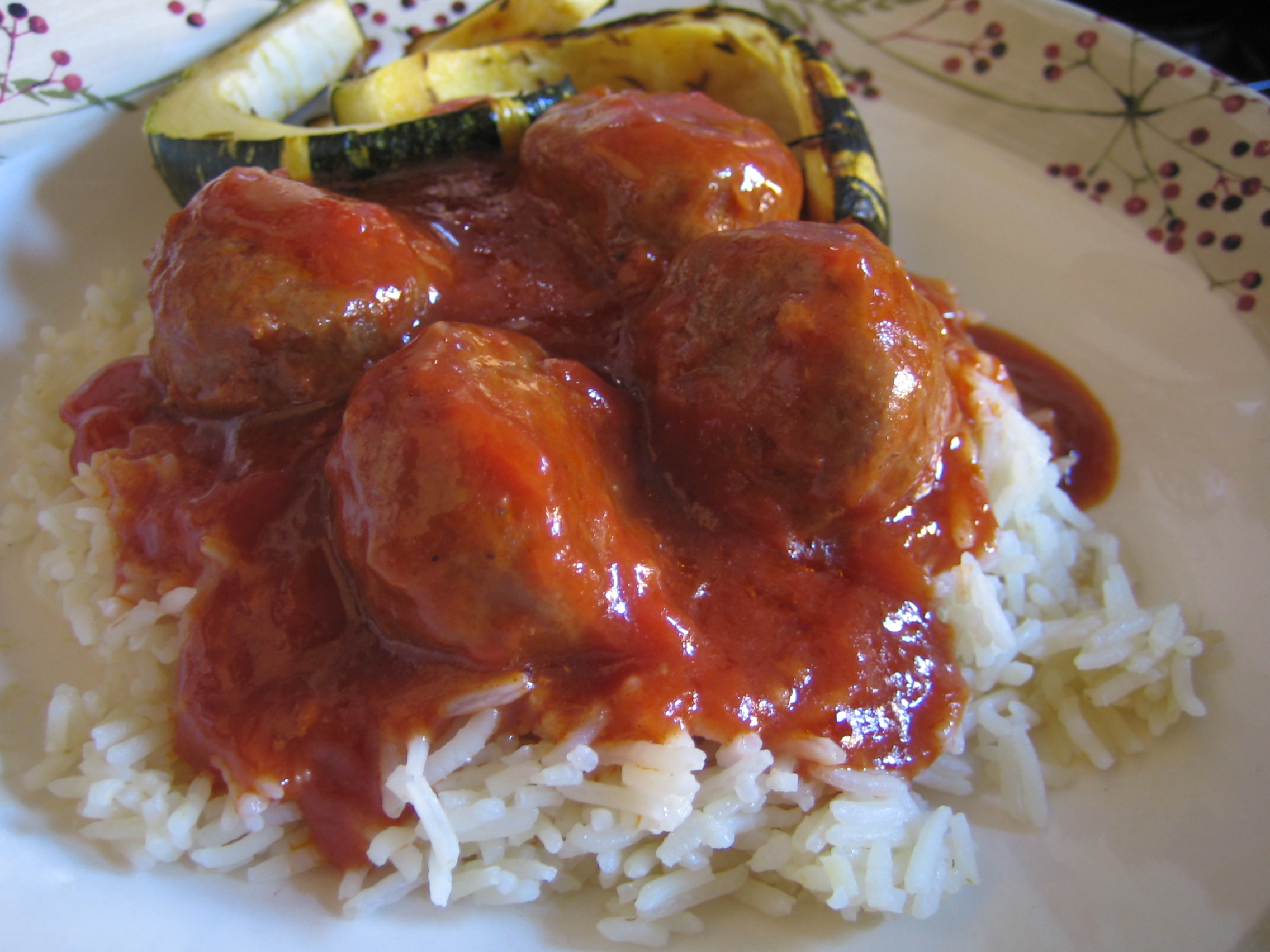
Paprika Meatballs – Low FODMAP

Ingredients

400 g lean beef meatballs (ensure no onion in ingredients)

400 g tin of chopped tomato

2 teaspoons of Spanish Smoked Paprika

2 teaspoons cornflour

1 teaspoon of cinnamon

1 teaspoon of granulated sugar

1/4 – 1/2 teaspoon of asafoetida

1 teaspoon of garlic infused oil

Method

Place meatballs in a casserole dish.

Pour the tomato into a measuring jug, add to this the paprika, cinnamon, sugar, garlic infused oil and asafoetida (take care to ensure that you place your asafoetida in a tightly sealed container – it smells very strong but adds a real depth of onion flavour to the dish.)

Then add this mix to the casserole dish.

Measure out the cornflour into a small dish and then add water to form a paste (cornflour is really great to use to thicken dishes – its wheat free and mixes very well with cold water – therefore NO LUMPS ๐Ÿ™‚ yay!)

Add this to the dish and mix well.

Cook in a preheated over at gas mark 6, 200 C, for at least 1 hour (more if you can stand to wait to try it!)

Serves 4 – served here with freshly boiled rice and roasted marrow.

Low FODMAP, wheat free (ensure that asafoetida is pure if you have coeliac disease or a wheat allergy – it can sometimes be diluted with wheat flour) gluten-free, egg free, dairy free. Check spice labels for allergens.

Violet and Chocolate Biscuits – egg free/wheat free/gluten free/low fat/Low FODMAP

150g Rice Flour

100g Soft Brown Sugar

50g dairy free low-fat margarine

125g pot of dark chocolate soya dessert (made from hulled soya beans)*

2 teaspoons cocoa powder (ensure gluten + Wheat free)

1 tsp of gluten-free baking powder

Crystallised violets.

Weigh all ingredients into a mixing bowl and mix using a hand mixer till the batter is smooth.

Draw heart shapes onto grease-proof paper and shape mixture, makes about 12 biscuits.

Cook for 5 minutes gas mark 170, then add one crystallised violet decoration to each biscuit, cook for further 10 minutes at the same temperature.

Cool and sprinkle with icing sugar

These biscuits are suitable for wheat free, gluten-free, egg free, dairy free.

Suitable for LOFFLEX when chocolate has been introduced with no problems and Low FODMAP – nb contains soya products check for other FODMAP ingredients and use products made from hulled soya beans – do not consume if soya intolerant.

updated 22.11.14

Book Review IBS Free at Last โ€“ Second edition Patsy Catsos

Book Review IBS Free at Last โ€“ Second edition Patsy Catsos

This recently published book is based on the FODMAPs diet for irritable bowel syndrome. Itโ€™s a guide for those wishing to trial a low FODMAPs diet to alleviate symptoms; as such it is comprehensive, explains the diet fully and includes information about who should use this diet. It is safe, explanations about possible other conditions such as coeliac disease, which may be masked by going on wheat free diets, for example, are discussed fully. Dietetic treatment is vital to help with following the exclusion and reintroduction phases to ensure the diet is nutritionally complete and to give advice about eating out and shopping, finding onion and garlic free processed foods can be problematic, for example. Patsy has included common questions that patients have and answers these very well, useful for those following the diet and those who treat them. For USA patients this book does give examples of food plans and recipes โ€“ for those outside the US information about converting cups to grams may be useful for following the recipes and some of the medications and supplements mentioned may not be available in all countries. It is important to include information for those who do not get resolution of symptoms using this diet and this is mentioned. The book does not clearly detail other factors for consideration such as stress, anxiety and other areas such as behaviour around mealtimes, as it was intentionally written as a book about diet. Although written for the United States, this book is certainly useful for those who wish to know more about this new treatment for IBS, and would be a good accompaniment to those who are treated withย  by their dietitian. ย Healthcare professionals wishing to know more will also find it useful and it is fully referenced, it is available on Kindle and hardcopy from good book suppliers.

This book in Kindle version was provided free of charge by the author