Reflection on a year of blogging.

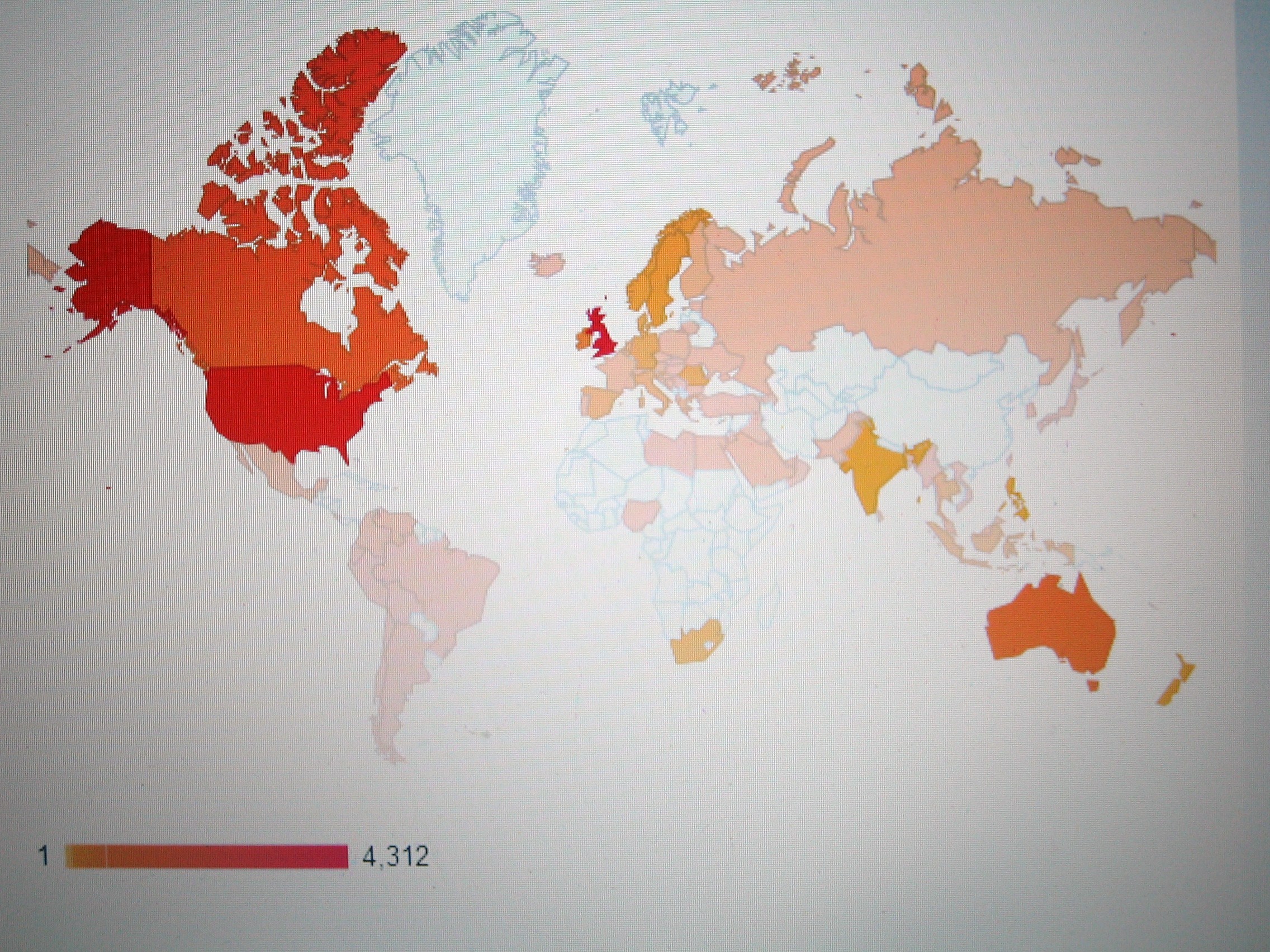
IMG_1650I have just had my anniversary of my blog, I started the site a year ago and did wonder how it would go, but I have been really hooked on writing and cooking recipes. Watching my stats I am also surprised at the breadth of countries who are interested in looking at my site, plus an interest in which countries have not viewed my site yet – so, come on guys I want to complete the full globe this year, as sure as anything you can bet that someone has some digestive complaint that would benefit.

I have experienced writers block for the last month and a paucity of recipes too. I am hoping that IBS Awareness Month spurs me on with writing more and I would also appreciate some ideas about what people would like to read on digestive disorders. The plans for the next twelve months include more book reviews and recipes, I hope to expand the blog to a website – and perhaps most exciting of all I hope to be running a clinic for patients who have intolerances, allergy and low FODMAP dietary requirements very soon, email me if you are interested.

http://www.arikhanson.com/wp-content/uploads/2010/08/InspirationPoint.jpg

I have attended The IBS Networks AGM today, my third one and the future in IBS is looking really positive, new ideas, treatments (including the Low FODMAP diet) and new research into the gut microbiome (bacterial population) and it’s effects on health and disease have made IBS more of an attractive area for research and medical management. If you are interested in getting involved, maybe you would be interested in running a support group in your area, The IBS Network can provide support if you do.

ibsnetwork

So watch this space and any ideas on what you would want to read are gratefully appreciated!

Valentines Day approaches – love me, love my gut – even if it misbehaves sometimes.

Now, I’m not a counsellor or psychologist but I am able to give you some advice around dining out and reducing the anxiety this can cause around safe foods to eat. If you are going out with a new partner Dr Barbara Bolen has some really useful advice around dating and functional bowel problems (IBS.) She advises that you should be open about having digestion problems and it is OK to describe them as such, you don’t need—and probably

A little flippant perhaps – but also some truth, love me love my GUT!

wouldn’t wish to go into detail. She also provides some good examples of how to describe your GUT problems so check out her website. An explanation will also help to reduce your anxiety about needing to go to the loo frequently during a meal and this might help reduce the actual visits required. Dr Bolen also has some really good information on her website about how to tell someone about your IBS, relationships and how to enjoy a healthy sex life with functional bowel problems, check out her site here –

http://ibs.about.com/od/livingwithibs/tp/IBSandDating.htm

Dr Bolen has also posted a link about this post and she does also appreciate Valentines Day is not a day that everyone celebrates and it can be a time that can be difficult psychologically – see the link here:-

http://ibs.about.com/b/2013/02/14/ibs-and-valentines-day.htm

If you are going on a date you may want to go to an establishment that you know well and ask for a table to be reserved in a good position, making it easier should you need to visit the toilet. Making a suggestion about where to go on a date shouldn’t cause a problem, just be a little assertive and ensure that you explain about your IBS at some point—if someone wishes to go out with you this really shouldn’t be an issue. You could also a look at the menu before your visit and telephone the chef to ask if they can cook your food without ingredients that may cause problems if this helps. See if your partner also wishes to look at the menu before arriving, this will leave more time for conversation and getting to know each other. Looking at the menu is easier to do these days as most restaurants post menus on-line.

Eating out on the Low FODMAP diet can be challenging, as onion and garlic are widely used, don’t forget to ask about sauces and stock. Having dietary intolerances shouldn’t stop you going out – some ideas for choosing food are grilled chicken breast, fish fillets, steak—in other words plain meat or fish without sauce. Egg dishes are also a possibility, omelette or frittata, check the dishes are onion and garlic free, if they are a problem for you. Choices for the starchy component are plain rice, freshly cooked potato or you could ask for wheat or gluten-free dishes (depending on your intolerance,) but again check for other FODMAPs. Establishments are now better at labelling their menus, or providing separate gluten-free menus, since a recent change in regulations. Or you could try sushi, if you like it but again check any vegetables for FODMAPs. Always remember that it might not be the food you have just eaten that causes symptoms. If you are through the exclusion phase stick to your known low FODMAP foods for the day and possibly the evening before your date depending on your GUT motility (knowing the time it takes food to pass through your digestive system.)

If foods high in fat are a problem for your digestion then ask for the meat grilled or cooked on a griddle which will allow the majority of the fat to drain away. Vegan options are a little more challenging as they often contain foods high in fermentable carbohydrates, but a risotto based on Low FODMAP vegetables or rice stuffed peppers would be an option here, not forgetting to ask about use of onion and garlic in the dish, should you need too.

Wheat free pasta I presume?

Some people find alcohol is a problem, if you want to have alcohol and it does give you symptoms, limit the amount that you have. You could have a glass of wine, for example with your main meal, or ask for a spritzer to make a longer drink. Order a spritzer with your starter and allow it to go a little flat before drinking it, if you suffer from bloating. Using an implement such as a straw or cocktail stirrer to mix your drink will help to disperse the gas it contains, but don’t be tempted to drink from the straw.  You could try a little seduction and gaze into your partners eyes, whilst stirring your drink! Watch the amount of fruit cocktails you have, if you have fructose intolerance—one small glass (100 ml) of pure fruit juice containing low FODMAP fruits is usually the maximum advised. So ensure your cocktail has no more than this amount and drink it with the main dish or sweet.

Check out The IBS Network Self-Care Plan for medications that are helpful.

I would really encourage you to eat out this Valentines Day if you are invited, you may have some symptoms because it can be difficult to avoid all FODMAPs, but the most important factor is that you go out and enjoy the experience. You might find a life partner by going on the date, what more could you wish for? If you don’t have a partner, you could plan to do something special with friends or family for the day.

Most of the advice has been about functional gut problems (IBS) but if you have inflammatory bowel disease IBD, some of the advice posted may be useful but I would strongly advise you to go on-line and check out Crohns & Colitis website (link to the main site is found to the right) as they have some really useful advice on relationships and IBD, or the link for The Ileostomy and Internal Pouch Association for advice.

Check out the living with IBD leaflet here

http://www.nacc.org.uk/content/services/infoSheets.asp

Now for the bah humbug ;-),  this advice also applies to the rest of the year! Valentines Day is very commercialised, expensive and anticipation of events occasionally can prove to be disappointing if you spend lots of money on the day. You could always suggest going out at another time, if you wish and there are other ways of showing your affection than an expensive card and some petrol station bought carnations! If you know what your partner likes, try making your own gifts, some baking perhaps (and I do include you gentlemen readers here too)—invest some time and personalise your gift, this will be really appreciated as it shows your love and understanding.

Change is not made without inconvenience, even from worse to better – (Samuel Johnson 1755)

IMG_1634

Happy New Year to our my readers and I hope you will have a year of gut calmness in 2013. January is a natural time for contemplating change and you might be wondering how successful New Year resolutions are, I am sure the majority of people have attempted to make changes in the New Year. I know I have joined gyms and weight loss groups in January, signed up for twelve months only to lapse and end up wasting my money. So what is the trick here? Can we be successful in what we choose to renew? Looking into the actual evidence one study that compared New Years resolvers with those who wanted to change later in the year, the authors found that 46% of those choosing to change in the New Year were successful compared with 4% of those choosing to change later on. The reasons for their success were that they were contemplating change, really thinking about how it can be achieved and feeling confident of being successful. It might have been possible that the study was biased, those choosing to take part were more likely to be successful because of being more proactive for example, but even if the figures are an overestimation this is still pretty impressive. Other surveys have suggested that New Year isn’t the time to plan changes; a very large survey by Richard Wiseman suggested that 88% of people fail but the details of this survey were difficult to access.

After the Christmas indulgence in rich foods it is perhaps natural to want to look after your body and wipe the slate clean, this is a time of year when detox diets or programmes are promoted to help you cleanse your body, in general but also for people with IBS. I know from personal experience I always crave fresh foods after Christmas, fruit for example never gets eaten at Christmas in our home – I often wonder about the reason, every year in fact! Detox is the process of removing toxins from the body and I’ll let you into a little secret, we have a fantastic organ in our body called the liver, it really is a wondrous organ, it is our bodies detox machine and it normally works very effectively in removing toxins from inside our body, helped by our kidneys. But there is a natural need to look after our body this time of year and there is no harm in pampering it by eating a more healthy diet, within the restrictions of your IBS symptoms, of course. For example higher fibre is not advisable for everyone; check out the IBS Network Self Care Plan for more advice on changes to help changing to a healthier lifestyle. Perhaps getting back to your normal pattern of eating after the Christmas splurge might be a good goal to begin with, then choosing one more change to a healthier lifestyle to keep things manageable. Personally and professionally the problem I have with detox diets and regimens is that they don’t do what they propose to do. Sometimes they can be very expensive and are, in the main, just a very restrictive diet – which will result in rapid weight loss initially, making you feel lighter, less bloated and fresher, but this feeling is unlikely to be maintained. So what do you do to fulfil the need for a fresh new you? Your body will thank you if you make changes to make your life generally healthier and you can feel really positive that you are helping in the long-term. Being a little more active can help your digestion and changing to eating perhaps a little more healthily for your IBS, check out the Self Care Plan for advice about how to eat and manage your IBS. Perhaps all that is needed is planning to include some ‘me time’ in your life, this will be helpful, if you find your life is very busy. A thought to changes to help your well-being is also a possibility – the overriding consideration is that whatever you decide to do it has to be your choice and shouldn’t harm you in any way.

Here are some tips to help make those changes more permanent.

1. Think carefully about what you wish to change, I mean REALLY think, not just a transient ‘light-bulb’ moment, put the kettle on, get a pen and paper or use your laptop, deliberate and plan what you are going to do.

2. On your paper write a heading of positive and negative or pros and cons. How is changing helpful? What positive benefits are there to what you are planning? The more you can think of here the better.

3. What are the negative aspects of your change? These are very important to consider as we all choose to live the way we do as it is somehow easier for us, what makes it easier? The content of this list is possibly what is going to stop you changing or result in a relapse. How are you going to manage this aspect? Write a plan of action for if you lapse, remember lapses are likely and if you plan for the possibility, it’s less likely to become a fully blown relapse.

4. How are you going to put your plan into action? What exactly are you going to do? You need to be specific here.

5. You might find that thinking about your change results in deciding that it really isn’t the best time to do it, this is acceptable, maybe keep the pros and cons list somewhere safe and come back to it sometime in the future. Ensure your choice is an easy goal for you to achieve; being successful will help you make other changes. Goals need to be realistic and achievable deciding that it is perhaps not the right time to change is a positive step. Changing one aspect of you life at a time is more manageable.

6. How will you know whether you have made a positive change? It is important to measure this aspect as this is your motivation to continue, write it down or draw a graph, use the symptom tracker or there are lots of apps available to help with this and never forget to congratulate yourself on your achievements.

7.  How long is it going to take to see an achievement? Measuring daily might not be helpful, weekly might be better. It depends on what you choose to do, but if you measure too much you might not see a change and this can be disheartening.

8.  What do you do when you lapse? Well look at your measurements – what you have already achieved, congratulate your self for all that effort, use that motivation to continue. Also review your list of positive reasons you wrote at the start to refresh yourself on why you decided to change that aspect of your life.

If we live our lives without considering changing then we will carry on having to manage the negative aspects of what we choose to do. New Year is a really good time for people to consider what it is about our lifestyles can be improved and as such it is a really useful time, also getting others involved can also help people to keep up with resolutions.

J. C. Norcross, M. S. Mrykalo, M. D. Blagys (2002) Auld Lang Syne : Success Predictors, Change Processes, and Self-Reported Outcomes of New Year’s Resolvers and Nonresolvers Wiley Periodicals, Inc. J Clin Psychol 58: 397–405, 2002.

http://richardwiseman.wordpress.com/2009/12/29/how-to-keep-your-new-years-resolution/

Sage and hazelnut stuffing wheat free and Low FODMAP

IMG_1624This is a little late for Christmas 2012 but there is always next year or you could try this with roast chicken or any other light meat.

Ingredients

150g of fibre based wheat free bread

200 g of chicken livers

30g hazelnuts

a good handful of fresh sage leaves

leaves from 4 stalks of thyme

1 tablespoon of garlic infused oil

100 mls vegetable stock (made from celery + carrot) or chicken/turkey stock – this is probably better home made as stock cubes often contain onion and garlic.

Salt + pepper

Method

Crumb the bread (it is better if it is a little stale)

Chop the herbs and hazelnuts

Trim the livers – removing any white and connective tissue

Add the oil to a frying pan and lightly fry the livers, chop them into small pieces (or lightly blend) They do not need to be cooked through as the stuffing will be going in the oven.

Mix with the breadcrumbs, herbs livers, hazelnuts, salt + pepper.

Place the ingredients in an oven proof dish and cook at gas mark 5, 190 degrees C, for 20-30 minutes.

Serves 5 don’t have a very large amount as hazelnuts do contain a small amount of FODMAPs.

Marilyn and the #IBS Myth

I have recently been interested in celebrity and IBS – would someone famous divulge that they have IBS? Would they want to act as an advocate, perhaps? My twitter followers would tell you I do hold a certain amount of disdain for celebrity culture, but I also appreciate the good work a role model can have to support a cause. I am not averse to sidelining my principles to help. Having a role model would be really beneficial as in my view we certainly need some support for this condition. Could any of these people be a real role model to help with promotion of the cause?

http://www.topnews.in/people/marilyn-monroe

There appear to be a number of famous people who clearly have not, or would ever be able to give consent to discuss this very private aspect of their lives. Whilst looking into celebrity and IBS I can across the following article. It appears Marilyn was reported to have had IBS, she was also reported to have been ‘unhygienic’, eating in bed and pushing the remnants of her meal under the bedclothes when she had finished. This was reported to have been disclosed by Clarke Gable (in a biography by David Brett) – who had a cleanliness fetish, she has also been classed as one of the top 15 filthiest people.

http://www.standardmedia.co.ke/?id=2000012098&cid=349&articleID=2000012098

So – it was reported by a person who ‘had’ an issue with dirt – is this a good scale to use to measure someone’s cleanliness? Possibly not, but it is a good titbit to sell a publication, however.

http://www.huffingtonpost.com/2012/08/01/marilyn-monroe-fbi-files-_n_1730017.html

It is always reported, after describing her apparent less than desirable cleanliness habits – oh by the way, just so you can know this, alongside her obnoxious habits, she also had ‘a form of IBS.’ I am not sure what ‘a form of IBS’ means as a diagnosis – it either is or it clearly isn’t. Marilyn always held a fascination for me, I am not sure why, perhaps it was her ethereal qualities, the fact that she died young and had a pretty hard life. Her beauty is indisputable, even in the first picture in this post, windswept and ruffled she appears alluring. Yet she was also vulnerable, courting nurturing – one of her reported virtues. She does not deserve to have her memory belittled by gossip about her personal life, the worst of it is she cannot defend herself.

http://jamiemalanowski.com/blogwp/2012/01/page/2/

She had a tragic life and fifty years after her death we still are enthralled by her story but we really should apply the Socrates triple filter test to this – do we know this is true? Well, Clarke Gable cannot confirm that he said it, let alone prove that it was in fact true. Is this something good? – the reported slovenliness no, obviously not. She may have been ill at that time, the circumstances are never included in the short internet reports. Do we, therefore, have a right to report this information, assuming it were true? It is a piece of useful information? Well the fact that she had IBS might be an interesting fact that would be useful to inform people IBS can affect anyone, but did she consent to us knowing? However, when reporting someone’s health status to help others it is vital HOW you inform – discussing it whilst also reporting a range of spurious unappealing habits clearly does not shed IBS in a good light. An incorrect association of IBS with unappealing habits may have been made by the report authors, this is damaging to what we want to ultimately achieve and the association is so far wide of the mark – simply false, but in fact, we don’t know if she had IBS at all. We clearly don’t know if what has been said is fact and neither does it pass any of the triple filter test. We cannot ask Marilyn for her consent so we should respect her memory and not gossip about something that we know little real facts about.