Fast eating – speedy way to make your IBS worse, the benefits of slow eating.

Why is it suggested to help IBS you need to ensure you relax, take time over your meals and chew food slowly? How does this advice help with reducing symptoms?

If you don’t chew your food well you are more likely to swallow air with your food, this can pass into the intestines and increase bloating. After your mouth your digestive system does not have teeth, your gut moves and squeezes to mix and push food through it, but this not break down tougher foods – you need to chew these foods well, prior to swallowing.

If you are eating whilst working you may experience stress, particularly if you are answering a discourteous email that demands some diplomacy in its response, or dealing with a complaint on the telephone. It does not help your digestion (or your IBS) if your body is experiencing stress whilst you are eating a meal. Stress causes an increase in adrenaline, a hormone that gets the body ready for action, and this hormone slows the digestive tract, slowing down digestion. Adrenaline reduces the amount of digestive juices that are secreted to help digest your food, therefore it is perhaps not surprising that you feel so uncomfortable if consuming food when stressed. Sitting up straight can also help – use gravity to help your digestion and don’t slouch when eating.

Sometimes it is difficult to change what we do, particularly if you feel that you may be penalised in some way if you take a break at work, but it is worth considering. Under the current economic climate it is difficult to insist on taking breaks if your colleagues do not, so perhaps it is time we all support each other and take back our work breaks and lunchtime, to allow everyone time to sit down, relax and ‘rest & digest.’

1952-2012 austerity & celebrations, is alcohol the new tea?

In 1952 the UK was still recovering from the devastation that occurred during the second world war, but there was an air of optimism for the future. During the war food was rationed and this rationing was still in place during the first part of the 1950’s and in 1952 tea rationing was lifted, but staple food, such as bananas, were still in very short supply. So being able to have unlimited cuppas must have been luxurious and I am sure I would have struggled to ration my cups of tea, an English staple. I recall after an operation, or being starved for medical procedures and scans the first drink I always crave is a cup of tea – tastes so refreshing. We are currently undergoing a new period of austerity, not as a result of a war, but as a result of excessive spending. So this weekends diamond jubilee celebrations are a bit of a distraction, and welcome at that, for all we seem to hear is doom and gloom. But what do you think we are using as a celebration drink? Tea? Probably not.

Having to go for my usual weekly shop at the supermarket I was astounded with the amount of alcohol in the store. Large boxes of cans of beer and lager from floor to ceiling and more alcopops in crates waiting to replace the overstacked, groaning shelves. Whilst I do not begrudge anyone having a small celebratory drink, and I shall probably join in – we do have a problem in excessive rates of alcoholic liver disease in this country, which has very high rates of mortality and morbidity. The problem is that you may not have much warning about it until the damage is done. I don’t wish to be a party pooper  – so have a party this weekend if you want to celebrate, think about how much alcohol you SHOULD have for your health – have a soft drink in between alcoholic ones. It is difficult today to know what a unit of alcohol is, as portion sizes, like those of food, have increased enormously in recent years, in our ever-increasing indulgence in excess. Wine has increased from 125ml to 175ml to 250ml, using a 125 ml glass may reduce your intake, does anyone drink wine spritzers, or shandy? Another way of reducing your intake is by diluting your drinks.

Click on the following link to calculate how many units are in your drinks and remember no one wants to be moribund on the sofa with a pounding head and sick digestive system tomorrow! So lift up your spritzer or shandy and toast the jubilee ;-)!

  • Men should not regularly drink more than 3-4 units of alcohol a day.
  • Women should not regularly drink more than 2-3 units a day.
  • If you’ve had a heavy drinking session, avoid alcohol for 48 hours.

‘Regularly’ means drinking this amount every day or most days of the week. ( http://www.nhs.uk/Livewell/alcohol/Pages/alcohol-units.aspx)

http://www.drinkaware.co.uk/tips-and-tools/drink-diary/?gclid=CNjU6I3Mpa0CFegmtAodmHgrlA

LOFFLEX recipes Third Edition

Ground rice pudding Annette Sharp RD

50g Ground rice

25g Sugar

600ml rice milk (plain or vanilla – try to get one with added calcium)

1 tsp vanilla extract (optional)

Flavouring tinned pears, pineapple juice honey/cinnamon/cardamom to taste

Method

Place ground rice, sugar and milk in a small non stick saucepan and whisk until smooth. Gently bring to the boil, stirring whilst cooking – the mixture should quickly thicken into a custard consistency.Continue to simmer over a very low heat for 5-6 minutes, stirring occasionally. Transfer to a bowl, cover and leave to cool of can be eaten whilst warm. Can blend cold pudding to achieve a very smooth consistency.

Rice Flour Pancakes

1/2 cup of rice flour

300mls of milk

2 tbsp caster sugar

oil for frying

Whisk ingredients together and fry small pancakes (approx 2 inch in diameter) in a small amount of oil until dark golden, serve with jam made from allowed fruit or honey.  Alternatively omit the sugar and add herbs and serve with meat or fish from allowed list.

Chicken Noodle Stir Fry My Le Lac RD

100g Chicken Breast

50g Courgette (skinned and sliced thinly)

50g Mushrooms (chopped)

Dried Rice Noodles

1 tbsp Vinegar

1 tsp sunflower oil/olive oil

Salt to taste

NB this counts as one portion of vegetables

Bring a pan of water to boil, place noodles in the pan

Cook the noodles till softened, drain and rinse in cold water to prevent them sticking together

In a non stick pan heat the oil, add the chicken

When the chicken has browned add the courgettes and mushrooms

When the vegetables have cooked add the noodles and stir fry, them add the vinegar, salt to taste and serve.

Moroccan Lamb Tangine Layla Brown RD

Serves 4

2 tsp black pepper

11/2 tsp paprika

11/2 tsp ground ginger

1 tbsp turmeric

2 tsp ground cinnamon

1x shoulder of lamb, trimmed and cut into 5cm/2 inch chunks

2 large carrots, peeled and grated

2 tbsp of garlic infused oil

3 peppers

115g canned apricots

55g stewed plums

1 tsp powdered saffron

brown rice miso

1 tbsp clear honey

2 tbsp coriander

2 tbsp flat leaf parsley

Place the black pepper, paprika, ginger, turmeric and cinnamon into a small bowl and mix to combine. Place the lamb in a large bowl and toss together with the spice mix. Cover and leave overnight in the fridge.

Preheat the oven to 150C/300F/gas 2

Cut the remaining food into small pieces/chunks and place in a slow cook oven or casserole dish along with the other ingredients and brown rice miso, water and cook for approx 21/2 hours till meat is very tender.

Place in a serving dish with fresh herbs.

Serve with boiled rice.

Please note: Everyone’s dietary tolerance of foods, with crohns disease, is individual. If you suspect you have problems with these ingredients please check with your dietitian if the ingredient is OK for you, before trying the recipe. The recipes are designed for stage 1 of the LOFFLEX diet, but occasionally people can have reactions to foods in stage 1, so it is very important to keep in touch with your dietitian, when following the treatment.

Coeliac Awareness Week, food labelling and celebrity intolerance!

Sausages may contain gluten via fillers or bin...
Sausages may contain gluten via fillers or binders such as Butcher’s Rusk (Photo credit: Wikipedia)

I have had a very busy week and been unable to blog, my wish was to blog of my findings at the end of Coeliac Awareness Week however we were extremely busy on The IBS Network stand at the Allergy and Free From Show – I needed a weeks rest (but I was still at work during the day!) It was an experience to follow the gluten-free diet again, I did find it much easier second time around but the challenge was eating out, of which it was my first experience. I managed to resist the temptation of eating the ginger biscuits left on my tea-tray in the hotel room and survived the eating out experience. I did find discussing my requirements a little difficult at first, being someone with a shy disposition (you may find this a little difficult to appreciate, but I assure you its true,) I was soon used to the challenge of asking how food is cooked and served.

At the show, a colleague informed me that someone was selling a freshly cooked sausage 97% gluten-free – we discussed this, why make 97% gluten-free sausages? Why not go the whole hog, so to speak – 100% gluten-free and suitable for all? Who were these sausages aimed at? Clearly not people with coeliac disease, perhaps those with gluten intolerance?  I suspect that 3% gluten may affect those with gluten intolerance also. Or possibly aimed at those with the highly exclusive condition ‘fashionista celebrity gluten hypochondria’ who follow the latest dietary trends and can afford to be a little selective in their gastronomy – perhaps now I am being a little too cynical or cruel? I am sure you will tell me, if I am! Am I suffering from celebrity intolerance, I wonder? This food was being provided freshly cooked for direct sale – not prepackaged, but freshly cooked food in restaurants and cafe’s provided for those with coeliac disease is included in the new UK 2012 gluten-free food legislation and to be labelled gluten-free it should have been tested and have no more than 20 ppm of gluten. What this does show is industry food labelling obfuscation at its worst – despite the fact we now have regulations regarding the labelling of gluten-free and allergen containing foods. We do seem to have individual suppliers who still persist in supplying food that is unsuitable for those who need to avoid certain components that may cause illness. Unfortunately I didn’t have adequate time to discuss this with the vendor as we were so busy, but I do hope that someone had the time to elucidate them with the details of the legislation.

Where I felt that I was of use was to explain about contamination risks for coeliacs with the hotel before I left. If you recall the breakfast was a buffet style with gluten contamination risks with serving cutlery, this was discussed when I checked out of the hotel, I did suggest that it may have been better to provide and gluten-free cooked meat and cheese on a separate dish and avoid contamination in the kitchens, then people with coeliac disease could be a little more confident in the food provided. I still feel that people with coeliac disease will still struggle with eating out despite the new legislation, but we must continue to explain what is needed to the catering industry and if this is done sensitively, working with the industry, awareness hopefully will increase. Let me know of your experiences of coeliac awareness week, eating out, food labelling and the new legislation.

Thursday and London gluten free life

Less than 24 hours in London and feeling slightly claustrophobic – missing green spaces. I suppose I need to give you an update of where I am with the gluten-free challenge. Breakfast today was the same gluten-free rice cereal with milk + no yoghurt. I arrived in London arround lunchtime and had my lunch at Nando’s – this was OK, I checked that all that was cooked on the griddle was chicken and sweetcorn – so no contamination. The waitress didn’t understand what I meant by coeliac disease but she let me check their allergy book, which had all the dishes clearly labelled so it actually was fairly easy to see which dishes were OK as in ‘no gluten containing ingredients.’ My evening meal was at Carluccio’s and again the gluten-free menu was clearly labelled. If I had made a mistake I wouldn’t be aware of it though, not having coeliac disease – so as I am often told in clinic I have to go on trust that no contamination has occurred. My hotel is nice except for one small problem – I have a packet of ginger biscuits on my tea making tray, this is testing me and my resolve – it would have been a nice touch to have a packet of gluten-free ones. I await the joy of breakfast! Good night :-).

Update on the gluten-free diet

Todays blog is very brief as I am packing to go to London for the Allergy and Free From Show but I need to tell you about todays events. My tuna pasta salad was a disappointment I managed to eat about 1/3 of it before I gave in and purchased a gluten-free chicken and salad roll from the hospital cafe. This was very reasonably priced – not much different from the other sandwiches on offer, but it was rather high in calories – 500 Kcal per small roll but it was filling and very tasty. My meal tonight was unplanned and because I am really busy I cooked some rice and used a gluten-free butternut squash soup to flavour it – a bit unconventional but it was very nice and filling. I also ate one of my scones 🙂

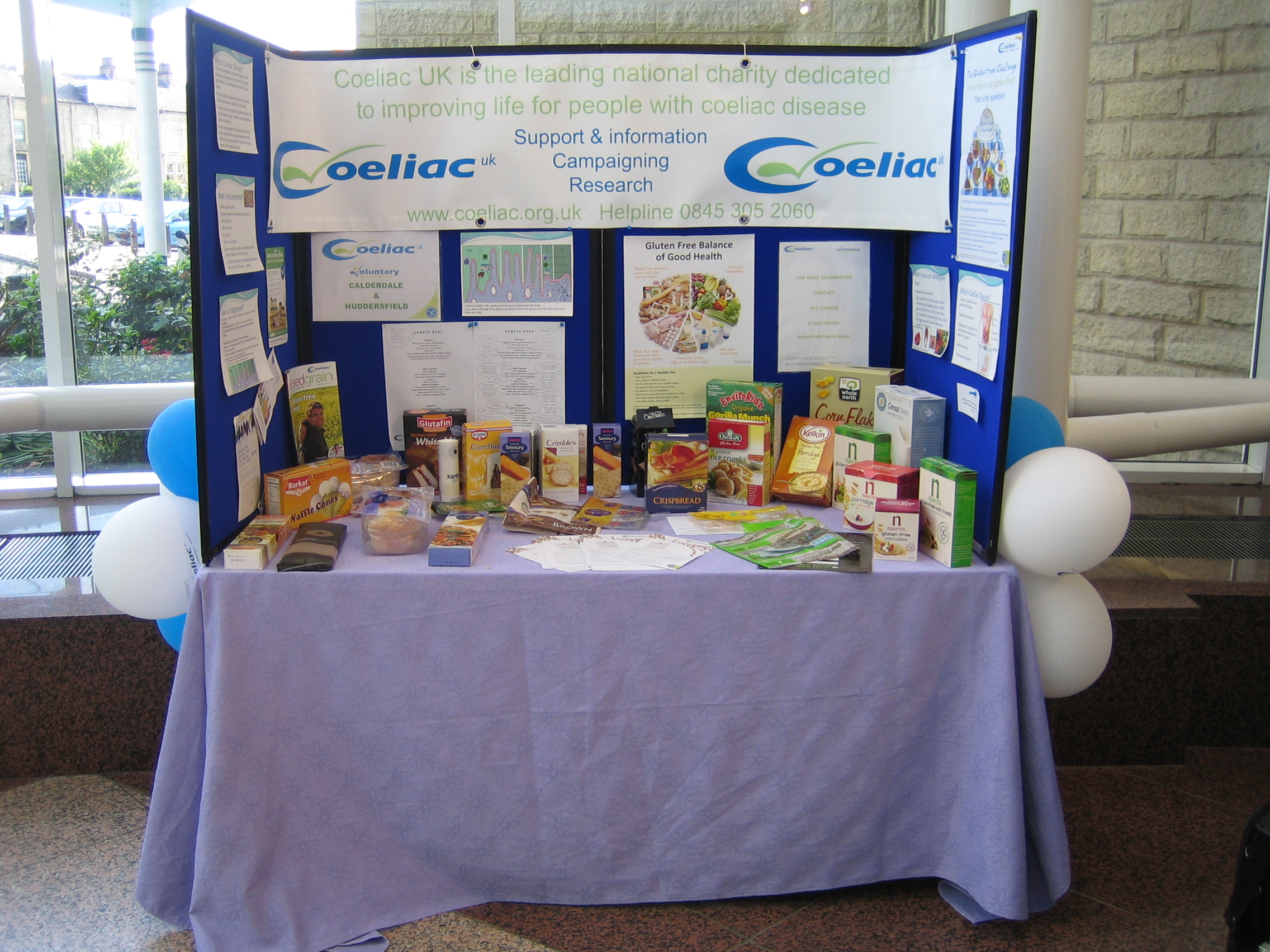
I have a different type of pasta to try but this will not be until Sunday, which I assume is the final day of the challenge, but I will try even if it is after awareness week. The picture I have posted was of the stand that I arranged with the local coeliac group last year, we were privileged to have a photo of it in Crossed Grain Magazine.